
Pentagon’s 850 F-35 plan depends on Congress and a final contract
A Pentagon–Lockheed Martin framework envisages 850 US F-35 aircraft over ten years, but the proposal requires congressional authority, funding and a final contract.
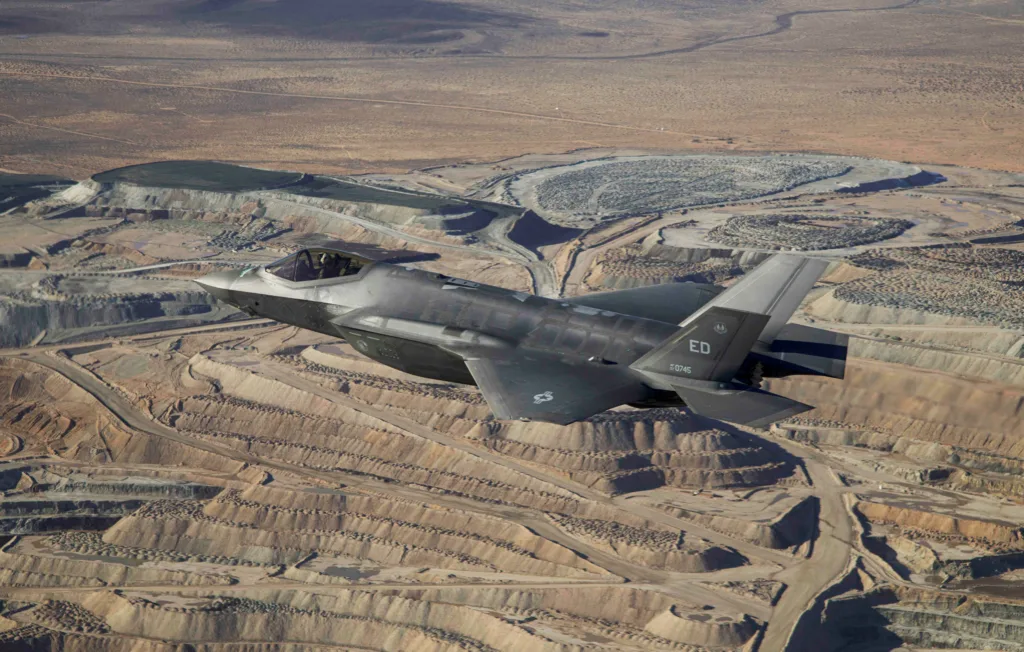
The Pentagon and Lockheed Martin have outlined an 850-aircraft F-35 production framework spanning ten years, but the announcement is not a firm order. Announced on 22 October 2026, the framework sets out a substantial industrial ambition rather than purchases that have already been authorised. Congressional approval, appropriated funding and a final contract still stand between the announcement and the aircraft it envisages.
The framework covers F-35 Lightning II production Lots 21 through 30. It envisages 850 aircraft for US forces, alongside international customer orders, initial spare parts, modification kits and ten years of fleet sustainment. Lockheed Martin intends to maintain worldwide output at 156 aircraft annually. That is a global production rate, not an annual US commitment to purchase 156 fighters.
For the US military, the proposed arrangement brings two pressing challenges together: keeping production predictable for suppliers and making more of the F-35s already delivered ready for missions. Its significance lies in both, not just in the impressive headline number.
Why the Pentagon wants a decade of certainty
The F-35 programme relies on an extensive network of suppliers, many making specialist components that cannot be ordered or produced at short notice. Annual contracting cycles complicate capacity decisions and bulk procurement. A sustained pipeline of business could give manufacturers the confidence to invest in equipment, secure raw materials and reduce delays across the supply chain.
The industrial bargain carries a commitment from Lockheed Martin, too. The Pentagon says the company will self-fund at least $7 billion in programme-related initiatives. Lockheed Martin expects multiyear orders and volume pricing to save taxpayers billions over the programme’s life. For now, those savings remain projections. Neither an overall contract value nor a final per-aircraft price has been announced.
Lockheed Martin estimates that the F-35 enterprise supports about 317,000 US jobs and $79 billion in annual economic activity. These are company estimates of the programme’s existing economic footprint, rather than new employment or spending guaranteed by the framework.
F-35 readiness is the other challenge
A ten-year production arrangement would achieve little operationally if aircraft already in service could not be maintained and kept ready for missions. This is why spare parts, modification kits and sustainment are included alongside new aircraft. Availability depends on the support network, not simply on how many fighters are delivered.
A June 2026 report from the Government Accountability Office (GAO) shows how serious the readiness problem has become. Across the fleet, the mission-capable rate fell from 67% in fiscal 2021 to 44% in fiscal 2025. The full mission-capable rate declined from 38% to 25%. Crucially, these measures describe the percentage of time aircraft can perform at least one or all assigned missions, respectively. They are not simply the percentage of aircraft permanently grounded.
More predictable parts procurement could help reduce maintenance delays and logistics bottlenecks. That is the intended benefit, not a verified outcome. The GAO has warned that shortages and supplier-capacity constraints remain a risk even as the F-35 programme changes the way it organises sustainment.
Foreign operators have a stake in the outcome as well. Their orders form part of the wider production plan, and the same supply chain supports aircraft serving well beyond the United States. But no detailed country-by-country delivery timetable was announced, so it would be misleading to promise any particular customer an earlier aircraft handover.
Congress still controls the next step
Spread evenly across a decade, 850 US aircraft would average 85 a year. That matches the Pentagon’s fiscal 2027 request. Yet Congress funded just 47 F-35s for fiscal 2026, according to Defense News. The contrast shows why long-term production planning cannot be mistaken for approved spending. Nor is an average an agreed annual delivery schedule.
At the time of the announcement, Congress had not passed a full-year defence budget, and temporary funding was due to run through 11 December. The legislation enabling multiyear purchases was also unfinished. Once the necessary authority and appropriations are in place, the F-35 Joint Program Office and Lockheed Martin can negotiate final pricing, terms and schedules. Congress must still provide the necessary authority and funding before firm production orders can follow.
Sources: GAO, 11 June 2026 report; Lockheed Martin, 22 October 2026; Defense News, 22 October 2026; Reuters, 22 October 2026.

JOIN THE CONVERSATION
Let’s discuss this story.
A question, a clarification or a different perspective? Share it with us.