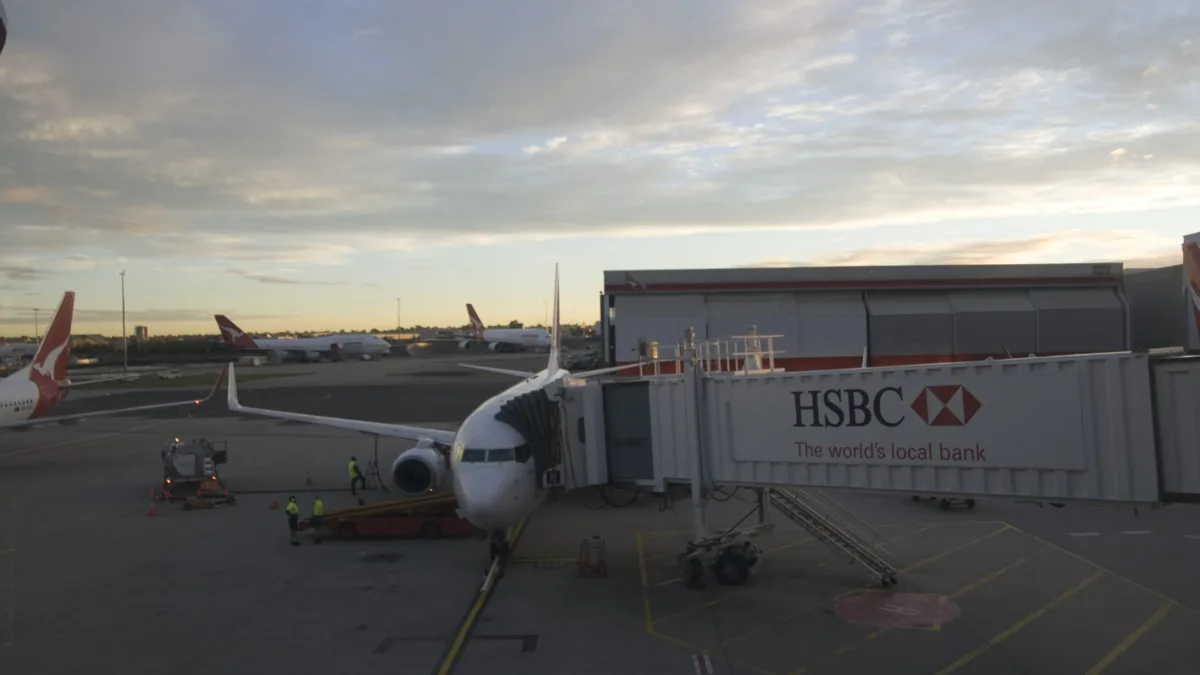
The Sydney near miss involving two Qantas aircraft has become a test case for a wider operational question: what happens when an air navigation provider can identify fatigue risk but still lacks enough staffing flexibility to act on it? Reuters-reviewed documents show that several controllers on duty were rated at high fatigue risk, although that does not establish fatigue as the cause of the incident.
The operational issue is bigger than one shift
Five of the ten controllers on duty were classified as high risk under Airservices Australia’s fatigue system, including two of the three directly involved in the event. Such models are designed to identify elevated probability of reduced alertness, not to diagnose an individual controller.
The real safety question is therefore how the warning is translated into staffing decisions when traffic demand is high and spare capacity is limited.
Why staffing resilience matters
Air traffic control systems can absorb disruption only if they have enough personnel to rotate staff, reduce workload or temporarily cut traffic. When overtime and extended duty periods become common, the organisation has less room to respond to fatigue alerts without affecting airport capacity.
For a hub such as Sydney, that trade-off is particularly sensitive because runway use, noise restrictions and dense traffic already leave little operational margin.
A fatigue model is only as useful as the action behind it
Fatigue-management systems can trigger additional breaks, roster changes or lower workload. But a model that identifies risk without changing the operation becomes a monitoring tool rather than a safety barrier.
Investigators will therefore need to examine not only whether fatigue was present, but also whether the system’s own warnings were handled as intended.
What this means for other ATC providers
The Sydney case is relevant beyond Australia. Air navigation providers in Europe and North America face similar pressures from staffing shortages, overtime and traffic growth.
The lesson is not that fatigue automatically causes incidents. It is that resilient ATC requires enough staffing depth to act conservatively when risk indicators rise.
What investigators still need to establish
The investigation must reconstruct the exact sequence of events, controller workload, communications, procedures and any contribution from fatigue. Until that work is complete, causation should not be assumed.
AeroSillage view: the central issue is organisational resilience. A warning system has value only if the operation has enough margin to respond to the warning.
Related: Newark and Philadelphia ATC communications outage.
Main source
Reuters, September 4, 2026.

Leave a Reply