
Seville at year’s end, the Spanish city break that holds on to the sun
Seville stays mild and luminous at year’s end. Alcázar, Giralda, Santa Cruz, Triana, budget, airport access and how to plan a three- or four-day city break.
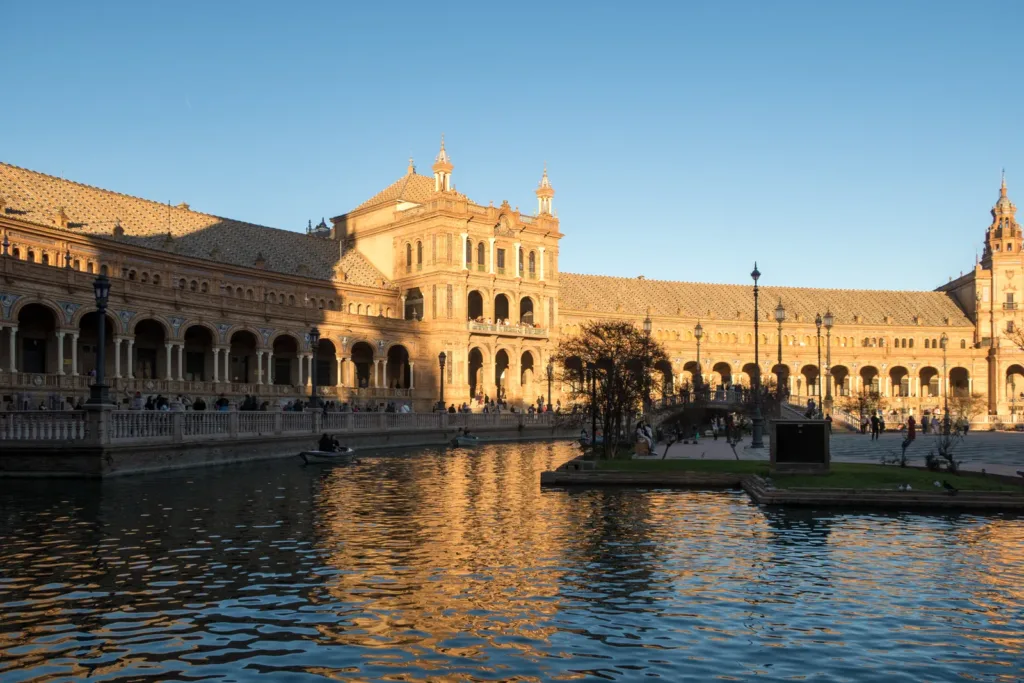
Plaza de España in Seville in the evening light. Photo: Javier Balseiro / Pexels, Pexels License.
As much of Europe moves into the colder weeks of the year, Seville still holds on to something of summer. Orange trees line the streets, terraces remain lively and late-afternoon light gives the city’s ochre façades their distinctive warm glow.
Andalusia’s capital does not promise permanent summer. From late October into December, what it offers is more appealing than that: days mild enough for long walks, the possibility of eating outside when the weather cooperates, and a monumental city that can be explored without the punishing heat of July and August.
At Seville Airport, long-term climate normals put the average daily high at 20.2°C in November and 16.6°C in December. Mornings and evenings are cooler, with average lows of 10°C and 7.3°C respectively, while rain becomes more likely again. A jacket and a small umbrella therefore belong in the suitcase. AEMET publishes Seville’s reference climate normals.
This is also a time of year when Seville is particularly well suited to what it does best: rewarding travellers who explore it on foot.
Start with Plaza de España
Few places make a more dramatic introduction.
Beside María Luisa Park, Plaza de España curves around a canal crossed by small bridges. Brick, stone and colourful ceramic tiles take on warmer tones as the sun begins to fall.
It deserves more than a quick photograph.
Walk beneath the galleries, follow the water and spend a few minutes looking at the ceramic panels dedicated to Spain’s provinces. At the end of the year, shorter days have an advantage: the best evening light arrives early enough to make the square a natural first stop after checking into a hotel.
Then one of Seville’s greatest strengths becomes obvious. Once in the centre, much of the trip can be done on foot.
From the Alcázar to the Giralda
The following morning brings a complete change of setting.
Behind the walls of the Real Alcázar, courtyards lead into rooms covered with plasterwork and tiles. Pools reflect arches and façades, while gardens stretch beyond the palace buildings.
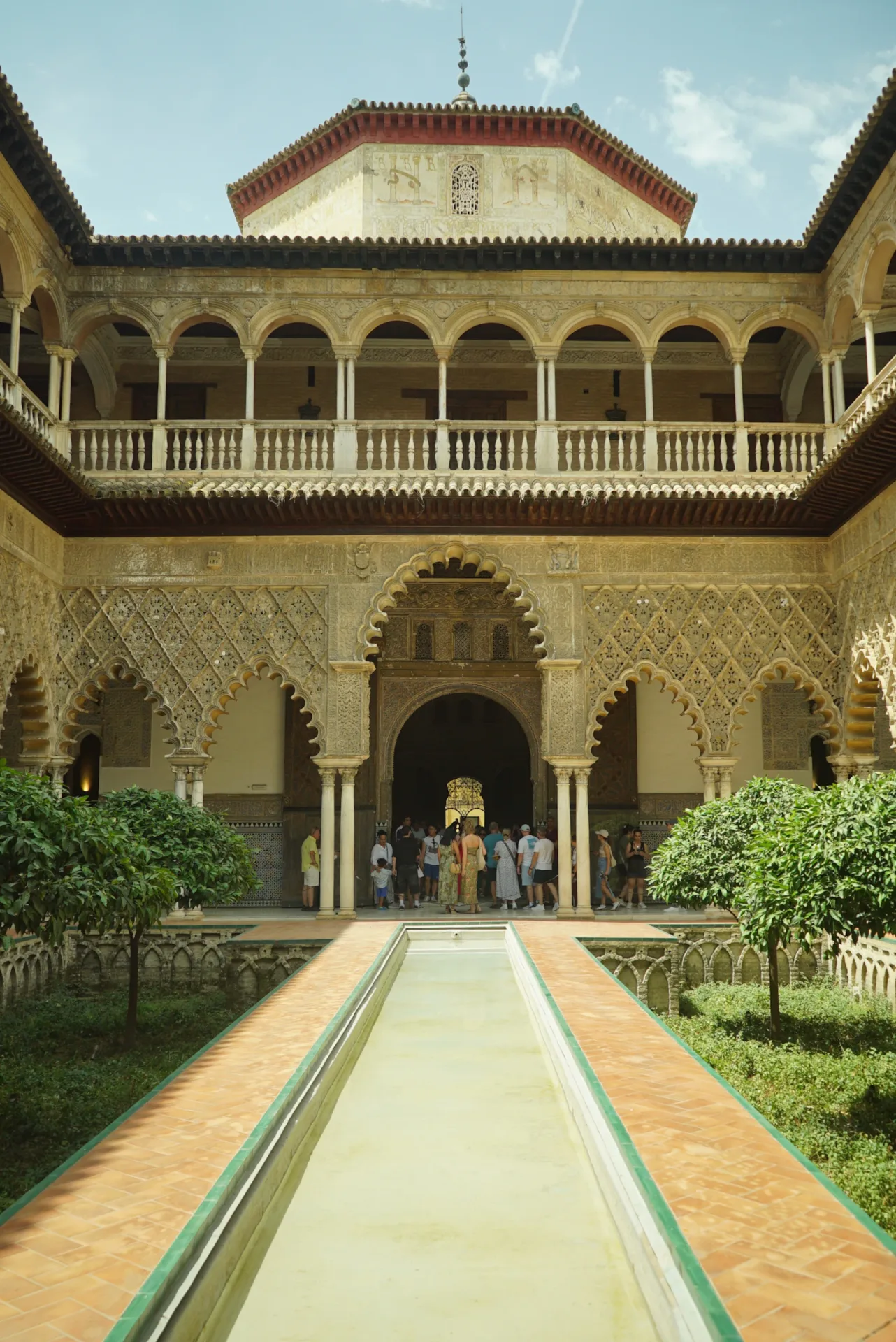
The complex is the product of centuries rather than one architectural moment. Islamic influences, Mudéjar craftsmanship, Gothic spaces and Renaissance additions overlap throughout the site.
From 1 October, the Alcázar operates on its winter timetable, opening at 9.30 am with admission until 5 pm. Standard entry currently costs €15.50. Booking ahead is sensible, particularly for travellers who want an early start. The Real Alcázar publishes its official opening times and prices.
Two hours can disappear easily between the palaces and gardens.
A short walk then leads to Seville Cathedral and the Giralda.
The former minaret of the city’s great mosque, later incorporated into the cathedral as its bell tower, still dominates the historic centre. Much of the ascent is made by ramps rather than a conventional staircase. At the top, rooftops, domes, the Alcázar gardens and the tightly packed streets spread out below.
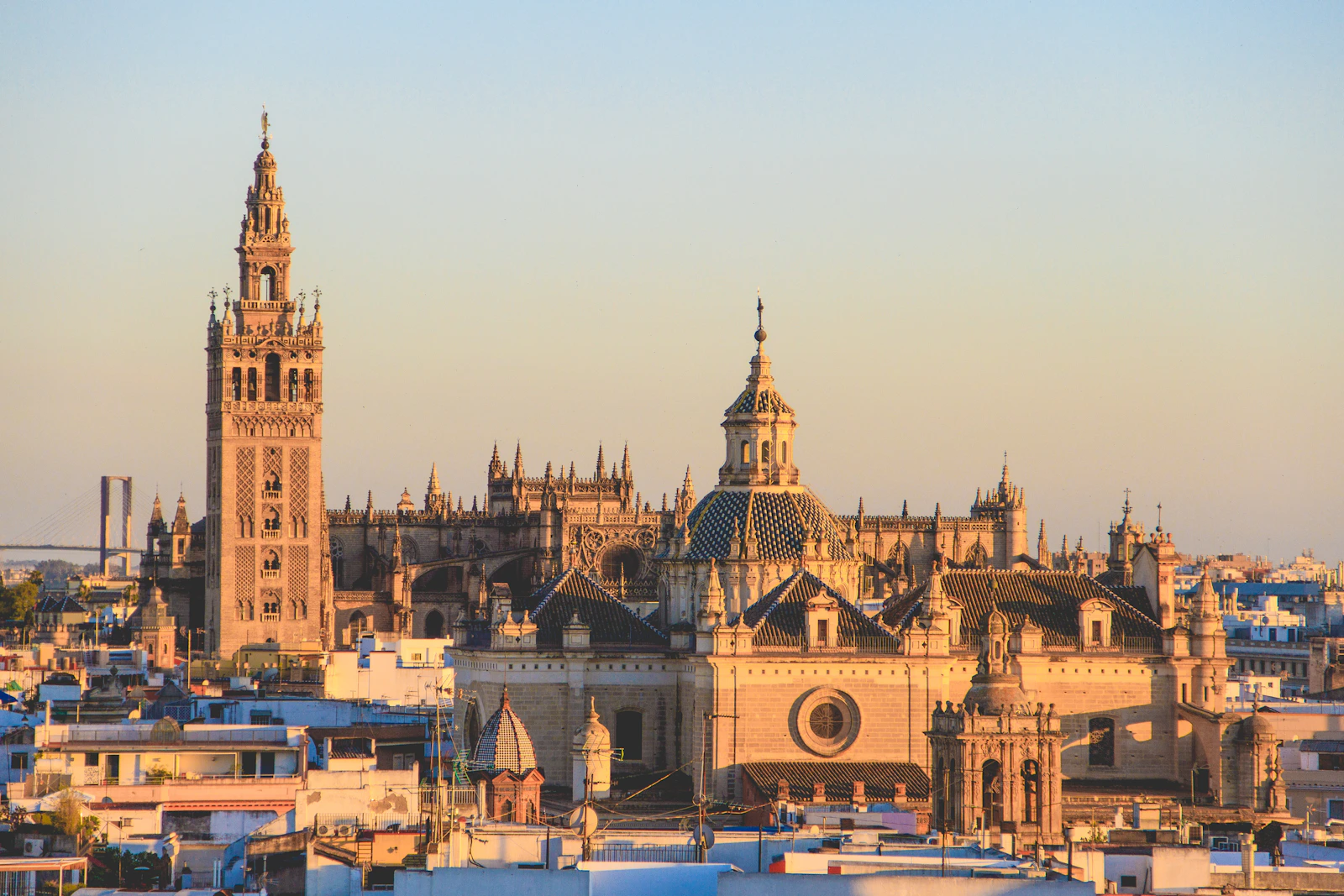
In 2026, a standard online ticket for the Cathedral and Giralda costs €13 and also includes the Church of El Salvador. The cathedral recommends allowing around 75 minutes for the main visit. Official opening times and prices are published by Seville Cathedral.
For the rest of the trip, the Giralda becomes a familiar reference point. It appears between buildings, vanishes around a corner and rises again above the rooftops.
Let Santa Cruz disrupt the itinerary
Around the cathedral, Seville changes again.
In Santa Cruz, streets narrow, white façades replace grand perspectives and courtyards appear behind iron gates.
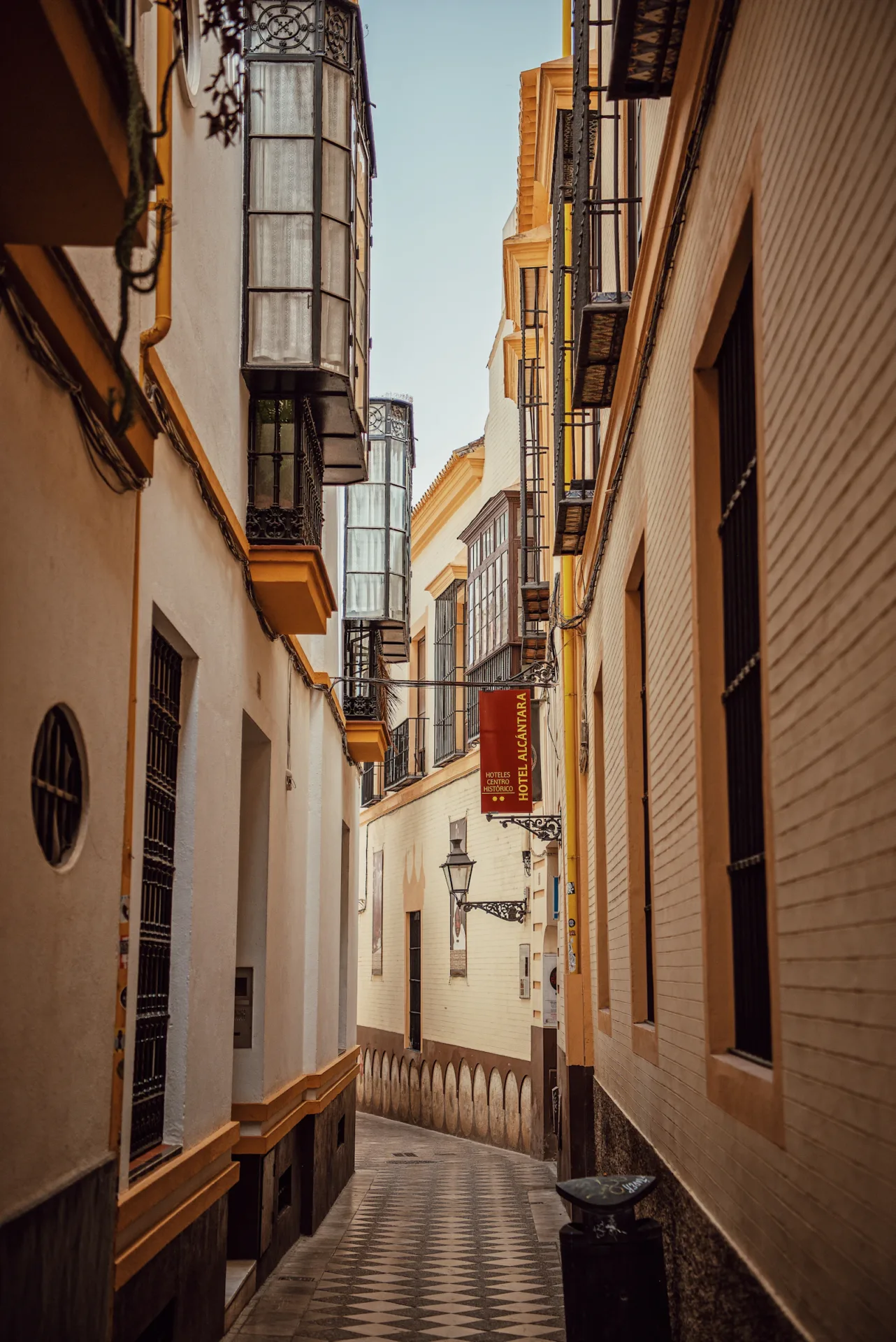
It is one of the most visited parts of the city, but a few turns away from the busiest routes can still make a noticeable difference.
This is where an overly precise itinerary becomes unnecessary.
Follow a lane because it looks inviting. Stop in a small square. Catch an unexpected glimpse of the Giralda between two houses. By the time lunch arrives, the morning may have taken a completely different direction from the one originally planned.
For a first trip, Santa Cruz is convenient for staying close to the major sights. El Arenal is another strong option between the cathedral and the Guadalquivir, while Triana offers a more residential atmosphere and livelier evenings across the river.
Central Seville is compact enough for the decision to be based more on character than distance.
Evenings belong to the Guadalquivir
Towards late afternoon, cross the river.
The Triana Bridge leads into a neighbourhood closely associated with ceramics and flamenco. Workshops, shops and the Centro Cerámica Triana preserve that heritage, but the district is more than a collection of traditions.
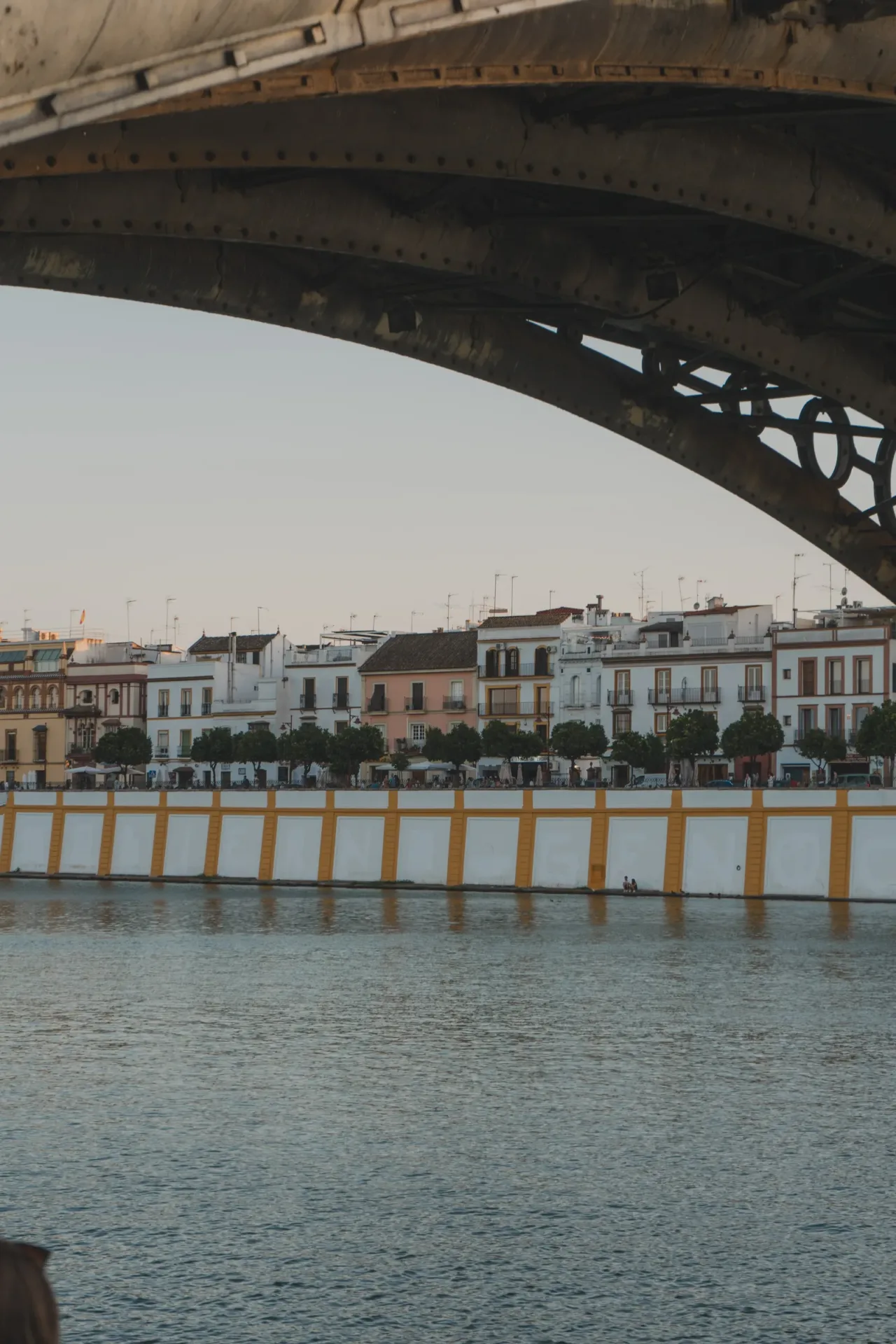
Calle Betis follows the river opposite the historic centre. As the sun drops, the last light catches the façades and the terraces begin to fill.
For dinner, walking a few streets back from the most visible riverside tables can produce a very different experience.
The same principle applies to flamenco. A dedicated tablao or smaller venue where singing, guitar and dance remain the focus generally makes more sense than treating the performance as an addition to dinner.
Three days to see Seville, four to enjoy it
Seville works particularly well as a long weekend.
Three days are enough to combine Plaza de España with María Luisa Park, devote a day to the Alcázar, Cathedral and Santa Cruz, and spend another part of the trip around Triana and the Guadalquivir.
Four days change the pace.
There is then time for the Palacio de las Dueñas or Casa de Pilatos, the Metropol Parasol, a market, a return to a favourite neighbourhood or simply a café stop that was never part of the plan.
For a first visit, four days may be the best balance: short enough to remain a city break, long enough to prevent the city from becoming a sequence of timed-entry tickets.
December adds another atmosphere. Central streets are decorated with festive lighting, while seasonal markets and the traditional Feria del Belén near the cathedral form part of Seville’s Christmas period. Avenida de la Constitución and Plaza de San Francisco are among the central areas associated with the festivities. Seville’s tourism office details the city’s Christmas programme.
The appeal is that Christmas does not replace the city. It simply becomes another layer of it.
An unusually easy city break from the airport
Seville Airport is close enough to the centre that transfers do not consume a large part of a short trip.
The EA airport bus serves several useful stops, including Santa Justa, San Bernardo, Prado de San Sebastián and Plaza de Armas. The journey into the city takes roughly 35 minutes, and Aena currently lists the one-way fare at €6, with card payment available on board. Aena details the EA airport bus service.
For several travellers, a taxi can also make sense depending on the hotel location. Airport journeys use an official fixed fare that varies according to the day and time. Spain.info summarises the main ways to reach Seville Airport.
For a trip focused entirely on Seville, however, a rental car adds little. The centre rewards walking and parking is more likely to create a problem than solve one.
Accommodation will usually determine the largest part of the budget. The two headline paid attractions already cost €15.50 for standard admission to the Alcázar and €13 for an online Cathedral and Giralda ticket. Weekends, holidays and major events can move hotel prices considerably.
Booking ahead is therefore valuable mainly because it preserves the choice of neighbourhood.
On the final evening, return to the Guadalquivir.
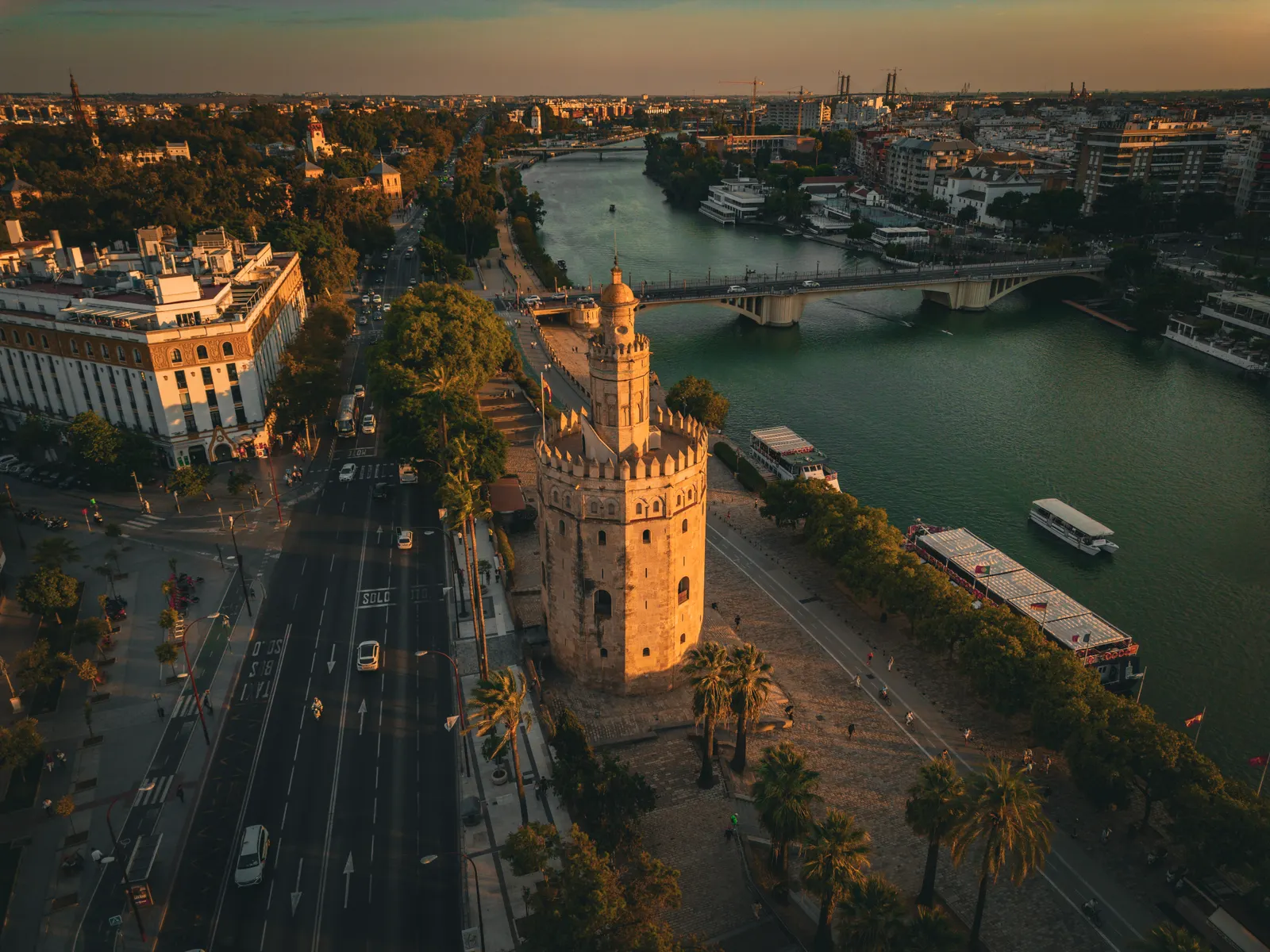
The Torre del Oro stands beside the water as boats pass, people walk and run along the riverfront and lights begin to appear across the city.
It is an appropriate place to understand what a year-end trip to Seville is really about.
Travellers may arrive looking for a few extra degrees and a little more daylight.
What stays with them is often everything that happened between the major sights.
JOIN THE CONVERSATION
Let’s discuss this story.
A question, a clarification or a different perspective? Share it with us.