
Saudia Aircraft Badly Damaged by Fire as Attacks Rock Riyadh Airport
A parked Saudia jet was severely damaged by fire in Riyadh. The exact cause and aircraft identity have yet to be established.
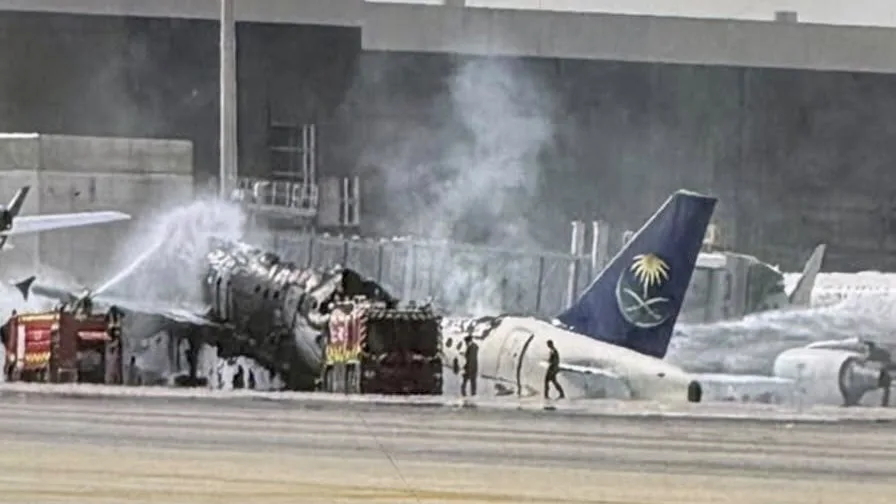
A Saudia passenger aircraft was badly damaged by fire while parked at Riyadh’s King Khalid International Airport on 8 October 2026. The incident coincided with renewed attacks claimed by Yemen’s Houthi movement, but the exact mechanism that caused the aircraft fire remains uncertain.
Three people briefed on the matter told Reuters that the aircraft caught fire close to an airport terminal. They cited two possibilities: a direct projectile impact or fragments from an intercepted missile. Neither explanation had been established through an official investigation at the time of the initial reports.
What is established about the aircraft
The jet was thought to be empty of passengers when the fire broke out, according to the sources. That does not confirm the absence of injuries among ground personnel or anyone nearby. Saudi Arabia’s General Authority of Civil Aviation (GACA) subsequently confirmed on October 9 that two separate attacks on October 8 targeted airport facilities and a parked Saudia aircraft. Three Saudi nationals were killed and several others injured. Saudia confirmed that no passengers were aboard the damaged aircraft and named its pilot, Captain Hamoud Ali Al-Kalthami, among the dead. These three deaths are separate from the three previously reported in attacks on Abha and Riyadh on October 6 and 7. Source: https://www.aa.com.tr/en/middle-east/saudi-arabia-says-3-killed-in-attacks-on-riyadhs-king-khalid-airport/4083103
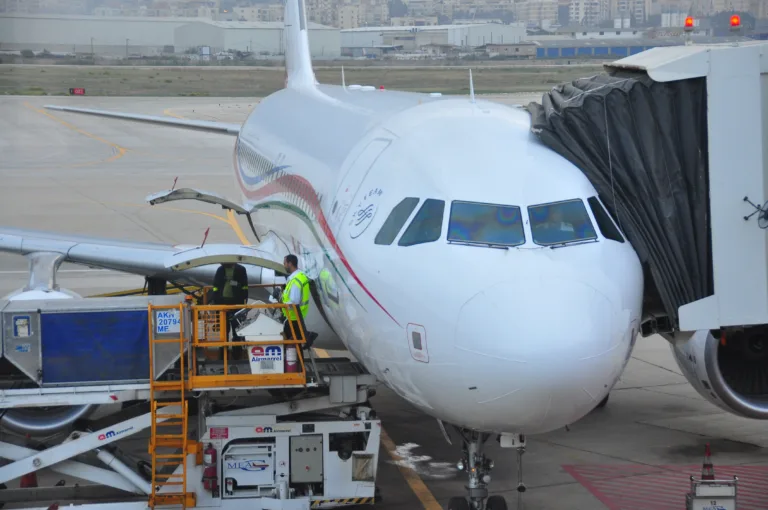
The aircraft’s registration and precise model were also unconfirmed. Aviation enthusiasts have suggested that online imagery resembles a member of the Airbus A320 family, but such assessments should not be reported as conclusive identification. The photograph accompanying this article shows a different Saudia Airbus A320 taken at Riyadh in 2017.
Claimed airport attack does not settle the cause
The Houthis said they had targeted King Khalid International Airport with a ballistic missile on 8 October. Reuters reported the claim, while making clear that Saudi officials had not immediately confirmed details of the latest incident. A claimed strike and a documented fire are not, on their own, proof of a direct hit on this particular aircraft.
Reuters verified video showing smoke rising from airport premises. Matching landmarks and ground features can establish where a recording was made; it cannot independently determine the precise origin of a fire or the identity of a damaged aircraft.
Why damage on the ground can disrupt an airline
An aircraft fire at a terminal may trigger structural inspections, emergency-response activity and restrictions around the affected parking area. It can also complicate fleet assignments and onward flight schedules. However severe the visible damage appears, a permanent hull loss should not be asserted without an operator statement or technical assessment.
The cost of a damaged aircraft extends beyond repair bills. Inspections, replacement parts and the need to reposition other jets can disrupt services even when passengers were not on board at the time of the incident. Those operational consequences can be examined without prematurely identifying the fire’s cause: a direct strike and interception debris remain reported possibilities, not established findings.
The disruption extends far beyond the damaged aircraft. In a Cirium snapshot published on October 8, 169 of Riyadh’s 378 scheduled departures were cancelled or did not operate, alongside 124 of 369 scheduled arrivals. Together, 293 of 747 scheduled movements were affected, approximately 39%. This is a time-specific snapshot, not a final daily tally; flights marked as not operating should not all be described as confirmed cancellations. Cirium figures as reported on October 8.
The wider security situation has prompted airline service suspensions. Lufthansa Group said it would suspend Riyadh flights through October 16, IndiGo through October 9, and Air India and Akasa Air through October 10, according to statements reported on October 8. An Air India service from Delhi turned back. Pakistan International Airlines (PIA) temporarily suspended its Riyadh flights on October 9, with no resumption date announced. PIA advised travellers to confirm their flight status before leaving for the airport, according to its spokesperson quoted by Dawn. Travellers should check the status of their specific flight and any rebooking or refund options directly with their airline before setting out.
Questions still outstanding include the aircraft’s registration, the final number of injuries, the direct cause of the fire and whether the jet can return to service. AeroSillage will update the account when verifiable information becomes available. For further regional aviation coverage, see our Middle East aviation news section.
Illustrative photograph: a Saudia Airbus A320 at Riyadh in 2017, not the aircraft damaged on 8 October 2026. Credit: Kskhh / Wikimedia Commons, CC BY-SA 4.0.

On October 9, the European Union Aviation Safety Agency revised its Saudi Arabia conflict-zone bulletin, CZIB-2026-09-R1. It recommends that affected operators avoid two precisely delineated portions of the Jeddah flight information region at all altitudes, while exercising caution elsewhere. EASA cites the expanding geographical reach of missile and drone attacks and heightened risks to aircraft on the ground and during take-off and landing. This is not a blanket closure of Saudi airspace or a ban on every flight. EASA’s revised October 9 bulletin. Updated October 9, 2026.
Read next

JOIN THE CONVERSATION
Let’s discuss this story.
A question, a clarification or a different perspective? Share it with us.