
Ryanair and passenger rights: court rulings and the difficulties of claiming compensation
An investigation into French court rulings, UFC-Que Choisir, passenger accounts and Ryanair’s claims procedures.
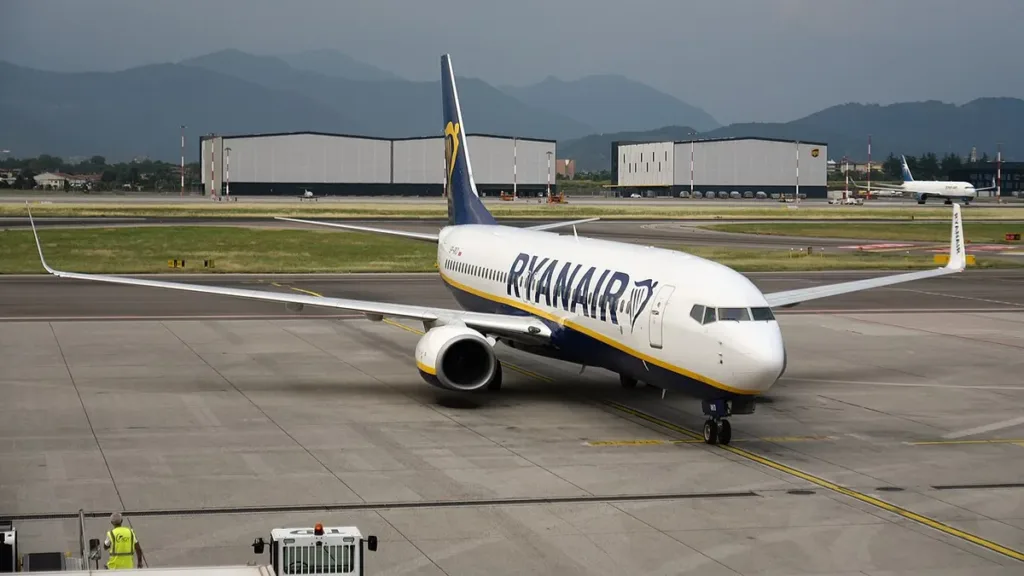
A flight disruption can be over in hours; the argument over compensation may last months. Some Ryanair passengers describe difficulties with claim forms, rejected requests and the separate process for recovering expenses. Those accounts are not proof of wrongdoing. French court decisions, however, offer a firmer way to examine what happens when travellers challenge an airline’s response.
Two French rulings issued in September 2026 help explain the gap between entitlement and payment. They relate to individual disputes and follow a much larger case pursued by consumer group UFC-Que Choisir, which ended in a settlement. Together, they show how difficult enforcement can become without establishing a company-wide policy of refusing valid claims.
The French consumer case and what happened afterwards
On 12 December 2023, the Commercial Court of Aix-en-Provence ordered Ryanair to pay UFC-Que Choisir €150,000 in damages for harm to consumers’ collective interests. The proceedings involved dozens of passengers affected by delays, cancellations and denied boarding between April 2016 and July 2019. Fifty-seven eligible travellers were also awarded €250 each in additional damages, alongside the statutory amounts due. The court had found abusive resistance in the cases before it and ordered judicial publicity. The consumer organisation described the judgment in its UFC-Que Choisir account.
That decision must not be presented without its subsequent legal history. Ryanair appealed, but an agreement was reached between the parties on 18 November 2024. On 12 February 2025, the Aix-en-Provence Court of Appeal approved the settlement and recorded the withdrawal of the appeals. It did not issue a new merits judgment upholding every element of the first-instance decision. The full financial terms of the settlement are not established in the public material reviewed here, so it would be misleading to claim that the original €150,000 award was definitively paid. The 12 February 2025 judgment records the procedural outcome.
The settlement nevertheless led to a practical initiative. In January 2025, Ryanair and UFC-Que Choisir announced a dedicated channel for certain compensation claims submitted through the association concerning flights departing from or arriving in France. Both presented the January 2025 agreement as a way to simplify eligible requests. Publicly available material, however, does not establish how many claims the channel has processed, how quickly it resolves them or the proportion that succeed.
Why claiming can be harder than understanding the entitlement
Ryanair encourages passengers to apply directly rather than paying a claims company a commission. According to its Ryanair Help Centre, customers must identify the booking, use the appropriate myRyanair account and complete identity verification. Such steps can have a legitimate purpose: protecting customer information and ensuring money goes to the right person.
The challenge is that a single disruption may produce several legally distinct claims. Statutory compensation is handled separately from reimbursement of expenses. Someone whose flight is cancelled and who must arrange accommodation and onward transport may therefore need to navigate more than one process. EU guidance makes the distinction clear: extraordinary circumstances may remove the obligation to pay fixed compensation, but do not automatically extinguish duties of care or the choices of reimbursement and rerouting. The EU passenger-rights guidance explains those rights and their limits.
In July 2026, a Reddit user describing a cancelled Barcelona-Bologna journey said repeated attempts to submit a claim led back to apparently unsuitable forms. The traveller later reported finding another route to submit expenses; the original discussion remains publicly viewable. In August, another user described seeking reimbursement for ground transport after a diversion to Trapani rather than Catania. The August account alleged that a system response focused on the duration of the delay rather than the onward-travel expenses actually claimed.
The travellers’ accounts illustrate reported difficulties, not independently established breaches of the law. AeroSillage links to the original posts but has not reviewed every supporting document or obtained Ryanair’s detailed response to each case.
Other travellers have questioned discrepancies between explanations received at an airport and reasons later given for refusing fixed compensation. Such questions deserve examination, but aircraft rotations can involve successive causes, from routine technical problems to bad weather and air traffic restrictions. An apparent discrepancy does not prove dishonesty. Under European law, however, an airline relying on extraordinary circumstances must establish the relevant facts and show that reasonable measures could not have avoided the consequences. Routine technical issues do not ordinarily meet that test.
What the September judgments actually establish
On 11 September 2026, the Commercial Court of Nice decided a case pursued by Skycop, which held an assigned passenger compensation claim. The Nice Commercial Court judgment awarded €250 in statutory compensation, €200 relating to a breach of passenger-information obligations, €771.84 in legal costs and court expenses. The court did not uphold the separate allegation of abusive resistance. The decision was issued in last instance.
On 29 September, the Commercial Court of Aix-en-Provence ruled on Ryanair flight FR5163 of 19 May 2025. It awarded €250 in compensation plus €500 towards legal costs and court expenses. Ryanair had challenged procedural aspects of the action but, in the alternative, did not oppose payment of the statutory €250. The Aix-en-Provence judgment dismissed the further claims relating to passenger information and abusive resistance. The judges also rejected Ryanair’s counterclaims concerning provisions in Skycop’s customer terms because the airline was not a party to those contracts and lacked standing to challenge them. The ruling was issued at first instance with provisional enforcement; any subsequent appeal had not been confirmed at the time of this investigation.
For individuals, a refusal may still be costly to challenge. They must preserve travel records, document expenses, identify the correct legal entitlement and sometimes seek independent dispute resolution or go to court. French procedural changes applying from February 2026 made certain passenger-rights lawsuits more formal, drawing criticism from UFC-Que Choisir. When a claim is worth €250, the time and cost of a formal case can be decisive.
Ryanair’s publicly stated position is that claims are assessed individually, extraordinary circumstances may justify exemption from fixed compensation and dissatisfied customers can use the relevant dispute-resolution routes. These published explanations are included here; the airline has not been approached for a case-specific comment on the online accounts discussed.
What remains unavailable is a reliable, comparable measure of how many compensation requests Ryanair rejects and how often those decisions are reversed, measured against other European airlines. Without such data, a league table of the most frequently condemned carriers would be misleading. The documented cases nevertheless underline the practical question for travellers: what does a legal entitlement mean when recovering the money demands disproportionate effort? See our guide to passenger rights after delays and cancellations.
JOIN THE CONVERSATION
Let’s discuss this story.
A question, a clarification or a different perspective? Share it with us.