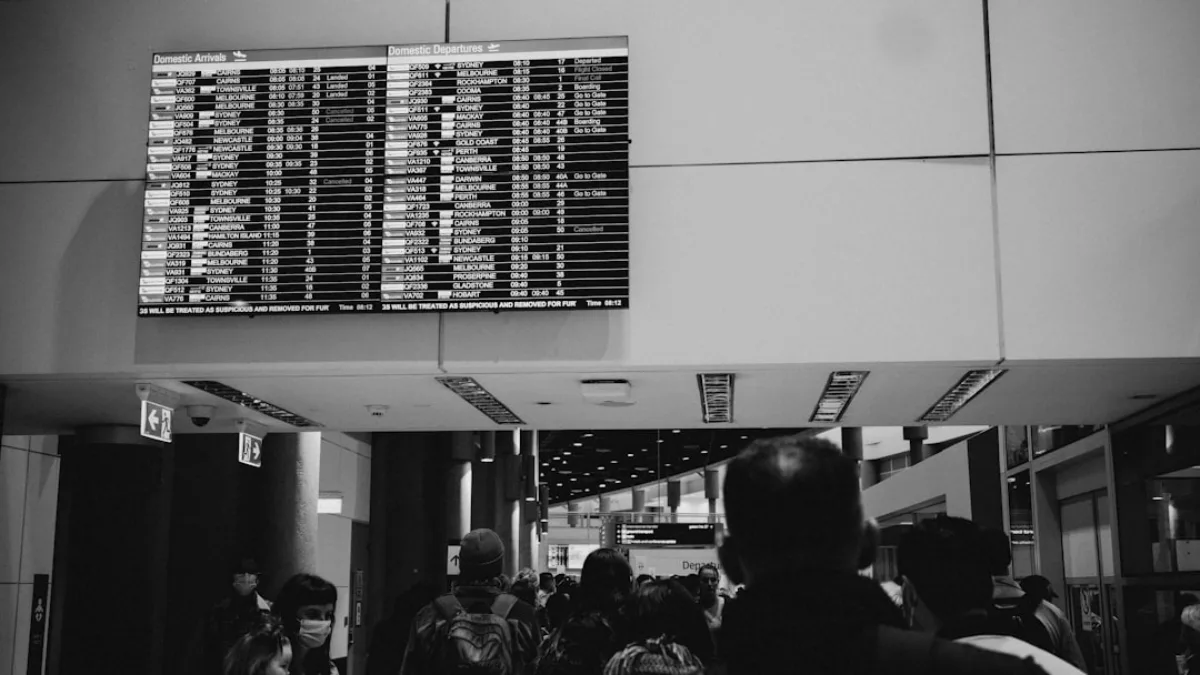
Every summer, ATC strike and major weather disruption brings the same question back: when a flight is heavily delayed or cancelled, do airlines really apply the rights guaranteed by European law?
Regulation EC 261/2004 provides strong rights on assistance, rerouting, refunds and, in many cases, compensation. The harder part is often enforcement: passengers can still face difficult forms, long processing times, weak rerouting offers or refusals based on “extraordinary circumstances”.
Compensation, care and rerouting are separate rights
If a passenger reaches the final destination at least three hours late and the disruption is attributable to the airline, fixed compensation may be due.
The standard amounts are €250 up to 1,500 km, €400 for intra-EU flights above 1,500 km and other flights between 1,500 and 3,500 km, and €600 for longer flights, subject to the regulation’s conditions.
Cancellations can also trigger compensation when notice is not given sufficiently early.
An airline cannot simply cancel and leave passengers to solve everything themselves.
Depending on waiting time, meals and refreshments are due. If an overnight stay becomes necessary, hotel accommodation and airport-hotel transport must also be provided or reimbursed.
After a cancellation, passengers must be offered a choice between reimbursement and rerouting to the final destination. Rerouting can, where necessary, require another airline or another mode of transport.
Extraordinary circumstances change compensation, not every duty
Severe weather, security risks and some external ATC events can qualify as extraordinary circumstances if they could not have been avoided despite reasonable measures.
But simply writing “extraordinary circumstances” is not enough. The carrier must be able to justify the cause.
And even when fixed compensation is not due, care, reimbursement or rerouting obligations can still remain.
Enforcement cases show where airlines still fail passengers
France publishes final administrative sanctions for breaches such as late refunds, inadequate rerouting, failures of care and poor passenger information.
Recent decisions have involved Vueling, Wizz Air, Transavia France, Volotea, Ryanair, easyJet, Air France and other carriers.
That matters because enforcement problems are not unique to low-cost airlines.
In 2022, Volotea was fined €105,000 for 35 refund failures linked to pandemic cancellations, plus €35,000 for passenger-information failures.
Other decisions in 2024 and 2025 concerned denied-boarding compensation, rerouting, care and information. Adding the published French decisions cited in the source article since 2021 takes Volotea sanctions above €370,000.
This is not an official European “worst airline” ranking and cannot by itself measure overall service quality.
In September 2022, Ryanair was fined €75,000 for refund failures and €56,000 for information failures.
In November 2024, easyJet faced sanctions totalling about €117,000 for issues including pandemic-flight refunds and passenger information.
The French public record also contains decisions involving Air France, British Airways, Air Europa, Royal Air Maroc, Tunisair, Air Senegal, Iberia Express and Norse.
After UK Civil Aviation Authority enforcement, Wizz Air had to reopen more than 25,000 previously closed claims.
Thousands resulted in additional payments totalling more than £1 million. The cases included replacement tickets bought by passengers after inadequate rerouting offers as well as hotel and care costs.
The lesson is important: having a legal right does not always mean receiving the money automatically.
What enforcement records can and cannot prove
Not from public data alone. Each country publishes sanctions differently and there is no single EU database normalising enforcement by passenger volume, flight count and seriousness of the breach.
A large airline naturally generates more claims than a small one, so raw complaint totals can be misleading.
The real problem is enforcing rights that already exist
European law is strong, but it still depends heavily on passengers understanding what they can demand.
Failure to inform travellers is itself one of the recurring issues in published French sanctions. A passenger who does not know a €250, €400 or €600 compensation right exists may never claim it.
The European Union adopted a major passenger-rights reform in 2026, with application expected the following summer. Until then, the existing rules continue to apply.
The new framework includes more systematic electronic information after disruption, simplified claims processes and clearer response deadlines.
For a compensation claim, the airline will have to acknowledge and answer within 30 days, either by paying or clearly explaining the refusal.
Rerouting rules are also intended to become clearer, including use of another airline or another transport mode where necessary.
What should you do when the airline refuses?
Start with a formal written complaint to the airline. In France, mediation and further regulatory or court routes may then be available depending on the case.
Keep boarding passes, booking confirmations, emails, screenshots and every receipt for hotels, meals and alternative transport.
Airlines are not responsible for every disruption. Storms, closed airspace and some ATC restrictions may genuinely fall outside their control.
But enforcement decisions also show failures involving basic duties: refunds, rerouting, hotel care and passenger information.
Europe has one of the world’s strongest passenger-protection systems. Its practical effectiveness still depends on travellers knowing what they can require and preserving the evidence needed to claim it.
Main sources
DGCCRF; French Ministry of Transport published sanctions; Council of the European Union; European Commission; UK Civil Aviation Authority.
Leave a Reply