Québec City is one of North America’s most atmospheric winter destinations: snow-covered streets in Old Québec, the Château Frontenac, Dufferin Terrace, Petit-Champlain, the Ice Hotel and the Québec Winter Carnival combine into a genuine cold-weather city break rather than a summer destination covered in snow.
This AeroSillage guide looks at the trip from a traveller’s perspective: how to get there from the main francophone markets, what entry formalities to expect, where to stay, how much to budget and how to enjoy winter without underestimating the cold.
Why Québec is worth visiting in winter
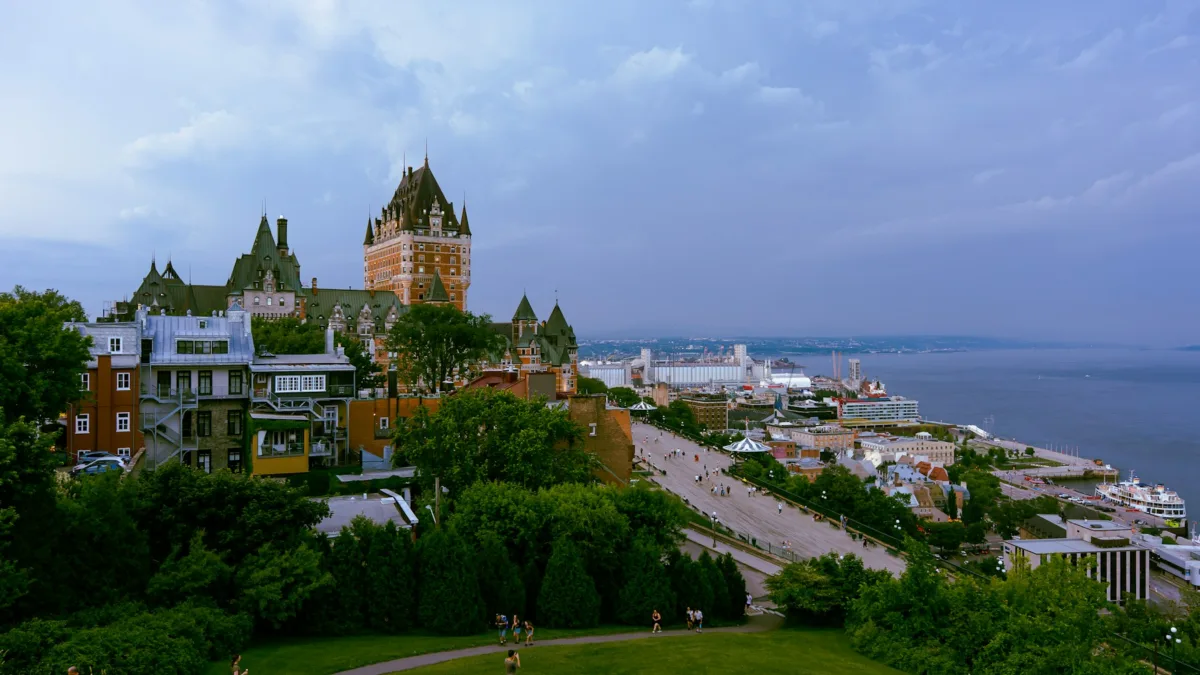
Old Québec, a UNESCO World Heritage Site, changes character completely under snow. The fortified old town, historic façades, Petit-Champlain, Dufferin Terrace and Château Frontenac create the postcard image most visitors are looking for.
The main event of the 2027 season will be the Québec Winter Carnival, from 5 to 14 February 2027. For ten days, the city hosts snow and ice sculptures, Bonhomme’s Ice Palace, night parades, music and the famous canoe race across the St. Lawrence River.
When to go
For a full winter experience, the best period runs from mid-December to the end of February. December brings festive decorations, January is often quieter and February offers the Carnival atmosphere.
The cold is real. Temperatures are frequently below freezing and can fall sharply. That is part of the appeal, but it also means proper clothing is essential: insulated waterproof footwear, a genuinely warm coat, gloves, hat, scarf and thermal layers make a major difference.
Getting to Québec from francophone markets
France: Paris is the simplest gateway. Air Canada markets Paris–Québec itineraries, with some return fares observed from around €520 depending on travel dates. Air Transat also serves the destination depending on the seasonal programme.
Belgium: Air Canada offers Brussels–Québec itineraries, normally with a connection. Fares seen for some periods were around €655 return.
Switzerland: Geneva is a practical departure point for French-speaking Switzerland. Air Canada displayed itineraries from around CHF615 return on certain dates.
Luxembourg: nonstop options are more limited. It can be worth comparing Luxembourg with Brussels, Paris or Frankfurt depending on the exact travel dates.
Within Canada: Montréal is the obvious alternative gateway. Québec City can then be reached by air, train, coach or car. A Montréal + Québec combination works especially well for a first trip of one week or more.
Jean-Lesage Airport and getting into town
International arrivals use Québec City Jean-Lesage International Airport (YQB). For a stay focused on Old Québec, a rental car is not essential: the historic centre is compact and easy to explore on foot, provided you are equipped for winter conditions.
Entry formalities
For French, Belgian, Luxembourgish and Swiss nationals arriving by air, Canada generally requires a valid passport and an Electronic Travel Authorization (eTA) rather than a visitor visa for a short tourist stay. Travellers should still verify their own situation on the official Canadian government website before departure.
Children need their own travel documents. When a minor travels with only one parent or another accompanying adult, carrying appropriate parental or family documentation is advisable.
Money, cards and tipping
The currency is the Canadian dollar (CAD). On 23 September 2026, the market rate was around €1 = CAD1.60, meaning €100 was roughly CAD160 before bank charges.
Visa and Mastercard are widely accepted in hotels, restaurants, shops and attractions, and mobile payments are common. One North American habit should be built into the budget: tipping is expected in table-service restaurants and some other services.
What to do in winter
Old Québec: start with the fortifications, Rue Saint-Louis, Place Royale, Dufferin Terrace and Château Frontenac.
Petit-Champlain: one of the most photogenic areas in winter, especially after dark when decorations and snow combine.
Québec Winter Carnival: the signature February event, with its ice palace, sculptures, parades and activities.
Hôtel de Glace: north of the city, presented as North America’s only ice hotel. Even without staying overnight, it is worth visiting.
Montmorency Falls: the winter landscape is dramatically different from summer, with ice formations around the waterfall.
Québec–Lévis ferry: even a simple round trip provides excellent views back toward the old city and Château Frontenac.
Where to stay
Old Québec: the easiest choice for a first visit. It is more expensive, but hard to beat for atmosphere and walkability.
Upper Town: ideal for easy access to Château Frontenac, Dufferin Terrace and the major historic sights.
Saint-Roch: more local and contemporary, with restaurants, cafés and hotels that can be more affordable than the tourist core.
Good places to eat
Chez Boulay – Bistro Boréal is a useful introduction to ingredients and flavours inspired by northern Québec. Aux Anciens Canadiens offers traditional Québec cuisine in a historic house. Cochon Dingue in Petit-Champlain is an easy mid-sightseeing option, while Chez Muffy at Auberge Saint-Antoine is better suited to a higher-end dinner.
Family, couple or solo?
Families: Carnival, the Ice Hotel, slides, hot chocolate and short outdoor sessions work very well with children, provided you build in regular warm-up breaks.
Couples: winter arguably shows Québec at its best, with evening walks, snow-covered streets, warm hotels and strong restaurant options.
Solo travellers: the city is compact, easy to navigate and works well for a three- or four-day trip.
How much should you budget?
Québec is not a low-cost destination, especially during Carnival. Flights and accommodation are the largest expenses. A Paris return fare can sometimes be found around €520, but hotels rise sharply during major winter events.
To control costs, book early, stay somewhere central enough to walk and mix restaurants with cafés and simpler meals. Three nights are enough for the essentials; four nights offer the best balance for a first winter visit, while five nights allow time for Montmorency Falls or the Ice Hotel without rushing.
AeroSillage tip
For February 2027, the strongest plan is to book early enough to overlap with Carnival, stay in or near Old Québec and embrace the winter conditions rather than trying to avoid them. Québec is not simply a city that looks attractive in snow: winter is central to its tourism identity.
Sources and checks
Government of Canada (entry rules and eTA); Destination Québec cité (winter guide); Québec Winter Carnival 2027; Hôtel de Glace; Québec City Jean-Lesage International Airport; Air Canada fare calendars; exchange rates checked on 23 September 2026.
Photo credit: Mike Bryant / Unsplash.
For a European alternative with a strong festive atmosphere, see AeroSillage’s Copenhagen at Christmas guide covering flights, markets and budget.