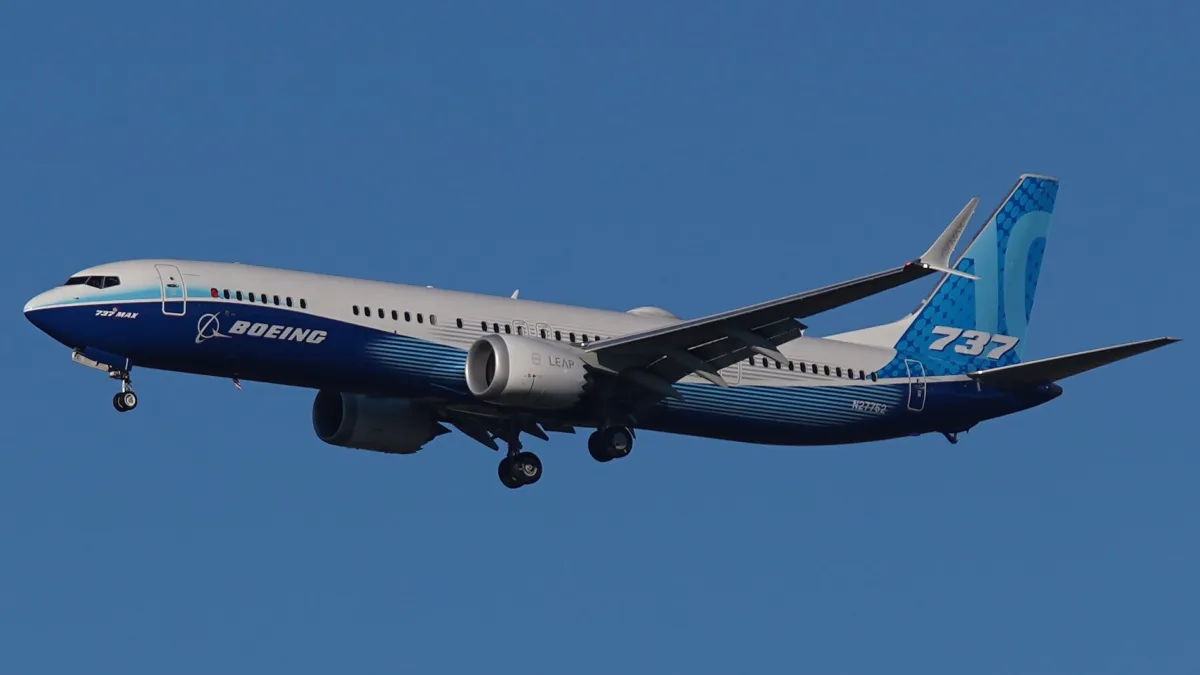
Lufthansa’s latest 737 MAX 10 commitment is less about adding 20 aircraft than about reopening supplier competition in a European narrowbody fleet long dominated by Airbus. The group said on September 17, 2026 that it had exercised 20 of the options negotiated in 2023, taking its firm 737 MAX backlog to 60 aircraft.
The deal is valued by Lufthansa at around $3.4 billion at list prices. Deliveries are not expected before the early 2030s, which means certification timing and industrial execution will matter as much as the order itself.
Why this matters for Lufthansa’s fleet strategy
Lufthansa Group already has deep operational experience with Airbus single-aisle aircraft across several airlines. Bringing Boeing back into the narrowbody mix gives the group leverage at a time when delivery slots are scarce and both manufacturers are struggling with supply-chain pressure.
The order therefore creates optionality. Lufthansa is not abandoning Airbus; it is reducing the risk of relying too heavily on one supplier for the next phase of fleet renewal.
The MAX 10 is the key variable
The MAX 10 is the largest member of Boeing’s 737 MAX family. Its economics depend on high seat capacity and lower fuel burn per seat, but the type still has to complete its certification process. That makes the aircraft’s regulatory path a central issue for Lufthansa, even though first deliveries are years away.
Lufthansa says the new aircraft should cut fuel consumption by roughly 30% compared with the older jets they are intended to replace. For a group operating a large European network, the real benefit will come from combining lower unit costs with enough capacity for dense short- and medium-haul routes.
A transatlantic manufacturing rivalry returns to Europe
The order also has a broader European significance. Airbus has become the default narrowbody supplier for many large European airline groups. Lufthansa’s move gives Boeing a stronger strategic foothold and may improve the group’s bargaining position for future aircraft purchases.
That competition could become increasingly valuable as airlines plan beyond 2030 and try to secure enough aircraft to replace ageing fleets without being trapped by one manufacturer’s production delays.
What to watch next
The first milestone is certification of the MAX 10. After that, the important questions will be which Lufthansa Group airlines receive the aircraft, how they are configured and how quickly they replace older A320-family jets.
AeroSillage view: this order is best read as a portfolio decision. Lufthansa is buying aircraft, but it is also buying flexibility in a market where industrial capacity has become a strategic asset.
Related: FAA delays Boeing 737 MAX 10 certification.
Sources
Lufthansa Group, September 17, 2026
Boeing, 737 MAX
Photo: Steve Knight / Wikimedia Commons, CC BY 2.0.
Leave a Reply