
Italy: easyJet strike and ENAV outage disrupt flights on 16 October
The 16 October easyJet strike coincides with an ENAV network outage. Malpensa cancellations are confirmed, and ENAC has published protected flights.
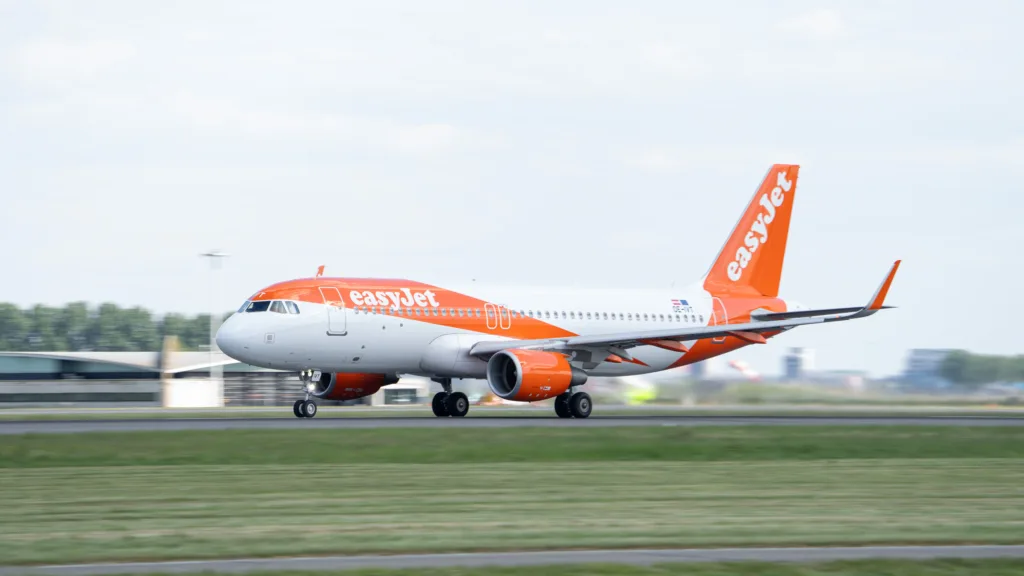
The easyJet strike in Italy on Friday 16 October has coincided with confirmed cancellations at Milan Malpensa. Yet the airline dispute is only part of the story: an unrelated failure in ENAV’s nationwide data network has curtailed air traffic control capacity, disrupting other airlines as well. Italy’s protected-flight list is now available, while the earlier Florence and Pisa airport strike notices no longer apply to 16 October.
All times are local Italian time, CEST (UTC+2).
By mid-morning at Milan Malpensa, passengers were dealing with a crowded Terminal 1 and a departure board increasingly dominated by delays. Local reporting from MalpensaNews identified cancelled easyJet and easyJet Europe services to Catania, Nantes, Nice and Lampedusa. Flights to Amsterdam, Malaga and Rabat also suffered lengthy delays. These are observed disruptions, not proof that each affected departure was cancelled for the same reason.
That distinction matters especially to international passengers. Two independent events have collided on the same day. An industrial action involving easyJet flight crews has reduced the airline’s ability to operate its schedule, while a technical failure affecting ENAV’s national air traffic control data network has constrained traffic flows across Italian airspace. The latter affects carriers that have no involvement in the easyJet dispute. Treating every cancellation as a strike-related event would give travellers a misleading account of both the scale and the cause of the disruption.
Why Italy’s aviation disruption extends beyond easyJet
Italy’s official transport strike register continues to record a nationwide, 24-hour call by USB Lavoro Privato for easyJet Airlines Limited flight crew, from 00:00 to 23:59 on 16 October. The union has challenged a collective agreement signed on 15 September and the way employees were consulted on it. The industrial action therefore stems from a dispute within the airline and is not limited to an individual Italian airport.
Separately, ENAV says anomalies were detected overnight in the nationwide data transmission network supporting air traffic control services. Contingency arrangements kept operations running normally until 06:00, but increasing morning demand forced flow restrictions to protect safety. Traffic management capacity was initially reduced by around 50%, before gradually recovering through a backup satellite network. ENAV reported that full operational capacity had been restored at approximately 15:25 Italian time. The return to 100% capacity, however, does not undo delays already accumulated or cancellations already made. ENAV has ruled out malicious activity as the cause.
Delays and cancellations have consequently extended beyond Malpensa to Rome Fiumicino, Milan Linate and Bergamo, among other airports. Aviation data provider Cirium recorded 192 cancellations across Italian airports by around noon, according to Reuters. That figure describes the broader nationwide disruption. It is not a verified count of flights cancelled specifically because of the easyJet strike, and it should not be presented as one.
The protected flights, and a crucial difference between two Lampedusa services
Italy’s civil aviation authority, ENAC, published its guaranteed-flight notice on 12 October. Scheduled departures during the protected windows of 07:00–10:00 and 18:00–21:00 must be maintained under the strike rules. Its official document also names five services: EJU4115 Naples–Olbia, EJU4116 Olbia–Naples, EJU3599 Milan Malpensa–Lampedusa, EJU3600 Lampedusa–Milan Malpensa and EJU3897 Milan Malpensa–Sharm el-Sheikh. Other flights may operate if staffing allows. A service that does not appear on this short list should not automatically be treated as cancelled.
One apparent contradiction disappears once the flight numbers are checked. The Malpensa departure to Lampedusa reported cancelled at 11:10 was EC3637; ENAC’s specifically protected Malpensa–Lampedusa service is EJU3599. They are different flights. The departure-board report does not, by itself, establish that the ENAC-listed service was cancelled. Nor can strike-related protection prevent a separate technical restriction from affecting flight operations.
Other notices previously associated with 16 October have also changed. A strike involving Toscana Aeroporti, GH Toscana and Consulta at Florence and Pisa no longer appears among the active notices for that date, with a new action now recorded for 30 October. A separate notice covering Sicuritalia IVRI airport security staff at Venice Marco Polo is scheduled for 22 November. The nationwide Poste Air Cargo technical flight-crew strike, however, remains listed for 16 October. That movement primarily concerns freight operations rather than passenger departures.
What affected passengers should do
Passengers should check their precise flight number and the airline’s latest operational message, rather than assuming that a nationwide strike announcement means their flight is cancelled. Before travelling to the airport, monitor the carrier’s app or website and keep any cancellation notice, boarding pass and receipts for necessary expenses.
Where an itinerary falls within EU passenger-rights rules, cancellation generally gives travellers a choice between a refund and rerouting, as well as appropriate care. Fixed compensation may also be payable depending on the cause. An airline’s own staff strike is not automatically an extraordinary circumstance; a technical problem outside the carrier, including restrictions imposed by air traffic control, can require a different assessment. With two separate disruptions affecting Italy on the same day, travellers should ask the airline to identify the reason for any cancellation or major delay.
For the next industrial-action dates, see AeroSillage’s October aviation strike calendar. Our examination of easyJet’s exposed flights explains why individual routes and operating bases can face different levels of disruption.
Read next

JOIN THE CONVERSATION
Let’s discuss this story.
A question, a clarification or a different perspective? Share it with us.