Italy restores full air traffic capacity after ENAV network fault
ENAV has restored full Italian air traffic handling capacity after a network fault halved it earlier on 16 October. Delays and cancellations continue to affect schedules.

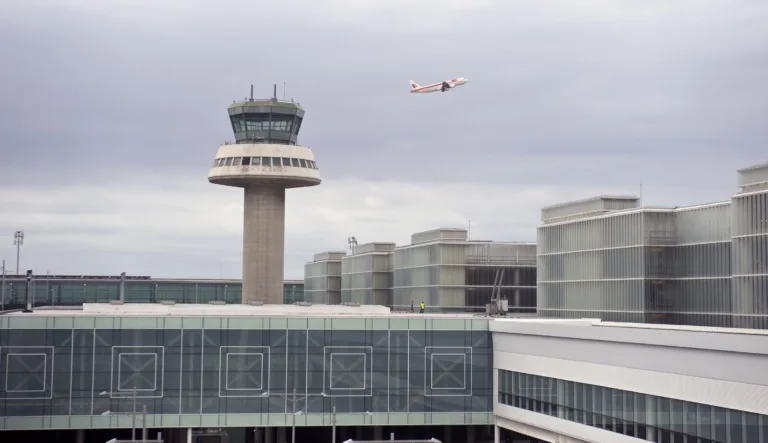
Archive photograph: ENAV’s Rome Fiumicino control tower in 2015. Carlo Dani / Wikimedia Commons — CC BY-SA 4.0. This image does not show the 16 October 2026 disruption.
Italy’s air traffic control capacity was fully restored around 15:25 local time on Friday 16 October, after a nationwide ENAV data-network failure temporarily halved the number of aircraft controllers could manage. Flights continued under restrictions throughout the morning, with delays and cancellations affecting Rome, Milan and Bergamo. Restoration of capacity does not erase the disruption already built into airline schedules.
A flight can be ready to leave, its crew on board and the runway available, yet remain at the gate because the airspace ahead has no spare capacity. That distinction mattered during Friday’s disruption. Italian airspace did not close outright: the problem temporarily limited how many aircraft the air traffic management system could safely accommodate while a critical data network was impaired.
In a statement on Friday, Italian air navigation service provider ENAV said anomalies had been detected overnight on the nationwide transmission network supporting air traffic control. Contingency arrangements kept operations running at normal capacity until 6 a.m. local time. As the morning traffic wave built and the fault persisted, flow restrictions became necessary. Associated Press and ANSA reported that ENAV put available traffic-handling capacity at approximately half its normal level during the morning.
That temporary capacity figure should not be mistaken for a cancellation rate. Flow management reduces the number of aircraft entering congested sectors at any one time, often by assigning departure slots or spacing movements further apart. It protects the safety margin, but aircraft and crews then arrive later at their next assignments. In a tightly connected European network, the knock-on effects may outlast the original technical fault.
Why flights beyond Italy may also be affected
Early reports from Rome Fiumicino described four cancelled departures and roughly 20 delayed services; delays were also visible at Milan Malpensa, Linate and Bergamo. Those were early-morning snapshots rather than final totals. By around midday, aviation analytics firm Cirium had recorded 192 cancellations across Italian airports, according to Reuters, with just 31% of departures operating on time. These are nationwide figures, not a count attributable solely to the network fault, which coincided with separate industrial action, including an easyJet flight-crew strike. Passengers flying into Italy, leaving it or connecting onward may still face changes as airlines reposition aircraft and crews.
For international travellers, the relevant question is not simply whether a departure is marked “on time” now. A late inbound aircraft can disrupt a later journey from another European airport. Airlines may protect long-haul departures and key connections where possible, but even carefully managed schedules have limited room to absorb a nationwide capacity shock.
ENAV says investigators traced the anomalies to the data-transmission network and ruled out malicious activity. Using a secondary satellite network, the provider gradually recovered operational capacity. Reuters and Associated Press report that ENAV restored 100% of capacity at approximately 15:25 Italian time (CEST, UTC+2). The recovery ended the temporary system-wide capacity restriction, but disrupted aircraft rotations, crew assignments and connections can take longer to return to schedule. Investigations into the original technical cause continue.
Travellers should check their flight directly with the operating airline before heading to the airport, monitor onward connections and retain any rebooking notices. Friday’s network failure is separate from the industrial action scheduled elsewhere in Italian aviation, so not every disruption should be attributed to the same cause.
Updated after 15:25 Italian time on 16 October 2026. Sources: ENAV, ANSA and Associated Press.