
Jet fuel shortages in Italy force flight to make refuelling stop
Fuel shortages at southern Italian airports forced a Crotone–Milan Bergamo service to make a refuelling stop at Pescara.
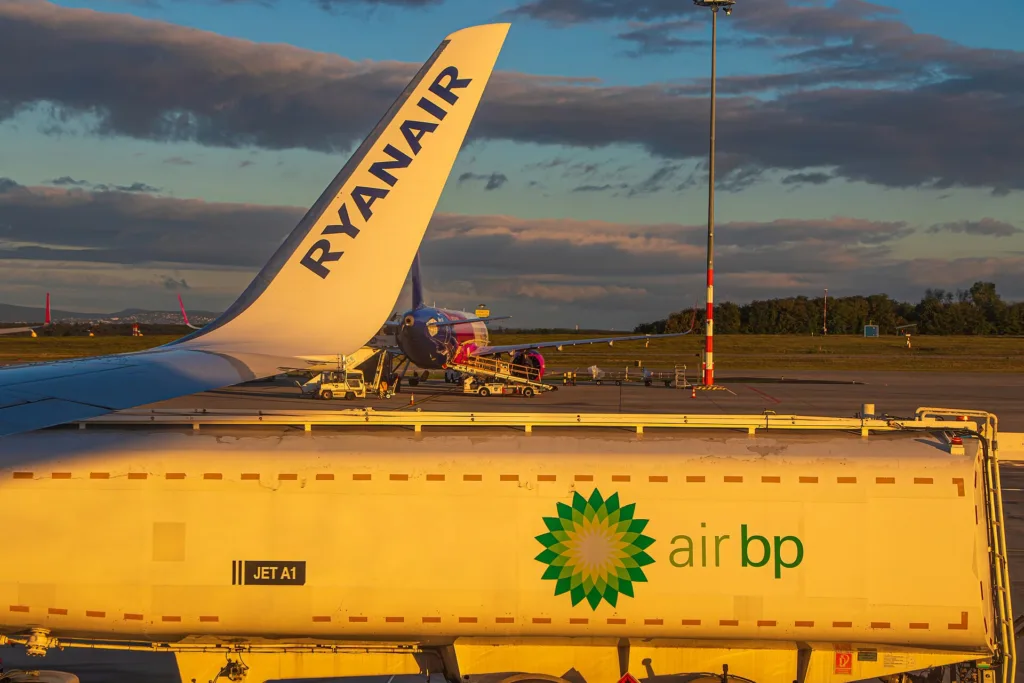
A flight from Crotone in southern Italy had to stop at Pescara to refuel before continuing to Milan Bergamo, a tangible sign of how disrupted jet fuel deliveries are affecting airport operations. The additional stop was reported on Thursday 22 October 2026 by AeroportiCalabria. The report attributes the extra stop to fuel supply problems at Crotone; it does not describe any aircraft technical fault.
The flight was operated by Ryanair on Wednesday 21 October. According to the Calabrian outlet, aircraft EI-EVP left Crotone at 20:10 local time. No confirmed final arrival time or measured delay was provided. The reason a domestic service needed a separate fuel stop lies in the disruption to airport deliveries.
Crotone and Reggio Calabria hit by fuel unavailability
Protests by road hauliers and farmers have disrupted the truck deliveries on which airports depend for fuel. On 21 October, the Italian news agency ANSA confirmed fuel shortages affecting both Crotone and Reggio Calabria, citing operational notices to airmen, or NOTAMs.
The operational notices show how serious the local constraints had become. At Crotone, NOTAM B6593/26 reported Jet A-1 unavailable from 22:00 UTC on 20 October until 22:00 UTC on 23 October. At Reggio Calabria, NOTAM B6592/26 listed both Jet A-1 and Avgas 100LL as unavailable until an estimated 22:00 UTC on 24 October. These published validity windows do not establish that the supply situation remained unchanged throughout. AeroportiCalabria reproduces their text.
Such notices change flight planning. Airlines can load additional fuel at an earlier airport rather than rely on supplies at the affected destination, subject to aircraft weight, performance and mandatory reserve requirements. Where that is not practicable, a separate technical stop may be required.
A patchwork of restrictions, not a nationwide shutdown
The disruption is uneven rather than nationwide. Within Calabria itself, flights at Lamezia Terme were reported to be operating normally on 21 October. Elsewhere in southern Italy, precautionary notices for Bari and Brindisi warned of possible refuelling limitations. Those warnings did not establish that either airport had completely run out of fuel.
SACAL, operator of the Calabrian airports, said on 21 October that arrangements were in place to keep scheduled flights operating while deliveries were expected to resume from 22 October. Keeping a service running, however, does not always mean it can follow its original itinerary.
For airlines, fuel constraints can force a reassessment of uplift at previous stations and of aircraft rotations. Loading more fuel adds weight, while adding a stop can extend the journey and complicate connections. Those are potential operational consequences, not evidence of a measured wave of cancellations across Italy.
Passengers using affected airports should check their flight status with the airline before travelling. More broadly, the episode exposes an often overlooked dependency: even when an aircraft and crew are ready, air services rely on road-based supply chains. Until regular deliveries are restored, carriers may have to adjust fuel loads and rotations to conditions at individual airports.
Sources: AeroportiCalabria, 22 October 2026; ANSA, 21 October; NOTAM texts and SACAL statement; BariViva, 22 October.
Read next

JOIN THE CONVERSATION
Let’s discuss this story.
A question, a clarification or a different perspective? Share it with us.