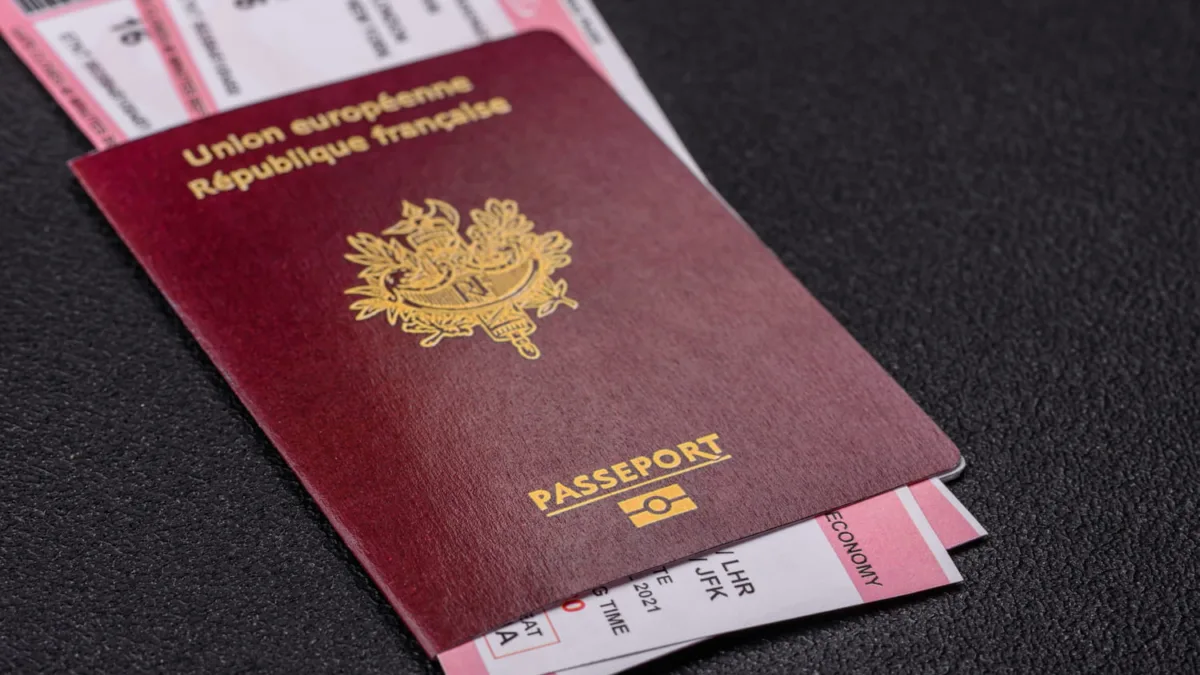
Flying from mainland France to Guadeloupe, Martinique, French Guiana, Réunion or Mayotte is not quite the same as taking a domestic Paris–Nice flight. These territories are French, but French overseas territories are outside the Schengen Area. Some are part of the European Union as outermost regions; others have different legal status. For travellers, that creates frequent confusion over identity cards, passports, visas and transit documents.
French overseas territory does not mean Schengen
Schengen applies to metropolitan France, not to the French overseas territories. That does not mean a French citizen always needs a passport to travel there.
On many nonstop mainland–overseas routes, a valid French national identity card is sufficient for a French national. But the distinction matters greatly for foreign travellers: a standard Schengen visa does not automatically grant entry to every French overseas territory.
What should a French national carry?
For a direct flight from mainland France to Guadeloupe, Martinique, French Guiana, Réunion or Mayotte, a valid physical French identity card or passport is the practical baseline.
For Saint-Martin, the airport matters. Grand Case (SFG) is on the French side; Princess Juliana (SXM) is in Dutch Sint Maarten and different entry rules apply.
For French Polynesia, a passport is effectively essential on the usual routes from Paris because services commonly transit the United States, where US entry or transit requirements apply.
For New Caledonia, Wallis and Futuna and other more distant territories, the full itinerary matters because journeys frequently include a foreign transit point.
Do not use a driving licence as your backup plan
A French driving licence may be accepted as identity evidence on some strictly domestic metropolitan flights, but it should not be relied upon for mainland–overseas travel.
Air France, Air Caraïbes and Corsair distinguish between metropolitan domestic flying and overseas travel. The safe rule is simple: carry a valid national identity card or passport.
Carte Vitale, family record book and phone photos are not travel documents
A Carte Vitale may help establish identity in some French administrative procedures, but it is not a travel document.
The family record book is not a substitute for the passenger’s own identity document either. A photocopy or a phone photo of a passport or identity card also does not have the same legal value as the original physical document.
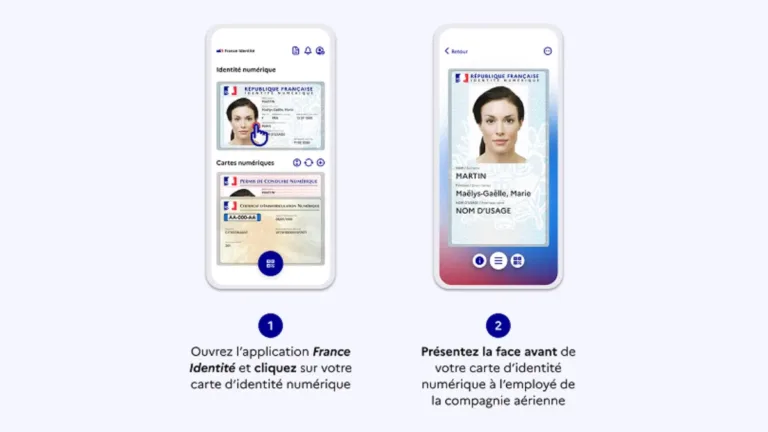
France Identité is useful, but keep the physical document
Digital identity is progressing in France, but airline identity verification and border crossing are not the same thing.
For overseas travel, keep your physical identity card or passport with you. Border-police checks may apply and an operational disruption can change your routing.
Why a passport can still be useful when it is not legally required
A French national can normally travel on a direct Paris–Pointe-à-Pitre, Paris–Fort-de-France, Paris–Cayenne or Paris–Saint-Denis flight with a valid national identity card.
A passport is nevertheless a useful precaution on long-haul overseas travel. Diversions, medical incidents, weather or technical problems can force an unexpected landing or rerouting through a foreign country.
A diversion does not automatically make a passport legally mandatory on the original nonstop flight, but having one can make an unexpected hotel stay or foreign rerouting much easier to manage.
French Polynesia: France via the United States
This is the clearest example of why travellers must examine the whole itinerary, not only the destination.
Paris–Papeete services operated by airlines such as French bee, Air France or Air Tahiti Nui commonly transit the United States. The US does not offer a simple “stay airside with no formalities” transit regime for these passengers.
A French traveller therefore needs a passport meeting US requirements and, depending on the traveller’s situation, ESTA or the appropriate visa. A French identity card alone is not enough for Paris–Tahiti via the United States.
Saint-Martin: two airports, two legal contexts
Saint-Martin is divided between the French side and Dutch Sint Maarten.
If you arrive at Grand Case (SFG) on the French side, a French or EU traveller can generally use an identity card or passport.
If your ticket takes you to Princess Juliana (SXM), the airport is on the Dutch side. Airlines such as Air Caraïbes require a passport for that routing, and Sint Maarten’s ED Card formalities may also apply.
Always check the airport code on the ticket, not just the destination name “Saint-Martin”.
French Guiana: the extra document many people forget
For a French national on a direct mainland–Cayenne flight, a national identity card can be sufficient.
But French Guiana has another important requirement: yellow-fever vaccination. Airlines and official authorities remind travellers that proof may be required, subject to the exemptions defined by the applicable rules.
Children need their own identity documents
A baby or child cannot travel solely on the basis of a family record book. Every minor needs the identity document required for the itinerary: identity card or passport.
For a direct mainland–French overseas route, an authorisation to leave French territory is not required solely because the destination is overseas France. But Service-Public notes that a minor travelling to a French overseas department may need an authorisation to leave the territory if the itinerary includes a foreign stop.
Foreign travellers: a Schengen visa may not be enough
This is one of the least understood rules. Schengen rules apply to metropolitan France, not automatically to every overseas territory.
Depending on nationality and destination, a traveller may need a specific overseas visa or an appropriate extension. Holders of some French residence permits or certain nationalities may benefit from exemptions, but this must be checked individually.
What the main airlines say
Air France: for mainland–overseas travel, a valid national identity card can be sufficient for a French national on eligible direct routes; a passport remains useful and may be required by the itinerary.
Corsair: identity card or passport for direct travel to destinations such as Guadeloupe, Martinique and Réunion; passport and transit-country documentation for other itineraries. Driving licence and family record book are not substitutes.
Air Caraïbes: recommends a passport and reminds passengers to satisfy the formalities of departure, destination and transit countries. Identity card is accepted on eligible French-side routes; passport is required for SXM itineraries.
French bee: identity card can be accepted for Réunion for French nationals, but Polynesia via the United States requires passport and US entry/transit documentation.
Air Austral: identity card or passport for eligible travel to Réunion and Mayotte, while reminding passengers that they remain responsible for formalities.
The simplest rule
For a French national on a direct mainland–Guadeloupe, Martinique, French Guiana, Réunion or Mayotte flight, carry at least your valid physical national identity card.
If you have a valid passport, taking it remains the most robust option for long-haul overseas travel. It covers more scenarios and becomes essential when a scheduled stop or rerouting passes through a foreign country.
Always verify the complete itinerary, transit countries, airport code, nationality rules and airline requirements shortly before departure.
Main sources
French Ministry of the Interior; France Diplomatie; Service-Public; Air France; Corsair; Air Caraïbes; French bee; Air Austral.

Leave a Reply