After a century of launches, mergers and bankruptcies, the French airline landscape has become much more concentrated. In 2026, France no longer has a large number of generalist airlines competing across every market. Instead, one dominant group coexists with long-haul specialists, overseas carriers and highly focused niche operators.
This fourth and final part of AeroSillage’s historical series looks at the French airlines still flying today. What they share is not size or business model, but the fact that each has found a sufficiently clear strategic role to survive.
1933–present: Air France: the backbone of the French flag
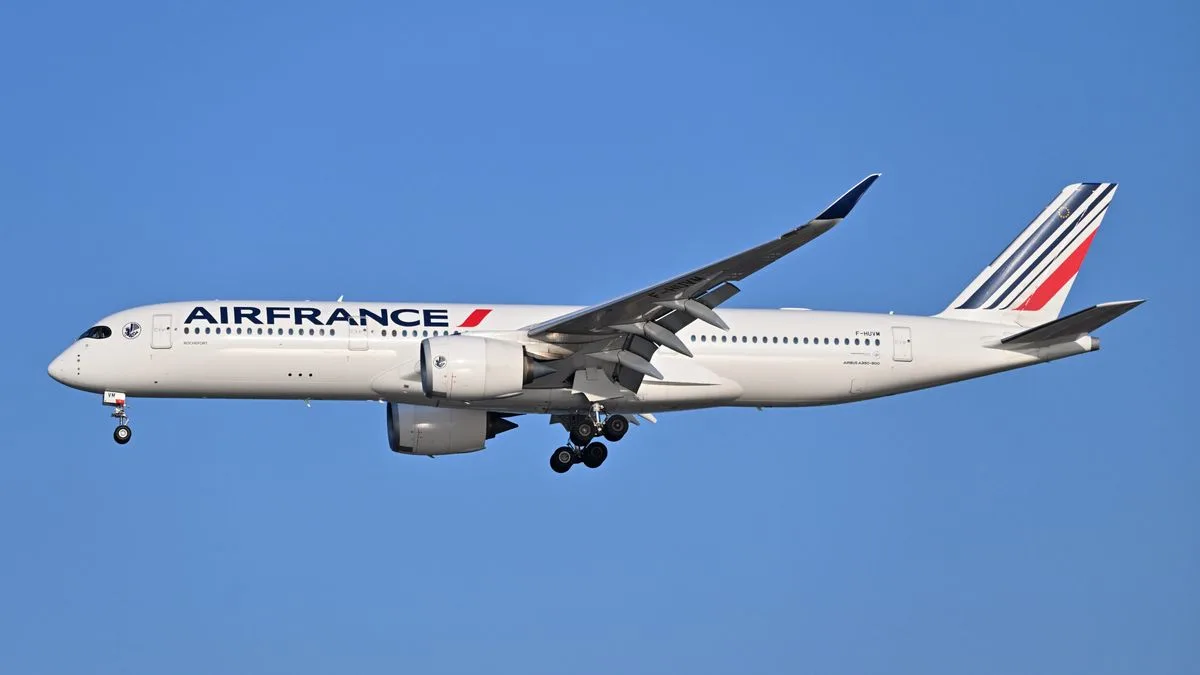
Air France remains by far the country’s largest airline. In 2026 it is concentrating its Paris system increasingly around Paris-CDG, where it focuses long-haul flying, connections and most domestic services from Paris.
For summer 2026, the airline announced nearly 170 destinations in 73 countries and up to 630 daily short- and medium-haul flights. Its model has also changed: Air France no longer tries to do everything itself.
Transavia has become the group’s reference operator at Orly, while Air France reinforces the CDG hub, premium positioning and long-haul fleet around the Airbus A350 and modernised Boeing 777s.
Position: historic flag carrier, core of Air France-KLM and France’s main international network airline.
2007–present: Transavia France: Orly’s new powerhouse
Long seen mainly as Air France’s leisure subsidiary, Transavia France has become central to the group’s Paris strategy.
Since March 2026 it has operated routes such as Toulouse, Nice and Marseille from Orly while Air France concentrates more heavily on CDG.
For summer 2026, Transavia France announced 109 destinations in 33 countries across 230 routes. Its fleet is also undergoing a major transition, with Airbus A320neo aircraft progressively replacing Boeing 737-800s.
Position: Air France-KLM low-cost subsidiary and now the group’s reference operator at Paris-Orly.
1981–present: Corsair: the long-haul specialist that survived repeated crises
Founded in 1981 as Corse Air International and later renamed Corsair, the airline moved through several ownership and strategic changes.
It once symbolised French charter flying before refocusing on scheduled long-haul. Its survival has relied on a clear specialisation: overseas France, the Indian Ocean and selected African markets.
Fleet renewal around the Airbus A330neo has been a major part of its recent transformation, improving efficiency and simplifying its long-haul product.
Position: independent long-haul carrier focused on overseas territories and selected African destinations.
2000–present: Air Caraïbes: from Caribbean regional airline to transatlantic carrier
Air Caraïbes grew from the consolidation of several regional Caribbean operators before expanding into long-haul flying between Paris-Orly, the French Caribbean and French Guiana while retaining a regional network.
Its fleet combines Airbus A350s, A330s and ATR 72-600s. Air Caraïbes was also among the first French airlines to make the A350 a central element of its transatlantic strategy.
Position: Groupe Dubreuil airline focused on the Caribbean, French Guiana and regional island connectivity.
2016–present: French bee: long-haul low-cost
French bee represents one of the newest French models: long-haul flying built around a homogeneous all-Airbus A350 fleet, dense cabins and highly unbundled fares.
Its network has expanded to Réunion, Tahiti, the United States and Canada. The homogeneous fleet and high-density configuration give the airline a cost structure very different from traditional network carriers.
Position: Air Caraïbes’ sister airline within Groupe Dubreuil, focused on “smart-cost” long-haul flying.
1974–present: Air Austral: connecting Réunion with the world
Air Austral gradually built a network around Réunion, mainland France, the Indian Ocean and regional markets.
Its trajectory is closely tied to the mobility needs of a remote island territory. The airline operates a mixed fleet suited to both regional and long-haul missions, with the Boeing 787-8 illustrating its ability to serve thinner long-haul markets with a smaller widebody.
Position: strategically important Réunion-based carrier for Indian Ocean connectivity.
1989–present: Air Corsica: an airline built around public-service connectivity
Founded in 1989 as Compagnie Corse Méditerranée, Air Corsica plays a role unlike most other airlines in this series.
A large part of its activity is linked to territorial continuity between Corsica and mainland France. Its network combines public-service routes, services to major French cities and seasonal international flying.
Position: Corsican regional airline structurally important to mobility between the island and mainland France.
2014–present: La Compagnie: the all-business-class bet
La Compagnie is one of the most unusual French airline models. Since 2014 it has focused on transatlantic flights with an all-business-class cabin.
Since 2019 it has operated the Airbus A321neo, using a narrowbody to achieve a cost structure very different from a conventional widebody premium operation. Another aircraft was expected to join the fleet by the end of 2026.
Position: premium niche carrier focused on all-business-class transatlantic flying with an all-A321neo fleet.
Eight airlines, eight survival strategies
The French market in 2026 is less crowded than it was in the 1990s, but it is also more specialised.
Air France dominates generalist and global flying. Transavia has become central to leisure and point-to-point traffic. Corsair, Air Caraïbes, French bee and Air Austral focus on clearly identified long-haul or overseas markets. Air Corsica fulfils a territorial mission, while La Compagnie occupies a deliberately narrow premium niche.
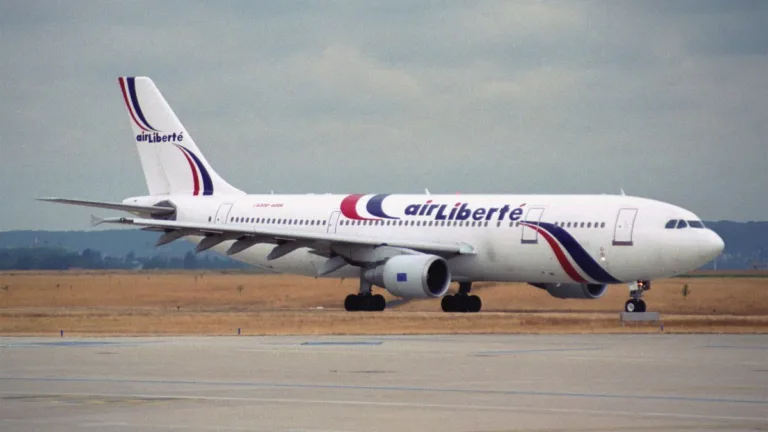
What has largely disappeared is the model of a large independent French airline trying to challenge Air France on every front at once. AOM, Air Liberté and Air Lib tried that route. The survivors generally chose the opposite strategy: do fewer things, but occupy a clearly identifiable market.
A century of French commercial aviation
From Compagnie Générale Transaérienne in 1909 to today’s A350s, A330neos and A321neos, French commercial aviation has been a succession of launches, mergers, ambitions, failures and reinventions.
France never stopped having airlines. But it moved from a highly fragmented landscape to a far more concentrated one in which each surviving carrier now needs either clear specialisation, critical scale or a territorial mission to justify its place.
Main sources
Air France summer 2026 programme; Transavia France network information; Air Caraïbes and French bee fleet information; Corsair, Air Austral, Air Corsica and La Compagnie corporate material.
Earlier in the series: French airlines (3/4): Minerve, AOM and Air Liberté.
Leave a Reply