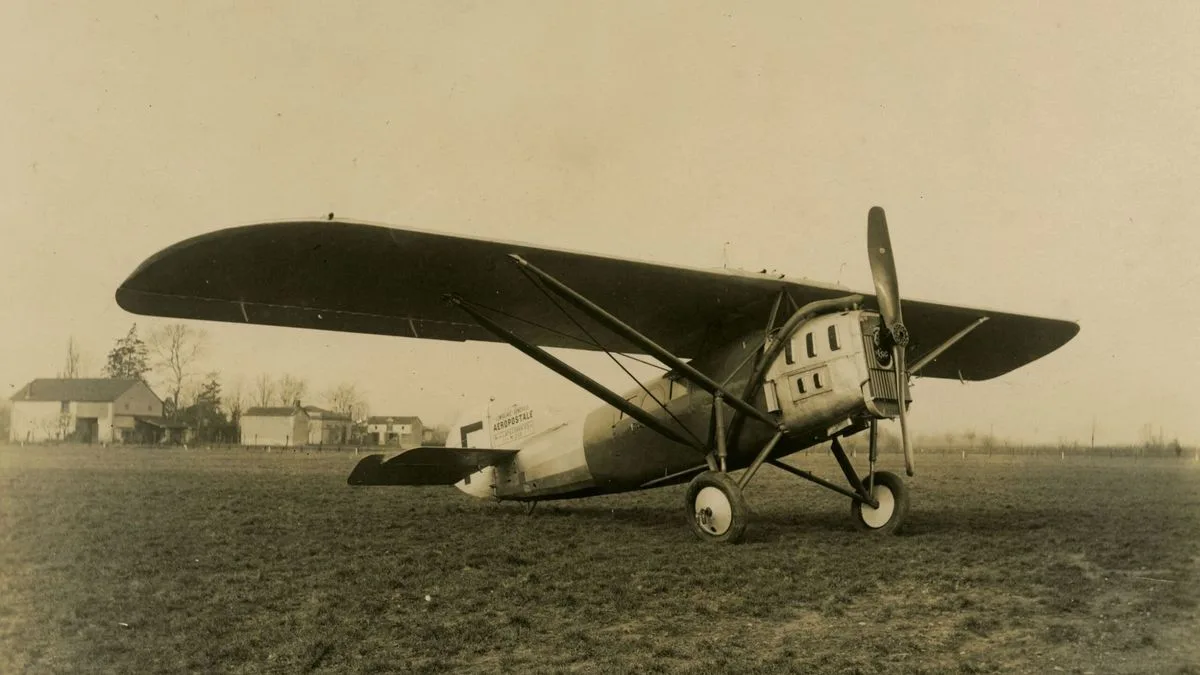
Before Air France, French commercial aviation was already being shaped by bold, fragile and sometimes short-lived companies that helped create modern air transport. In the early 20th century, flying was still an adventure: aircraft were small, infrastructure basic, weather a constant threat and networks still experimental. Yet within less than 25 years, France built carriers linking Europe, Africa, the Middle East, Asia and South America.
This first part of AeroSillage’s chronological series looks back at those pioneers and what became of them. Some disappeared through mergers, while others passed their fleets, routes, staff or even visual identity to the airline created in 1933: Air France.
1909: Compagnie Générale Transaérienne: the earliest pioneer
Air France traces its historical roots back to 1909, the year Compagnie Générale Transaérienne was founded. It is generally regarded as France’s first commercial aviation company. Its operations were still far removed from a modern scheduled network, with airships and seaplanes used for sightseeing and links to places including Reims, Nice, Brussels and Lucerne.
The First World War abruptly interrupted this first development phase, but the company marked a turning point: flying was beginning to become an organised commercial activity rather than only a technical or sporting demonstration.
What became of it: operations ended in the early 1920s. It was not directly part of the 1933 Air France merger, but it belonged to the industrial and commercial foundation from which later French airlines emerged.
1918–1927: Latécoère Lines: mail opens the route
After the First World War, Pierre-Georges Latécoère envisioned a postal network linking France with North Africa and later West Africa. Services departed Toulouse for Spain and Morocco before gradually extending towards Dakar.
The principle was simple: mail traffic could establish and finance routes before large-scale passenger travel developed. Operations were difficult, aircraft fragile and airfields basic, but regularity became central to the culture of what would become known as “La Ligne”.
1927–1933: Aéropostale: a French aviation legend
In 1927, the Latécoère network became Compagnie Générale Aéropostale after its acquisition by Marcel Bouilloux-Lafont. Its ambition expanded dramatically: linking France with South America and eventually Chile.
Didier Daurat imposed strict operational discipline. Jean Mermoz, Henri Guillaumet, Antoine de Saint-Exupéry, Marcel Reine and other pilots became symbols of an aviation adventure that went far beyond the company itself. South Atlantic crossings, flights across the Andes and operations over the Sahara entered French aviation mythology.
The company remained financially vulnerable. After the global economic crisis, state subsidies were halted in 1931 and the company entered liquidation.
What became of it: Aéropostale’s assets were incorporated into the process that created Air France in 1933. The company disappeared as a legal entity, but its human and symbolic legacy remained central to French aviation history.
1919–1933: Farman Lines / SGTA: building the European network
Henri, Maurice and Dick Farman were among the earliest entrepreneurs in commercial air transport. On February 8, 1919, a Farman F.60 Goliath flew between Toussus-le-Noble and Kenley near Croydon. A weekly Paris–Brussels service followed shortly afterwards.
The Farman air routes later became the Société Générale des Transports Aériens (SGTA), with services extending to London, Brussels, Amsterdam, Cologne, Frankfurt, Berlin and Copenhagen.
What became of it: SGTA was one of the principal companies merged into Air France in 1933.
1920–1933: Franco-Roumaine then CIDNA: the eastern network
Founded in 1920, the Compagnie Franco-Roumaine de Navigation Aérienne built routes into Central and Eastern Europe, including Prague, Warsaw, Bucharest and Constantinople.
In 1925 it became the Compagnie Internationale de Navigation Aérienne (CIDNA), reflecting a wider ambition to operate as a structured European carrier.
What became of it: CIDNA was absorbed into Air France in 1933, with its eastern routes becoming part of the new national carrier’s network.
1923–1933: Air Union: Paris, London and night flying
Air Union was created in 1923 through the merger of Compagnie des Messageries Aériennes and Compagnie des Grands Express Aériens. It became particularly associated with Paris–London services and was one of France’s most visible interwar airlines.
The company also contributed to the development of commercial night flying, a technically demanding undertaking at the time.
What became of it: Air Union joined the 1933 merger, bringing part of its fleet and European network into Air France.
1929–1933: Air Orient: Marseille, Saigon and the winged seahorse
Air Orient emerged in 1929 from companies already active towards Asia. Its name reflected its objective: regular routes to the Levant, the Middle East and Indochina.
The airline operated the Marseille–Saigon route, with Maurice Noguès playing a central role in network development.
Air Orient also contributed a symbol that survived for decades: the winged seahorse, later adopted by Air France.
What became of it: Air Orient ceased to exist independently in 1933 and contributed its eastern network, staff and emblem to Air France.
1933: The creation of Air France
By the early 1930s, French air transport remained divided among several carriers with complementary networks but limited resources. Under Air Minister Pierre Cot, the state pushed for consolidation.
On August 30, 1933, Air Orient, Air Union, Farman/SGTA and CIDNA were grouped into a new company, later joined by Aéropostale assets. Air France was officially inaugurated on October 7, 1933 at Le Bourget.
The new airline inherited diverse route systems, mixed fleets and several corporate cultures that now had to be unified.
Key predecessors and their legacy
- Compagnie Générale Transaérienne: early organised commercial aviation.
- Latécoère / Aéropostale: Africa, South Atlantic and South America.
- Farman / SGTA: European network.
- Franco-Roumaine / CIDNA: Central and Eastern Europe.
- Air Union: Paris–London and night operations.
- Air Orient: Middle East, Indochina and the winged seahorse emblem.
A story that was only beginning
By 1933, France finally had a national airline capable of combining the routes opened by its pioneers. After the Second World War, other major names would emerge or expand, including TAI, UAT, UTA and Air Inter.
Those airlines form the subject of the second part of this series.
Main sources
Air France historical archives; Bibliothèque nationale de France material on Franco-Roumaine/CIDNA; Wikimedia Commons historical archives for period imagery.
Continue the series: French airlines (2/4): Air France, UTA and Air Inter.

Leave a Reply