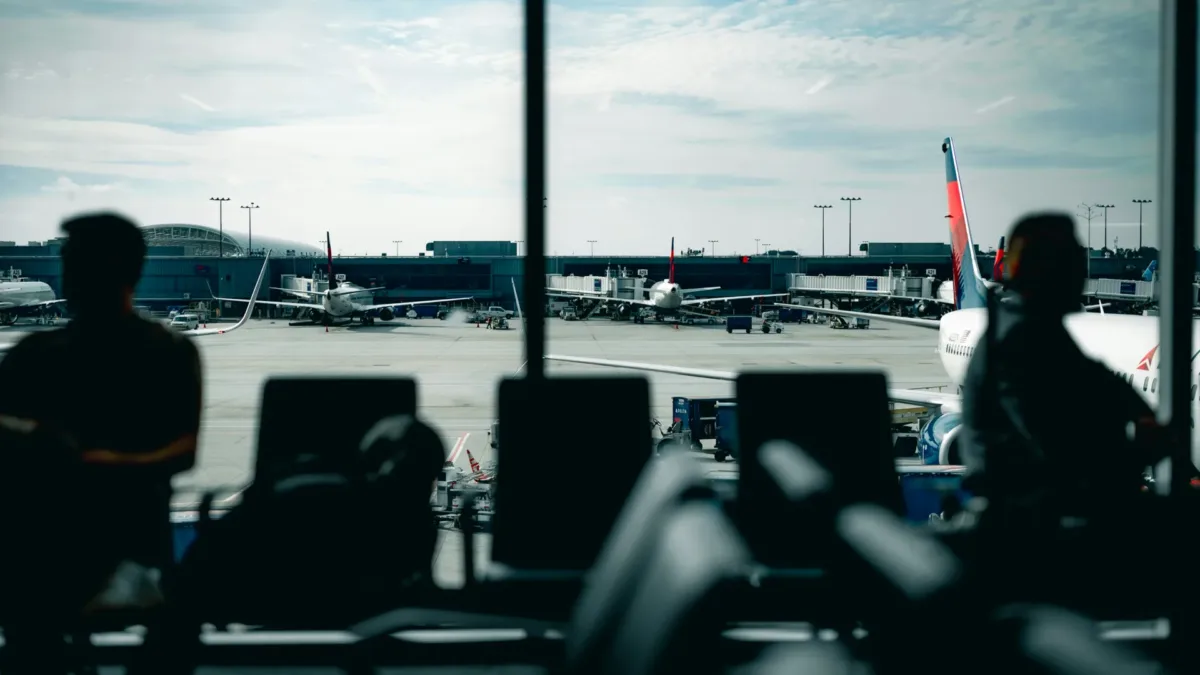
Overbooking is not a random airline mistake. It is a deliberate capacity-management practice based on a simple fact: some booked passengers cancel late or do not show up. When more passengers appear than expected, the statistical model becomes a very real problem at the gate: and passenger rights then depend heavily on the country and on whether the traveller volunteers or is denied boarding involuntarily.
Airlines usually seek volunteers first
In Europe, Canada and the United States, airlines generally try to find passengers willing to take a later flight before forcing anyone to stay behind.
That distinction matters. A volunteer accepts a negotiated deal offered by the airline. An involuntary denial of boarding can trigger specific statutory compensation and care obligations.
Who actually gets selected?
There is no universal rule saying the last passenger to check in is always the one left behind.
In the United States, the Department of Transportation allows airlines to establish boarding priorities using factors such as check-in time, fare paid or frequent-flyer status, provided the rules are not discriminatory.
Canadian rules also require priority systems and provide specific protection for categories such as unaccompanied minors, passengers with disabilities travelling with support, families and some travellers previously denied boarding on the same ticket.
In Europe, passengers with reduced mobility, their companions and unaccompanied children receive specific protection.
A cheap ticket does not automatically make you first to go
Fare paid may be one factor for some airlines, especially in the US, but a promotional ticket is not automatically selected first everywhere.
Likewise, having no loyalty status does not by itself mean you will be bumped. The criteria depend on the airline, local law and operational priorities.
Does checking in early help?
Yes, but it is not a guarantee. Checking in and reaching the gate on time protects you from being treated as a no-show or late passenger.
In the US, check-in time can also be part of the boarding-priority system. In Europe, punctuality is essential to preserve denied-boarding protections.
European Union: €250, €400 or €600
For involuntary denied boarding covered by EU Regulation 261/2004, compensation is generally:
- €250 for flights up to 1,500 km;
- €400 for flights between 1,500 and 3,500 km;
- €400 for longer flights entirely within the EU;
- €600 for longer flights between the EU and a third country.
Those amounts can be reduced by half when rerouting gets the passenger to the destination with only a limited delay.
Compensation is separate from the right to rerouting or reimbursement, and airlines may also owe meals, refreshments, hotel accommodation and ground transport where necessary.
Canada: compensation can reach CAD 2,400
Canada uses a different structure. When denied boarding is within the airline’s control and is not required for safety, compensation depends on the arrival delay:
- CAD 900 for less than six hours;
- CAD 1,800 for six to nine hours;
- CAD 2,400 for nine hours or more.
The payment should be made as quickly as possible and no later than 48 hours after the denied boarding.
United States: fare and delay determine the amount
US compensation for involuntary denied boarding is linked to the one-way fare and the arrival delay.
If the airline gets the passenger to the destination less than one hour late, no statutory compensation is normally due. For longer delays, DOT rules generally provide 200% of the one-way fare up to $1,075 or 400% up to $2,150, depending on delay length and whether the itinerary is domestic or international.
Another important US rule: once a passenger has been accepted and boarded, the airline generally cannot remove that passenger purely because the flight was oversold, except for safety, security or health reasons.
Should you accept a volunteer offer?
Not before checking the details. Ask:
- the exact departure time of the replacement flight;
- whether onward connections remain protected;
- whether compensation is cash or a voucher;
- the voucher’s expiry date and restrictions;
- whether meals, hotel and transfers are covered;
- what happens to checked baggage.
A large voucher can be much less valuable if it expires quickly or comes with restrictive conditions.
Connections can be the real risk
The cost of overbooking is not limited to the delayed flight. Missing a connection can also mean losing a hotel night, an event or an onward journey.
On a single ticket, the airline is generally responsible for rerouting to the contracted final destination. On separate tickets, the second carrier may simply treat the passenger as a no-show.
Five practical ways to reduce unpleasant surprises
1. Respect all check-in and gate deadlines.
2. Check in as early as practical. It is not a guarantee, but it can matter under some boarding-priority systems.
3. Keep proof of your booking and presence. Boarding passes, app screenshots and airline messages can help.
4. Do not accept a voucher without reading the conditions.
5. Ask for written confirmation if boarding is denied.
Why airlines overbook in the first place
Overbooking is profitable because historical no-show rates are usually predictable. Revenue-management systems estimate how many extra bookings can be accepted without creating a boarding problem.
When the forecast is right, the aircraft departs fuller. When it is wrong, the airline has to resolve the mismatch at the gate.
The practice is not illegal by itself, but it does not give airlines the right to leave passengers without assistance or compensation where regulations apply.
The key takeaway
The cheapest passenger is not automatically the one left behind. Selection rules vary by airline and country. In Europe, volunteer-seeking and statutory protections are central. Canada explicitly protects certain categories. In the US, factors such as check-in time, fare and loyalty status can be used.
The best protection is to respect deadlines, know which legal regime applies to your itinerary and never volunteer without understanding exactly what you are accepting.
Main sources
EU Regulation 261/2004; Service-Public.fr; Canadian Transportation Agency; US Department of Transportation; IATA material on overbooking.

Leave a Reply