
FAA Helicopter Tour Audit Probes Rule Gap After Six Deaths
The DOT inspector general opened an audit of FAA helicopter-tour oversight on November 3, 2026. It will examine a regulatory exception as questions persist after six deaths in the Hudson River.
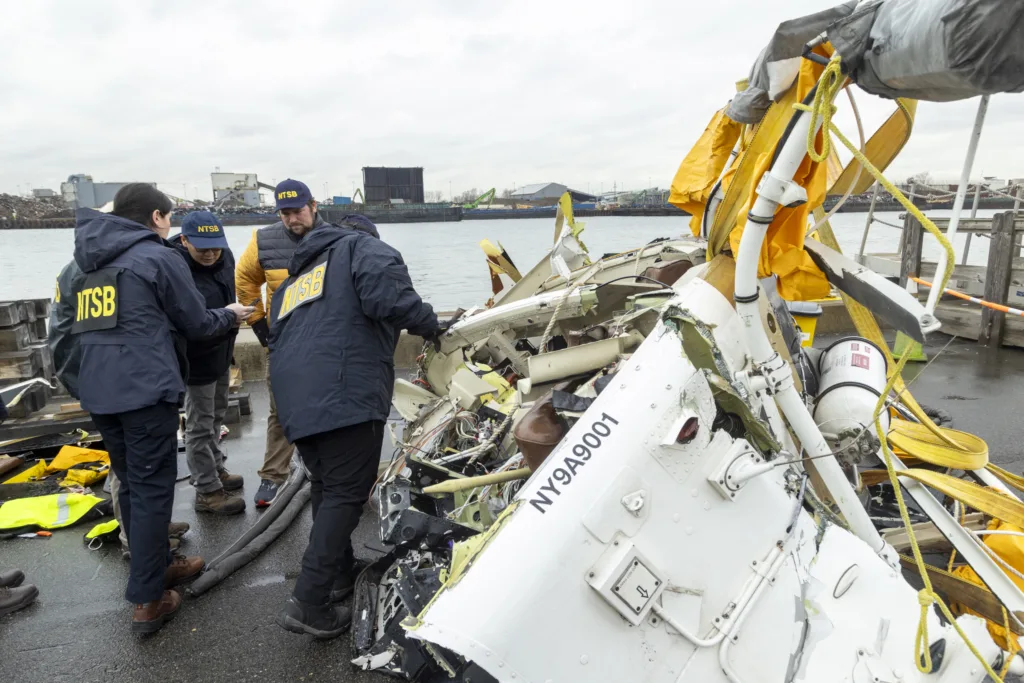
Federal auditors opened a nationwide review of FAA helicopter sightseeing-tour oversight on November 3, 2026. The U.S. Department of Transportation’s inspector general will investigate a rule exception that can place some paid tours under lighter safety oversight. The review follows a Hudson River helicopter crash that killed six people in April 2025.
In its official audit notice, the DOT inspector general identified project 27A3002A000, requested by seven U.S. lawmakers. Its central question is whether the Federal Aviation Administration adequately oversees sightseeing flights and knows which operators rely on exemptions. No operator has been found at fault by this newly opened audit.
FAA helicopter tour oversight faces a federal audit
The FAA’s local Flight Standards District Offices supervise commercial helicopter sightseeing operations. However, the inspector general says questions have persisted about how well existing rules protect passengers.
Auditors will assess how the FAA oversees air tours nationwide. They will also examine whether regulators know when businesses operate under the aerial-photography exception or other exemptions. That matters because different classifications can mean different safety requirements and levels of federal oversight.
For now, the watchdog has announced neither a completion date nor any findings. Its notice is an audit launch, not a new FAA rule or a nationwide order to ground tour helicopters.
Why the aerial-photography exception matters
The National Transportation Safety Board (NTSB) warned in 2019 that certain sightseeing flights used an exception intended for aerial photography. Those flights could operate under less demanding rules than other commercial air tours.
The exception can serve legitimate aerial-photography flights. Instead, investigators questioned whether operators were selling sightseeing experiences under a classification meant for a different purpose. As a result, passengers could face different oversight depending on how a flight was classified.
The NTSB urged the FAA to close that exception for the affected doors-off sightseeing operations. It also called for consistent national air-tour safety standards, including better management of operational risks.
The 2018 East River crash showed what was at stake
On March 11, 2018, an Airbus AS350 helicopter ditched in New York City’s East River during a doors-off sightseeing flight. Five passengers died, while the pilot escaped.
The NTSB concluded that a passenger’s safety-restraint tether caught the helicopter’s fuel-shutoff lever, cutting engine power. After the aircraft overturned in the water, the five passengers could not release their supplemental restraints. The agency linked the deaths to that failure and other shortcomings in the tour’s safety management.
That finding applies to the 2018 East River accident. It is not a finding about the separate 2025 Hudson River crash, nor does it establish the results of the new FAA oversight audit.
Six died in the 2025 Hudson River helicopter crash
The inspector general also cites the April 10, 2025, accident near Jersey City, New Jersey. A Bell 206L-4, registration N216MH, crashed into the Hudson River, killing its pilot and five passengers.
According to the NTSB’s investigation record, New York Helicopters operated the flight as a Part 91 air tour. The agency’s investigation, ERA25MA171, remains open. Investigators have not issued a final probable-cause determination in that record.
Meanwhile, the DOT audit will examine the broader regulatory system. The NTSB crash investigation and inspector general’s oversight review are separate proceedings with different objectives.
FAA committee found overlapping tour regulations
In January 2026, the FAA published a commercial air-tour committee report proposing changes to sightseeing-flight rules. The joint FAA-industry panel identified requirements spread across several regulations, including overlapping or conflicting provisions.
Those findings now form part of the inspector general’s case for examining FAA supervision. However, the committee produced recommendations, not binding rules. Its proposals did not by themselves change what operators must do.
Seven members of the House of Representatives requested the new audit, including Representatives Robert Menendez, Jerrold Nadler and Ed Case. The inspector general’s announcement does not estimate how many operators use the photography exception or set a deadline for a final report.
What changes for helicopter tour passengers now?
For now, the audit does not ban sightseeing flights, ground aircraft or establish new refund rights. Instead, it starts an independent examination of whether current federal oversight is effective.
Passengers considering a helicopter tour can ask operators three practical questions:
- Which FAA operating rules cover the flight, and is an exemption being used?
- If doors are removed, how do passenger restraints release in an emergency?
- What safety briefing explains evacuation and emergency landing procedures?
For operators, the immediate development is scrutiny rather than a compliance deadline. Any new requirements would need separate regulatory action. The inspector general must first establish what the FAA knows and how it supervises tour businesses.
That distinction also matters when reading other helicopter accident investigations. AeroSillage has covered the NTSB’s separate work on a fatal helicopter collision in Oregon and a Los Angeles news-helicopter crash. Neither accident is presented as connected to the Hudson River cases.
The next confirmed milestone will be the inspector general’s findings. Until then, the photography exception is a documented regulatory concern, not proof that every helicopter tour is operating outside the rules.
Read next

JOIN THE CONVERSATION
Let’s discuss this story.
A question, a clarification or a different perspective? Share it with us.