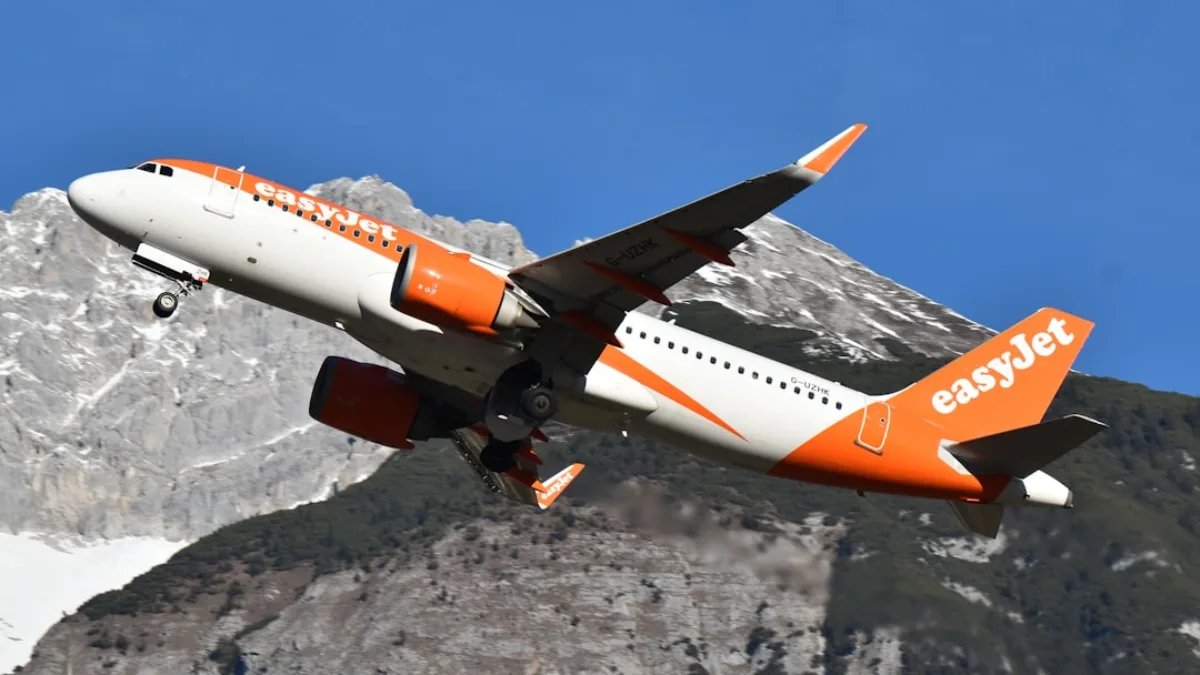
European aviation remains one of the world’s most fragmented large markets, but the balance is beginning to shift. easyJet’s agreed £5.7 billion sale to Apollo, Air France-KLM’s growing position around SAS, Lufthansa’s stake in ITA Airways and the contest for TAP all point toward a market in which a smaller number of groups could control more capacity, more hubs and more airport slots.
The question is no longer whether Europe will consolidate, but how quickly: and how far competition authorities will allow it to go.
easyJet, SAS, ITA and TAP follow four different consolidation paths
On August 6, easyJet accepted an Apollo offer valuing its equity at around £5.7 billion, subject to the required approvals.
Apollo has said it intends to keep the easyJet brand and support the current strategy: fleet renewal and capacity growth, more ancillary revenue, stronger customer loyalty and further expansion of easyJet holidays.
This is unusual because easyJet is not being absorbed by another airline group. A move into private ownership could nevertheless give management more flexibility to invest and reposition in a market where scale increasingly matters.
Lufthansa has taken 41% of ITA Airways. Air France-KLM has increased its influence over SAS. IAG remains a powerful multi-brand group built around British Airways, Iberia, Aer Lingus, Vueling and LEVEL.
These groups are not merely trying to make their existing hubs larger. They are buying positions in airlines that control national markets, scarce airport slots and complementary networks.
Portugal’s partial privatisation of TAP is one of the most consequential transactions still open.
Lisbon has been negotiating with Air France-KLM and Lufthansa after concluding that their initial offers were too close to separate easily. The government plans to sell 44.9% to a strategic investor, with another 5% reserved for employees.
TAP’s value lies in more than its brand. Lisbon is exceptionally well positioned for Brazil, North America and Lusophone Africa. A stake in TAP would materially strengthen either Air France-KLM or Lufthansa across the Atlantic.
Why Ryanair remains outside the consolidation logic
Consolidation does not mean the market will collapse into three traditional groups.
Ryanair remains a huge independent force with a cost structure that is difficult to replicate. Wizz Air also retains major positions in Central and Eastern Europe.
The “four giants” scenario often discussed by Michael O’Leary is therefore better understood as four or five major centres of power: Ryanair, IAG, Lufthansa Group, Air France-KLM and potentially a stronger easyJet under Apollo.
Why Europe is consolidating more slowly than the United States
US aviation underwent a major consolidation cycle between 2008 and 2013. Europe is structurally harder.
Traffic rights, foreign-ownership rules, national political interests, airport-slot scarcity and close scrutiny from Brussels make full mergers more difficult.
That is why European groups often rely on minority stakes, staged acquisitions and gradual integration rather than immediate full mergers.
Fuel, labour, maintenance, aircraft, financing and environmental compliance are all more expensive than they were a decade ago.
Geopolitical disruption in 2026 has added further pressure through volatile jet-fuel prices.
For years, rapid low-cost growth kept a lid on fares. If capacity grows more slowly while the number of truly independent operators falls, the balance of pricing power can gradually shift.
Fares, hubs and slots: what consolidation can change
Not automatically.
Ryanair, easyJet and Wizz Air still exert major competitive pressure, while European regulators can require slot divestments, route remedies or other concessions.
But on routes dominated by one or two groups, especially around constrained hubs, fewer independent alternatives can strengthen airline pricing power.
That is why consolidation matters to passengers as much as it matters to shareholders.
The battle is not only for airline brands. It is for the infrastructure positions those airlines control.
Lisbon matters through TAP. Rome-Fiumicino matters through ITA. Copenhagen matters through SAS. Heathrow and Madrid are core to IAG; Paris-CDG and Amsterdam-Schiphol to Air France-KLM; Frankfurt and Munich to Lufthansa.
At airports where expansion is physically or legally constrained, acquiring influence over an airline can be one of the few realistic ways to grow.
A slow but structural consolidation
Europe is unlikely to become the US market overnight. Regulatory barriers remain significant and several independent airlines still have enough scale to survive on their own.
But recent transactions show that consolidation is no longer theoretical.
TAP’s privatisation will be a major test. A win for Air France-KLM or Lufthansa would shift the balance between Europe’s largest groups.
At the same time, easyJet under Apollo will show whether private equity can create a stronger independent pole outside the three traditional network groups.
Three questions matter most:
How far can Air France-KLM and Lufthansa expand their portfolios?
What strategy will easyJet follow under Apollo?
How much consolidation will European regulators accept in exchange for route and slot concessions?
The answers will shape not only airline ownership, but frequencies, connections and pricing options available to travellers.
Main sources
Reuters Breakingviews; easyJet investor documentation; Reuters on Apollo/easyJet and TAP; European Commission decisions relating to Lufthansa and ITA Airways.
Leave a Reply