A 39-year-old woman was arrested on suspicion of assault after an altercation involving two passengers aboard an easyJet flight from Toulouse to London Gatwick on Wednesday 7 October 2026. Police met the aircraft after landing. According to the details attributed to Sussex Police in British coverage, the two women knew each other and both reported minor facial injuries. The investigation was continuing when those details were released.
Police called to easyJet’s Toulouse–Gatwick arrival
The incident involved flight U28394, also referred to as EZY8394 in the airline’s statement. The service connected Toulouse-Blagnac in southern France with London Gatwick. Flightradar24’s historical listing identifies the 7 October aircraft as Airbus A319 G-EZGO, a detail that matters because photographs of other easyJet aircraft must not be misrepresented as the incident jet.
The aviation incident website AIRLIVE reported that the flight crew requested police attendance ahead of arrival following a physical confrontation involving passengers. Its account also includes operational details about managing the aircraft’s doors and the handover to officers. Those additional particulars are attributed to AIRLIVE’s reporting, not treated here as independently verified police findings.
easyJet confirmed through a statement quoted in British local news coverage that the service was met by police at Gatwick because passengers had behaved disruptively. The carrier emphasised its cabin crews’ training to assess and respond promptly to situations that might affect the wellbeing of those on board. It said disruptive behaviour is not tolerated.
What Sussex Police said about the arrest
The police account reported by UKNIP says two women who knew one another were involved and each reported minor injuries to the face. One of them, aged 39, was arrested on suspicion of assault. At the time of that report, she remained in custody while enquiries continued.
Arrest is an investigative step, not proof of guilt. Neither a criminal charge nor a court finding was established in the publicly available account consulted for this article. There is also insufficient information to determine the complete sequence of events, whether any allegations are contested, or how the case might eventually be resolved.
An unverified concern should not become a headline allegation
An early AIRLIVE report also referred to concerns voiced by flight staff that a passenger might have been travelling under coercion. The subsequent police information quoted in the available reporting, however, does not confirm a coercion-related offence. That allegation is therefore not presented by AeroSillage as an established finding or as the basis for this article’s headline.
The difference matters: a report of an in-flight confrontation can establish why police were requested, but it cannot by itself substantiate additional allegations about passengers’ circumstances. Those questions, should they form part of any investigation, belong with the relevant authorities.
How disruptive-passenger incidents are handled
Cabin crews must make rapid judgements when conflict escalates in a confined space. Responses may include separating those involved, informing the pilots and requesting support from police at the destination. The captain remains responsible for the safe operation of the aircraft, while law enforcement officers decide whether further action is justified after landing.
In this case the available flight history records an arrival at Gatwick rather than a diversion to another airport. Police attendance on arrival must not be confused with an airborne emergency declaration or with evidence that flight safety systems failed. Still, confrontations can pose a genuine risk of injury and disruption, making early intervention by trained crew important.
For passengers, the broader lesson is that flight attendants may take reports of threats or assaults seriously even when the aircraft itself is operating normally. The handover to officers on the ground is a way of addressing alleged offences without turning cabin personnel into criminal investigators. Follow AeroSillage’s Safety and Regulation coverage for further reporting on passenger conduct and aviation operations.
What remains unresolved: the exact sequence of the incident, any charges arising from the arrest, and the outcome of the investigation. This report will be revised if verified official developments become available.
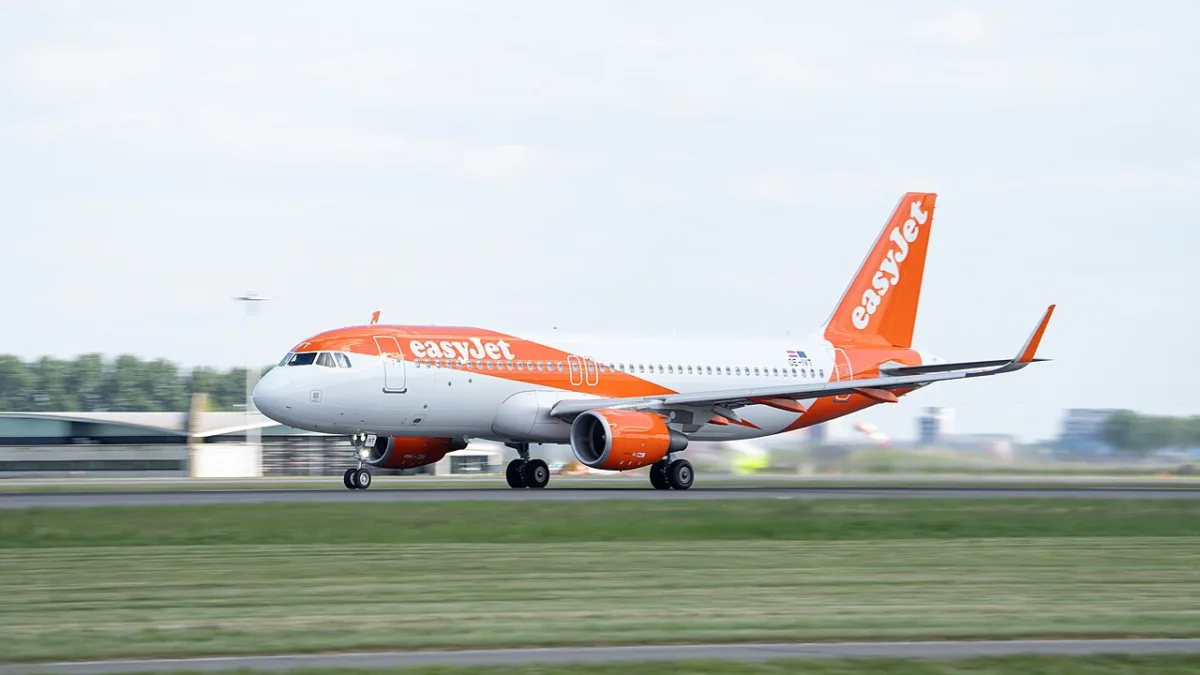
Illustrative image only: an easyJet Airbus A320, registration OE-IVT, photographed departing Amsterdam Schiphol on 8 May 2025. It is not the A319 G-EZGO used on flight U28394. Photograph by RubenVanKuik / Wikimedia Commons, licensed under CC BY 4.0. Image resized for AeroSillage.

Leave a Reply