
Chicago O’Hare Sets Summer Record as Taxi Times Draw Scrutiny
Chicago O'Hare handled more than 25 million summer passengers in 2026. Long taxi times and FAA scheduling limits show why record traffic does not guarantee faster journeys.
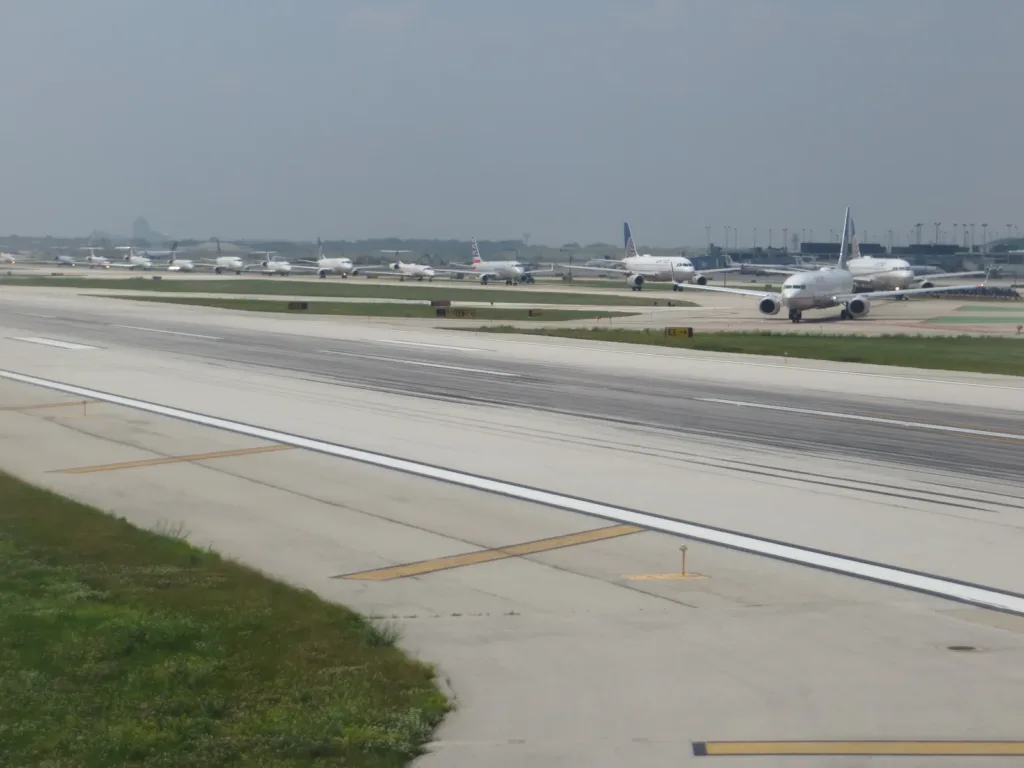
Chicago O’Hare handled more than 25 million passengers in summer 2026, setting another traffic record while travelers faced some of the nation’s longest aircraft taxi times. The Chicago Department of Aviation announced the record on October 22. A November 6 examination of federal data put the wait between gates and runways back in the spotlight.
The airport welcomed about 650,000 more passengers than during summer 2025. Yet higher traffic does not guarantee faster journeys. Time spent taxiing can add minutes after landing or before takeoff, even when a flight reaches Chicago on schedule.
More than 25 million passengers used O’Hare in three months
The Chicago Department of Aviation reported 25,013,873 passengers from June through August. That was roughly 2.7% more than in the corresponding period of 2025.
July accounted for 8,540,764 travelers, setting a monthly record. June brought 8,234,643 and August added 8,238,466. Aircraft movements also rose about 6%, reaching 245,719 takeoffs and landings.
Those figures measure traffic, not punctuality. An airport can serve more passengers while still experiencing ground congestion. As flight volume rises, controllers must coordinate additional runway crossings, departures and arrivals.
Taxi delays can extend a journey after landing
The taxi-out clock starts when an aircraft leaves its gate and stops at takeoff. By contrast, taxi-in time begins after touchdown and ends when the airplane reaches its arrival gate. Both can affect connections.
A November 6 Axios Chicago report described O’Hare as having the longest taxi times among major U.S. airports in the federal figures it examined. That is a reported comparison, not a new performance ranking issued by the city.
However, the numbers do not show that every flight spends an unusually long time on the ground. Conditions vary with runway use, arrival banks, gate availability and weather. United Airlines said its average taxi-in performance had improved since March.
For travelers, the difference is practical. A flight may land before its scheduled arrival time but still reach the gate later. Similarly, a departure can leave its stand on time and remain in a runway queue.
FAA capped O’Hare’s summer schedule at 2,708 operations
The U.S. Department of Transportation announced a summer scheduling limit in April. Airlines had proposed more than 3,080 daily flights on peak days, almost 15% above the previous year’s peak schedule.
Instead, the FAA limited the schedule to 2,708 operations per day from May 17 through October 24, 2026. The restriction addressed overscheduling and the risk of cascading delays. It did not mean the airport operated exactly 2,708 flights every day.
Officials also cited constrained gate capacity and taxiway closures related to construction. Alongside schedule limits, the FAA said it would work on controller staffing, airspace routing and closer coordination with airlines.
Major airport construction adds another pressure point
Chicago is expanding O’Hare through its ORDNext program. The airport plans a 19-gate Concourse D in 2028 and a first phase of Concourse E with 14 gates in 2030.
In the near term, construction can reduce available ground space or complicate taxi routes. However, the Chicago Department of Aviation says major runway and taxiway work that affected taxi times has been completed. Future terminal construction and its effects should be assessed separately.
Adding gates may ease certain bottlenecks once facilities open. Yet new buildings alone cannot guarantee shorter waits. Airlines must also coordinate schedules, aircraft parking and runway demand.
What the record means for passengers
Passengers changing planes at O’Hare should check their full connection time rather than relying only on the scheduled flight duration. The period between landing and reaching a gate can matter, especially during busy arrival waves.
Travelers should also distinguish planned schedules from live operating conditions. A delay on one journey does not establish that the airport’s system is failing. Likewise, a summer traffic record says little about individual passengers’ time on the ground.
AeroSillage has separately covered a reported drone encounter near Chicago and the FAA’s digital departure clearance project. Neither incident or program explains O’Hare’s overall taxi figures.
The central tension remains: O’Hare is moving record numbers of people, while ground time and scheduling limits continue to shape their journeys.
Read next
JOIN THE CONVERSATION
Let’s discuss this story.
A question, a clarification or a different perspective? Share it with us.