Barcelona-El Prat Airport is still recovering from one of its most disruptive weather weekends of the year, after torrential rain across Catalonia triggered hundreds of cancellations and severe disruption to the wider transport network.
Catalan Civil Protection figures supplied to EFE put the weekend total at 385 cancelled flights, with 220 cancellations on Saturday and 165 on Sunday. By Monday morning, Aena had confirmed another 29 cancellations, comprising 14 arrivals and 15 departures.
The aviation disruption forms only one part of a wider emergency. Flooding affected roads, rail services and communities around Barcelona and elsewhere in Catalonia. Two people were confirmed dead and another person remained missing on Sunday.
A major operational shock at Barcelona
The precise cancellation count varies depending on the source.
Aena does not normally publish a single consolidated cancellation total during severe-weather events and largely relies on individual airlines for operational data. On Sunday, the airport operator said airlines had reported roughly 200 cancellations for that day alone.
Civil Protection’s figure for Sunday was 165.
Flight-tracking platforms have produced different totals again, but all available data point to the same conclusion: Barcelona experienced a severe reduction in operational reliability throughout the weekend.
Weather stations near the airport recorded roughly 80 litres of rain per square metre on Saturday.
Heavy rain alone does not explain every cancellation. Thunderstorms and intense convective weather can force air traffic controllers to increase separation between aircraft or temporarily reduce arrival and departure capacity. Once capacity drops at a large airport, delays rapidly propagate through aircraft and crew rotations.
Barcelona is particularly exposed to those network effects because it is a major European base for Vueling and an important station for Ryanair, easyJet, Iberia and numerous international airlines.
Disruption continued into Monday
The recovery remained incomplete on Monday.
Aena reported 29 cancelled flights during the morning, while Catalonia’s meteorological service issued a very high danger warning for intense rainfall across several coastal and pre-coastal districts.
Vueling said adverse weather on 3, 4 and 5 October had forced adjustments to its schedule.
For customers booked to depart Barcelona after noon on 5 October, the airline offered free changes to travel within the following seven days. Eligible passengers could also choose a refund in the form of flight credit.
Vueling advised travellers to check their flight status before travelling to the airport.
That advice matters because disruption has not been limited to aviation. Flooded roads and interruptions to rail services have also made access to Barcelona-El Prat more difficult.
Why the disruption can outlast the storm
Airport operations do not immediately return to normal when the rain stops.
Aircraft that have been cancelled or heavily delayed may no longer be in the correct city for their next scheduled flight. Flight crews can reach regulatory duty-time limits, while stranded passengers need to be accommodated on later services that may already be close to full.
This creates a recovery phase that can last well beyond the original weather event.
At a major European airport, those effects can also spread to other countries as aircraft and crews fail to operate their next sectors on time.
Passenger rights
Under European passenger-rights rules, travellers whose flights are cancelled are generally entitled to choose between reimbursement and rerouting.
Airlines also retain obligations to provide reasonable care during prolonged disruption, including meals and accommodation where required.
Severe weather may, however, qualify as an extraordinary circumstance. In those cases, the fixed cash compensation normally associated with some cancellations may not be payable if the airline can demonstrate that the disruption resulted from weather conditions beyond its control.
That does not remove the airline’s separate obligations regarding rerouting, reimbursement and care.
Related on AeroSillage: Flight delays and cancellations: what are your rights really?
What is established and what remains to be seen
It is established that Barcelona-El Prat suffered several hundred cancellations over the weekend and that disruption continued into Monday.
It is also clear that the airport was affected by a wider regional emergency involving severe flooding and major disruption to surface transport.
The final cancellation total may still differ between Civil Protection, Aena, individual airlines and flight-tracking platforms because they do not all use the same counting method.
The next issue is the pace of recovery.
Further rainfall, restoration of rail and road links, aircraft positioning and crew availability will determine whether operations return quickly to normal or whether disruption continues into the following flight rotations.
For passengers travelling through Barcelona, checking directly with the operating airline before leaving for the airport remains essential.
Main sources: Catalan Civil Protection via EFE, Aena, Meteocat, Vueling, Reuters.
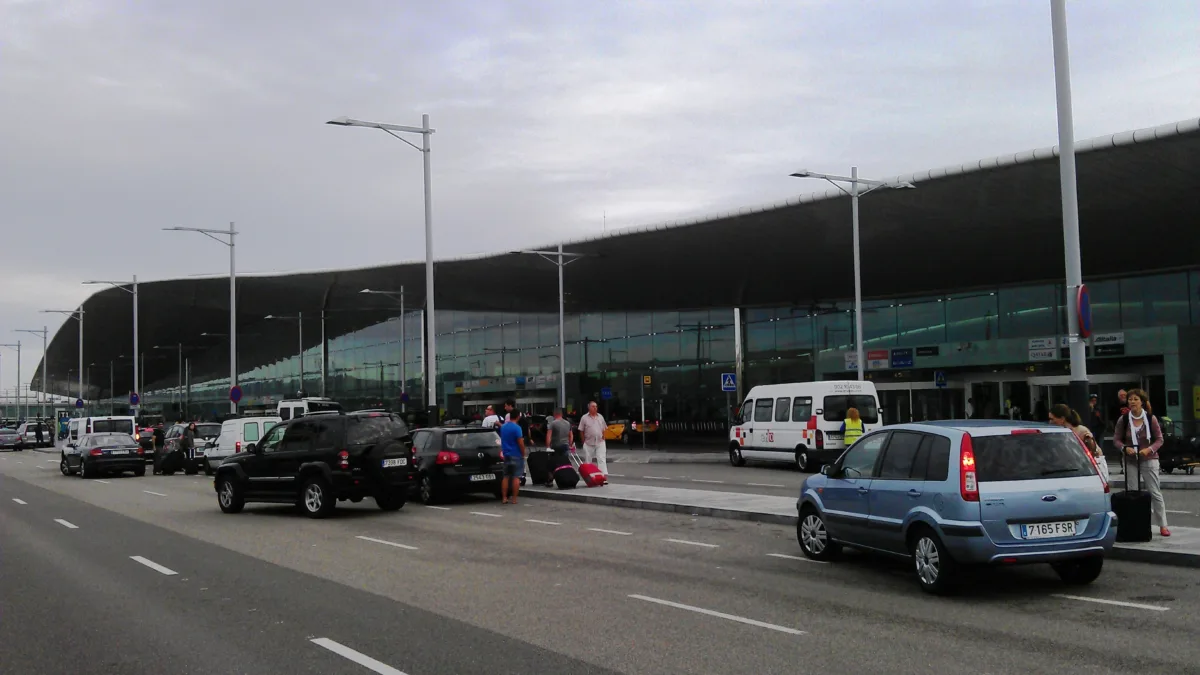
Illustration photo: Barcelona-El Prat Terminal 1. Nasobema lyricum / Wikimedia Commons, CC0 licence.
Leave a Reply