
The aviation journal
Press review
Essential aviation news, in perspective

Six aviation developments: Boeing 737 MAX 10 certification, Mexico–US flights, Italy air traffic disruption, drones, pilot training and sustainable fuel.
Certification, airspace resilience and market access lead today’s aviation agenda. Boeing’s largest MAX variant may be approaching a regulatory milestone, Mexico City airlines have fresh US route opportunities, and Italy is recovering from a national air traffic network failure. New drone restrictions, pilot-training guidance and the economics of sustainable fuel reveal how much of aviation’s future depends on decisions made outside the aircraft.
The 737 MAX 10 is nearing a decision, not yet a delivery date
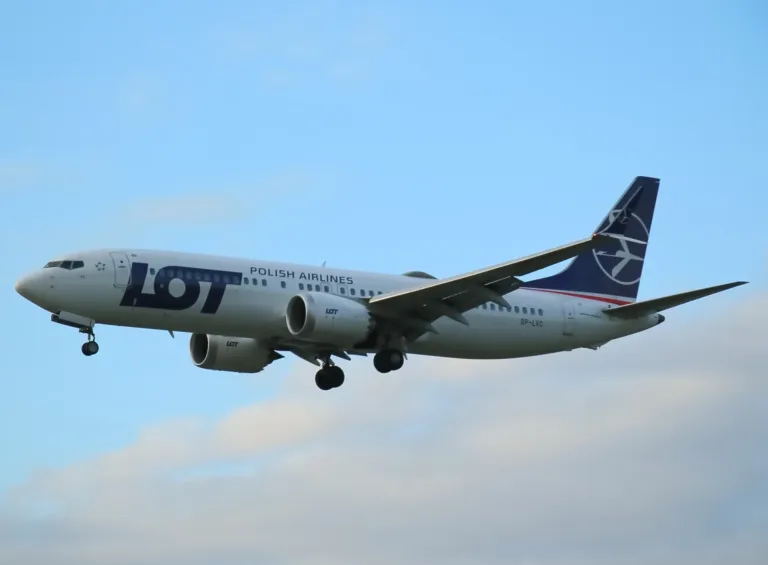
Boeing’s largest 737 MAX variant is back at the centre of airline fleet planning. Reuters reported on October 16 that US regulators could approve the aircraft as early as next week. That is a reported possibility, not a certification announcement. Boeing’s own July update said the programme had completed 976 planned certification flights and more than 2,060 flight hours. Airlines have been waiting for a higher-capacity narrowbody that can spread operating costs across more seats on busy routes. Yet three separate milestones matter: type certification, each carrier’s aircraft deliveries and the eventual start of passenger service. Conflating them creates unrealistic expectations. A regulatory approval would remove a major uncertainty, but it would not instantly put the MAX 10 into scheduled service.
Mexico City routes reopen to competition, with conditions attached
Mexican airlines gained a new opening on October 16 when the United States lifted restrictions on launching flights from Mexico City’s Benito Juárez and Felipe Ángeles airports. Reuters reported the decision following statements by both governments. The dispute concerned compliance with the countries’ 2015 air transport agreement; the US Department of Transportation had outlined a corrective process in May. The practical impact will depend on which routes airlines actually schedule and receive permission to operate. Requirements to file schedules and secure approval for certain large-aircraft services remain. For passengers, a regulatory opening is promising but does not itself mean new seats or lower fares tomorrow. Airport capacity and carrier economics will determine the real outcome.
Italy’s airspace recovers after a network failure exposed capacity limits
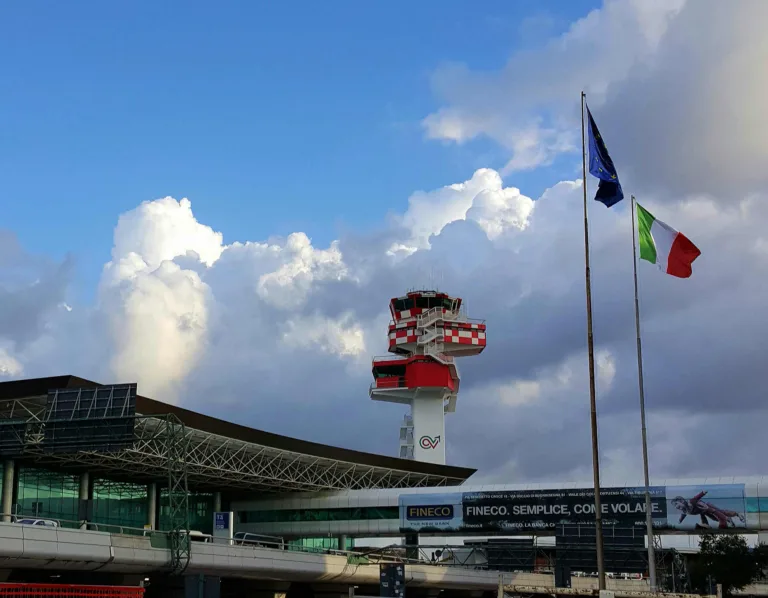
Italian air traffic management returned to full capacity on Friday after a data-transmission fault forced flight restrictions earlier in the day. In its October 16 operational update, ENAV said the primary network had been restored and its temporary capacity limits withdrawn. A secondary satellite system maintained air traffic services throughout the disruption, but could not initially handle normal traffic volumes. This is the operational lesson: contingency systems can preserve safety without preserving punctuality. Airline schedules are tightly connected, so an aircraft delayed in Rome or Milan can cause knock-on problems at airports far beyond Italy. The technical recovery should therefore not be mistaken for an immediate reset of every airline timetable. Travellers still need to check their own flight status and any onward connections.
US border drone limits highlight the changing low-altitude airspace map
A new US temporary flight restriction announced on October 16 prohibits unauthorised drone operations in a strip extending one nautical mile north of the Mexican border, from the surface to 400 feet above ground level. The Department of Transportation statement presents it as a measure to protect border-security operations. The restriction is specific to low-altitude unmanned aircraft; it should not be described as a general ban on commercial flights across the border. The wider aviation significance lies in the increasingly dynamic rules for drone operators, emergency responders and companies using unmanned systems. Even experienced pilots need to check current notices and authorisations, because an otherwise routine mission may cross a newly restricted area. Managing that complexity is becoming part of normal airspace governance.
European pilot training rules put simulators under a closer spotlight
The European Union Aviation Safety Agency published an updated Easy Access Rules for Aircrew collection on October 16. Among the changes brought together are rules on flight simulation training devices, how their capabilities are described and how those devices are used in aeroplane and helicopter type-rating training. The publication is a consolidated reference, not evidence that every listed provision suddenly became effective on Friday. For training organisations and airlines, that distinction is essential. A common regulatory reference can improve consistency in how simulator capability is matched to training tasks, but compliance still depends on the underlying legal dates and the equipment’s actual qualification. The next question is how efficiently schools can update their procedures without adding unnecessary complexity for trainees.
Corporate SAF demand could help, but it cannot replace fuel supply
A study released on October 14 by IATA, Airbus and Accenture estimates that corporate purchasing could support between one million and 1.9 million tonnes of sustainable aviation fuel by 2030, compared with roughly 323,000 tonnes in 2024. The mechanism is based on environmental attribute certificates, allowing businesses to support SAF use and account for eligible emissions benefits without requiring the fuel to be physically delivered to their own flight. This is a forecast of potential demand, not confirmed production. IATA says SAF is expected to account for only 0.8% of global jet fuel use in 2026, with costs still two to three times those of conventional fuel. Clear accounting, credible verification and lower prices will decide whether corporate interest turns into meaningful supply.
JOIN THE CONVERSATION
Let’s discuss this story.
A question, a clarification or a different perspective? Share it with us.