
The aviation journal
Press review
Essential aviation news, in perspective

Aviation Press Review for October 16, 2026: Lufthansa A350-1000, European flight delays, Airbus services outlook, Maastricht ATC, accessibility and cybersecurity.
Today’s six developments reveal a common tension: aviation is adding ambition faster than some of its operational foundations can expand. Fleet plans, network reliability, accessibility and digital resilience all deserve scrutiny.
Munich’s next long-haul bet has a date
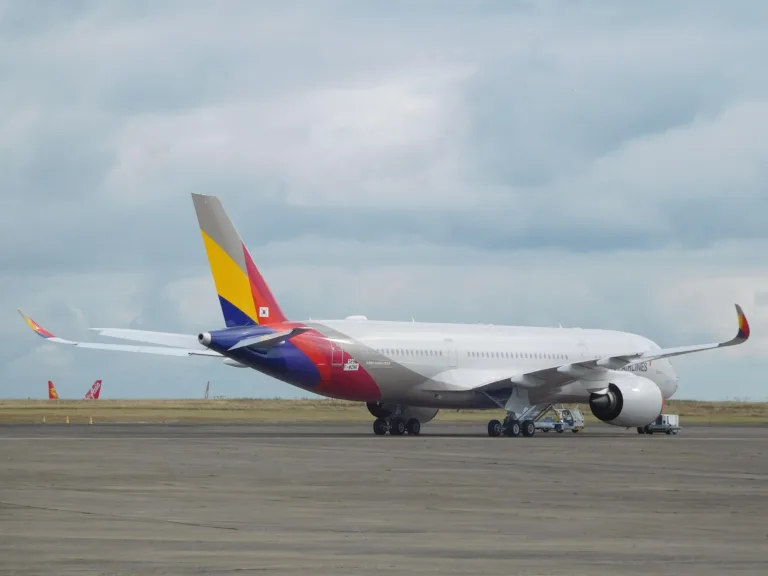
Lufthansa has set 3 December for the first scheduled service by its A350-1000, from Munich to Tokyo Haneda. The aircraft is due to arrive from Toulouse in mid-November, with Shanghai and Singapore joining its early network later. Lufthansa says it has ordered 15 A350-1000s for the group and will base the first ten at Munich. More revealing than the aircraft’s length is its commercial configuration: the carrier is putting substantial capacity into premium cabins. That gives Munich a stronger proposition for long-haul business travellers, but the profitability of the move will depend on filling those higher-yield seats through the winter, not simply introducing a new flagship.
Europe’s flight count holds up, but its timetable is less reliable
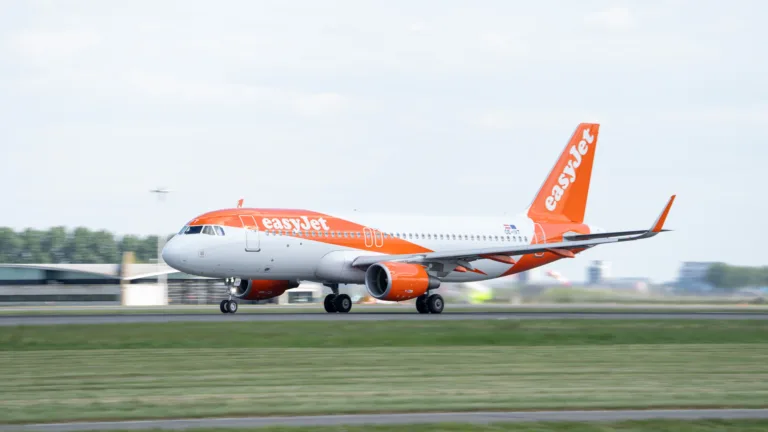
EUROCONTROL’s latest network assessment, released on 15 October, recorded an average of 33,491 flights a day during 5–11 October. Traffic matched the equivalent week last year, yet only 69.8% of departures and 74.1% of arrivals were punctual. Air traffic control capacity and staffing accounted for 63% of en-route flow-management delays. The distinction matters for airlines and airports: stable demand does not necessarily mean a stable passenger experience. The report also shows Europe–Middle East traffic running 14% below 2025 on a year-to-date basis, a reminder that geopolitical disruptions are reshaping networks unevenly across carriers.
Airbus sees the next bottleneck beyond the factory gate
Airbus projects that the global commercial aviation services market will exceed $420 billion by 2045, approximately twice its 2026 level. Its forecast also points to more than 2.44 million additional skilled personnel needed over two decades, spanning pilots, cabin crew and maintenance technicians. These are industry projections rather than firm hiring commitments. Their practical message is that aircraft deliveries alone will not secure capacity growth: engines must be maintained, parts must arrive and qualified people must be available to keep aircraft flying. Airlines that plan fleet expansion without the supporting workforce and repair ecosystem may find that nominal seat capacity is not usable capacity.
Maastricht shows what cross-border airspace management can deliver
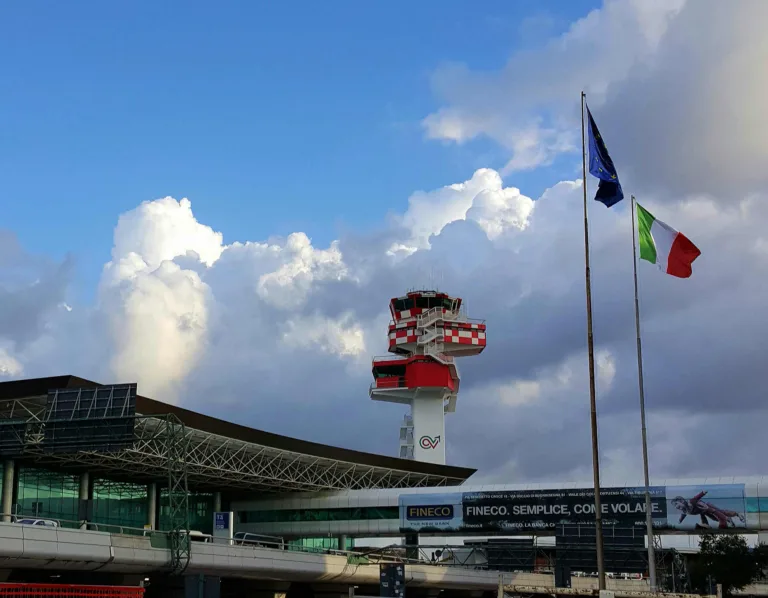
EUROCONTROL’s Maastricht Upper Area Control Centre handled 842,259 flights between May and September 2026, according to figures released on Thursday. The centre oversees high-altitude traffic above Belgium, the Netherlands, Luxembourg and part of north-west Germany, rather than stopping at national borders. It offers an operational example of how shared airspace management can help aircraft follow traffic flows more efficiently. That does not mean Europe’s capacity problem has been solved: delays elsewhere in the network still affect journeys passing through Maastricht. The lesson is one of coordination and technical reliability, not a claim that any single centre can fix continental congestion.
Accessibility is becoming a whole-journey aviation issue
ICAO, Airports Council International and IATA convened an international accessibility symposium in Montréal on 14–15 October. Its stated focus was inclusive air travel from end to end, including passengers with disabilities that may not be immediately visible. The operational challenge is the handover between airlines, airport operators, ground handlers and border processes: assistance that works at departure can still fail at a transfer point. The gathering did not itself enact a new universal rule, but it underscored the pressure for more consistent implementation of existing guidance. For passengers, the measure of progress will be fewer gaps in the journey rather than more statements of intent.
Cyber resilience is no longer separate from flight operations
EASA has released materials from its 7–8 October workshop on implementing Part-IS, the European aviation information-security framework. The presentations and recordings, posted on 13 October, examine practical obstacles for organisations with different levels of complexity. This is not merely a question of protecting office computers: aircraft maintenance records, operational planning and safety-critical information exchanges increasingly depend on resilient digital systems. The workshop materials do not certify that the sector is ready. They offer operators and regulators a clearer way to compare approaches, identify gaps and treat cyber incidents as an operational safety concern.
JOIN THE CONVERSATION
Let’s discuss this story.
A question, a clarification or a different perspective? Share it with us.