Every morning, AeroSillage selects the aviation stories that genuinely deserve attention. For 7 September we deliberately leave aside subjects already covered separately on the site in order to provide a genuinely complementary review.
Ryanair cuts traffic ambitions as fuel prices surge
Ryanair has lowered its traffic target for fiscal 2027 from 216 million to 214 million passengers. The Irish airline wants to limit its exposure to higher jet-fuel prices. It is keeping winter capacity broadly stable and has already reduced its footprint in Belgium, removing five aircraft from Charleroi and cutting around two million seats from Brussels programmes for winter 2026 and summer 2027.
Key point: even one of Europe’s most cost-aggressive airlines is beginning to adjust growth. If fuel prices remain elevated, winter 2026–2027 could become a severe test for carriers with weaker hedging.
Air Tanzania resumes its Moscow service
Air Tanzania is due to resume flights between Dar es Salaam and Moscow on 7 September after announcing and then quickly lifting a temporary suspension. The airline refers to a routine assessment of operating conditions. The restart nevertheless comes while Moscow airports are regularly disrupted by drone-related closures and risks associated with Russian airspace are again under scrutiny by airlines and insurers.
Key point: the restart illustrates the dilemma facing carriers serving Russia: maintaining commercial links while constantly reassessing operational risk.
EASA keeps Gulf restrictions but refines them
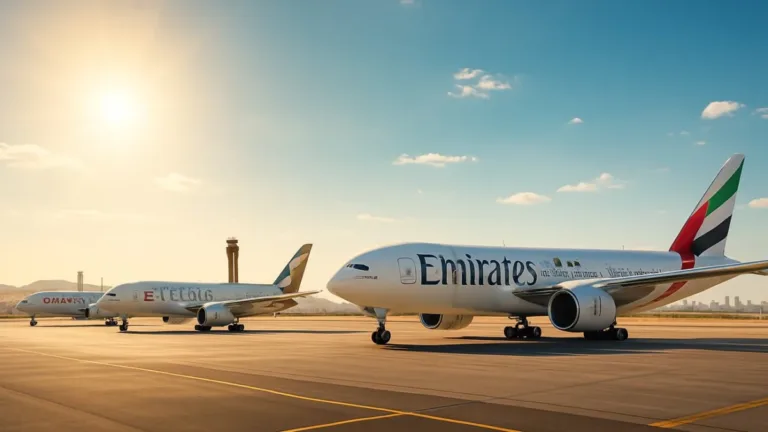
The European Union Aviation Safety Agency has extended until 30 September its recommendations for caution in several Middle Eastern airspaces. The notice has nevertheless been refined: the most restrictive recommendation now mainly targets maritime areas of the Persian Gulf under Bahrain, Kuwait, Qatar and the United Arab Emirates. Arrivals and departures remain possible with appropriate risk-mitigation measures. EASA is maintaining stronger restrictions for Iran, Iraq and Lebanon.
Key point: major Gulf hubs continue to operate, but route planning remains heavily dependent on the geopolitical environment. Detours, insurance and operational margins remain central issues for airlines.
KLM reaches a milestone with its first Airbus A350-900
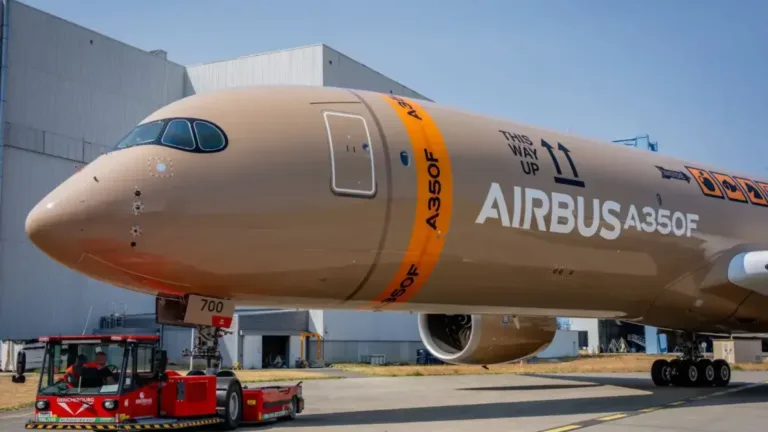
The first Airbus A350-900 intended for KLM completed its maiden flight on 4 September. The aircraft marks the beginning of a major long-haul fleet renewal for the Dutch airline. The A350 will allow KLM to modernise intercontinental operations with a newer and more efficient aircraft better aligned with fuel-consumption reduction goals.
Key point: for KLM, the A350 is not simply another aircraft type: it represents a major fleet transition and a long-term investment in the efficiency of the intercontinental network.
airBaltic secures €257 million in financing
airBaltic has announced €257 million in interim financing from bondholders and other financial partners. The transaction gives the Latvian airline additional short-term flexibility while its financial position remains under close scrutiny. The carrier continues to develop around a homogeneous Airbus A220 fleet.
Key point: the financing provides breathing room but does not by itself resolve structural profitability and long-term financing questions. airBaltic remains one of Europe’s most closely watched airline cases.
Ethiopian Airlines close to another Boeing freighter order
Ethiopian Airlines is reportedly close to concluding an order with Boeing for up to ten long-haul freighters, potentially combining current 777Fs with next-generation 777-8Fs. The Ethiopian carrier, already a major cargo operator, continues to invest strongly in the activity as its future Bishoftu mega-hub is expected to expand logistics capacity from the next decade.
Key point: Ethiopian Airlines is confirming its ambition to become not only a leading passenger carrier in Africa but also a world-class cargo platform. Follow the sector in AeroSillage’s Cargo desk.
Europe–Asia traffic temporarily benefits from Middle East tensions
European airlines are currently benefiting from a partial shift in Asia-bound traffic as some travellers avoid Gulf hubs. Finnair and Lufthansa are among the groups benefiting from this temporary redistribution. The trend remains fragile, however: Gulf airlines are progressively restoring capacity and retain major structural advantages.
Key point: the improvement for some European carriers looks more like a window of opportunity than a lasting change in the competitive balance between Europe and the Gulf.
Sources
- Reuters — Ryanair traffic target and fuel prices, 2 September 2026
- Reuters — Air Tanzania resumes Moscow flights, 4 September 2026
- Reuters — EASA Gulf airspace warning, 31 August 2026
- AeroTime — maiden flight of KLM’s first A350-900, 4 September 2026
- AeroTime — airBaltic financing, 4 September 2026
- Reuters — Ethiopian Airlines freighter discussions, 2 September 2026
- Reuters Breakingviews — temporary Europe–Asia traffic shift, 3 September 2026