
Severe Turbulence Forces Avianca Flight to Divert to Miami; Eight Hospitalized
Eight people were taken to hospitals after severe turbulence on Avianca flight AV042 from Medellín to New York, while the airline reported nine affected.
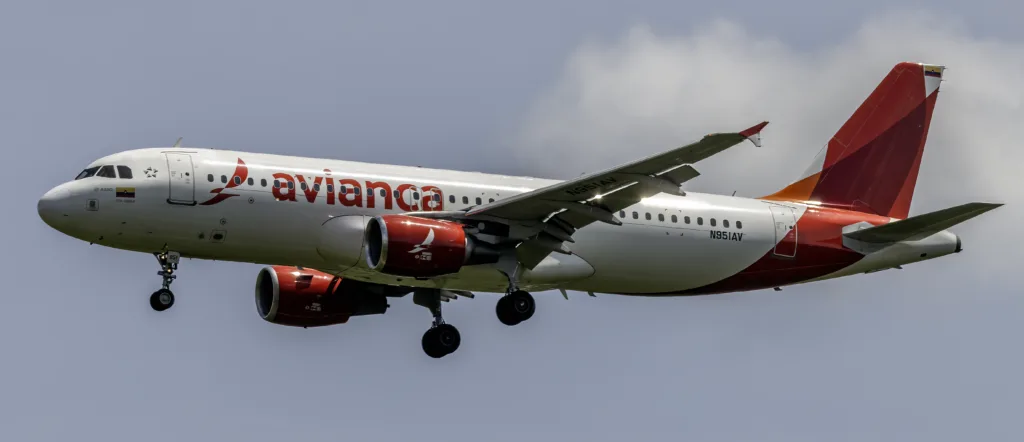
An Avianca flight from Medellín, Colombia, to New York was diverted to Miami early on October 9, 2026, after severe turbulence injured people on board. Emergency responders reported eight hospital transports, while the airline said nine people were affected. The different figures are not necessarily contradictory: they measure different aspects of the medical response.
New York-bound A320 lands in Miami
Flight AV042 was operating to John F. Kennedy International Airport when the crew diverted to Miami International Airport. The Airbus A320 landed at approximately 3:30 a.m. local time, according to accounts attributed to airport officials and Miami-Dade Fire Rescue. Emergency personnel were waiting to help injured occupants. Avianca subsequently assisted other travelers with arrangements to continue to New York.
A diversion to an airport with immediate medical support is a recognized operational response when injuries occur in flight. The landing should not be taken as evidence of an aircraft malfunction: the immediate concern was the condition of the occupants and access to emergency care.
What the casualty figures actually mean
Miami-Dade Fire Rescue reported that one injured person was taken to a trauma center and seven others to area hospitals. Avianca described nine affected occupants: six passengers and three crew members. That means eight hospital transports are reported by responders, not nine confirmed admissions. The full medical condition of those involved had not been established in the independently verified reports used for this article.
One of the injured was initially described as being in critical condition. That early assessment should not be presented as an updated prognosis without a subsequent medical or official statement. There was no confirmed fatality in the sources reviewed; the toll remains preliminary.
Why turbulence injuries can be serious
Even when an airplane remains structurally sound, sudden changes in motion can throw unrestrained people into seats, overhead compartments or the cabin ceiling. Cabin crew may face particular exposure while moving through the aisle. Keeping a seat belt fastened while seated, including between illuminated seat-belt warnings, offers a straightforward protective measure.
Hospital transports, people reporting injuries and the meteorological severity of turbulence describe different aspects of the event. None should be substituted for another. The practical safety lesson remains to keep seat belts fastened while seated, even when the sign is off, because a sudden aircraft movement can precede a crew warning.
When significant turbulence occurs, flight crews can suspend cabin service, instruct passengers and crew to secure themselves and coordinate route or altitude changes with air traffic control. Whether turbulence itself caused any large altitude loss is a separate technical question. Reports describing a dramatic 25,000-foot plunge cannot be substantiated by the verified information available here; a controlled descent and a turbulence-induced loss of altitude must not be conflated.
FAA investigation: key questions remain open
The Federal Aviation Administration has said it will investigate. Flight data, crew reports, weather conditions and the timing of the medical response may help reconstruct the event. The aircraft’s registration, the precise location of the turbulence and the sequence of altitude changes have not been independently confirmed for this report. Further reporting should focus on official findings and reliable updates on the injured, rather than unverified flight-tracking interpretations.
For travellers, the most useful distinction is between the severity of the turbulence and the severity of its consequences. The number of people taken to hospital does not measure the forces encountered, nor does it establish whether the flight crew could have anticipated the event. A sound safety assessment will depend on flight data, weather information and the investigation. In everyday terms, keeping the seat belt fastened while seated remains the precaution passengers can control.
Reporting sources: Associated Press and CBS Miami, reporting statements from the airline, first responders and FAA.
Illustrative photograph: an Avianca A320 approaching Washington Dulles in 2025. This is not confirmed to be the aircraft involved. Acroterion / Wikimedia Commons, CC BY-SA 4.0.

JOIN THE CONVERSATION
Let’s discuss this story.
A question, a clarification or a different perspective? Share it with us.