An IndiGo Airbus A320neo completed its flight from Patna to Lucknow on 7 October 2026 with serious damage to its nose radome, the aerodynamic cover at the front of the aircraft. All 104 passengers and six crew members on flight 6E925 were reported safe. The aircraft landed normally and was held for inspection. Reports cite lightning and hail among the possible causes, but the precise damage mechanism has not been conclusively established in an official finding.
Flight 6E925: a safe arrival and an alarming discovery
The jet was identified as Airbus A320neo VT-IQZ, operating IndiGo’s domestic service from Patna to Lucknow. Airportia’s incident report places the reported weather encounter at about 17,000 feet during descent, with the aircraft landing safely on runway 27 approximately 20 minutes later.
The outcome was markedly less dramatic than the images of the damaged aircraft might suggest. The passengers and cabin crew were not reported injured, and accounts in the Indian press say the aircraft reached Lucknow slightly ahead of schedule. Reports describe the nose cone as severely dented rather than detailing any confirmed failure of the fuselage or cockpit structure.
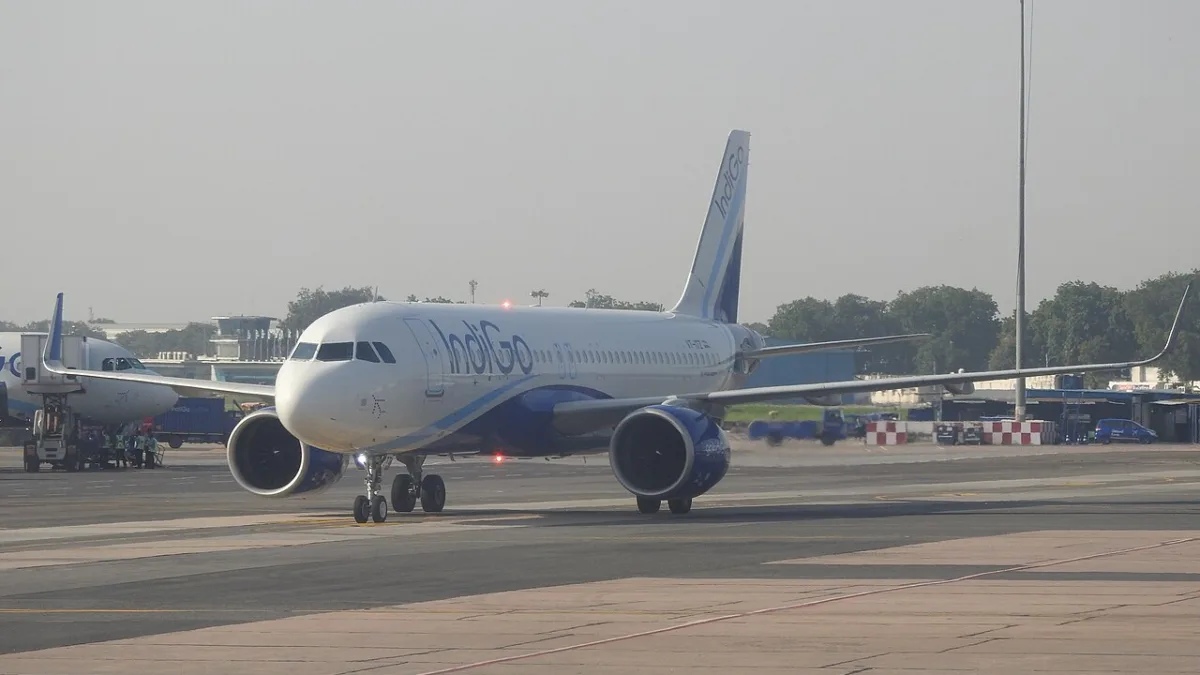
Images circulating online show the damage to the actual flight, although reproduction rights are not necessarily granted when a photograph is shared on social media. AeroSillage therefore uses a separately licensed image of a different IndiGo A320neo as its lead illustration, clearly identified as such.
Lightning or hail? Why the cause matters
Early coverage emphasised a lightning strike, but Hindustan Times reported that no official cause had been confirmed and cited several possibilities, including hailstones or ice. Airportia refers to a lightning-and-hail encounter. The difference between an early operational report and an established technical conclusion is significant.
An airliner’s nose radome is typically made from materials designed to allow the weather radar to operate through it. It is not the same component as the cockpit glazing or the pressurised outer shell. A visibly crushed radome can require detailed inspection of the cover itself, its attachment points and the equipment behind it before the aircraft returns to service.
Modern aircraft incorporate lightning-protection measures, but severe weather can present several hazards at once. Lightning, hail, heavy precipitation and turbulence can coexist within a storm system. Without inspection findings, it is not possible to attribute each visible deformation to a particular phenomenon with confidence.
The safety response after landing
IndiGo’s aircraft remained grounded at Lucknow for technical assessment after the incident. The Indian Express reported the safe landing and the lack of injuries, while other Indian reports indicated that the Directorate General of Civil Aviation had been notified. Any decision to return the aircraft to service depends on the outcome of the necessary engineering checks.
The incident highlights a fundamental distinction in aviation safety reporting: a visually striking aircraft defect does not automatically mean passengers were in immediate danger of a crash, nor does a safe landing mean the damage can be ignored. The crew’s completion of the flight and the subsequent inspection are both relevant to understanding what happened.
For travellers, the confirmed immediate result is straightforward: 110 people arrived safely. For investigators and engineers, the open question is what caused the radome deformation and whether any additional systems were affected. See AeroSillage’s Asia-Pacific aviation coverage for more regional reporting.
Still unconfirmed: a final causal explanation, the full repair scope and any definitive findings from India’s aviation authorities. We will update this report when verifiable information becomes available.
Illustrative photograph only: IndiGo Airbus A320neo VT-ITZ at Delhi in October 2018, not flight 6E925’s VT-IQZ. Image: Rehman Abubakr / Wikimedia Commons, CC BY-SA 4.0. Adapted to the website’s image format.
_@_DEL,_Oct_2018.jpg)
Leave a Reply