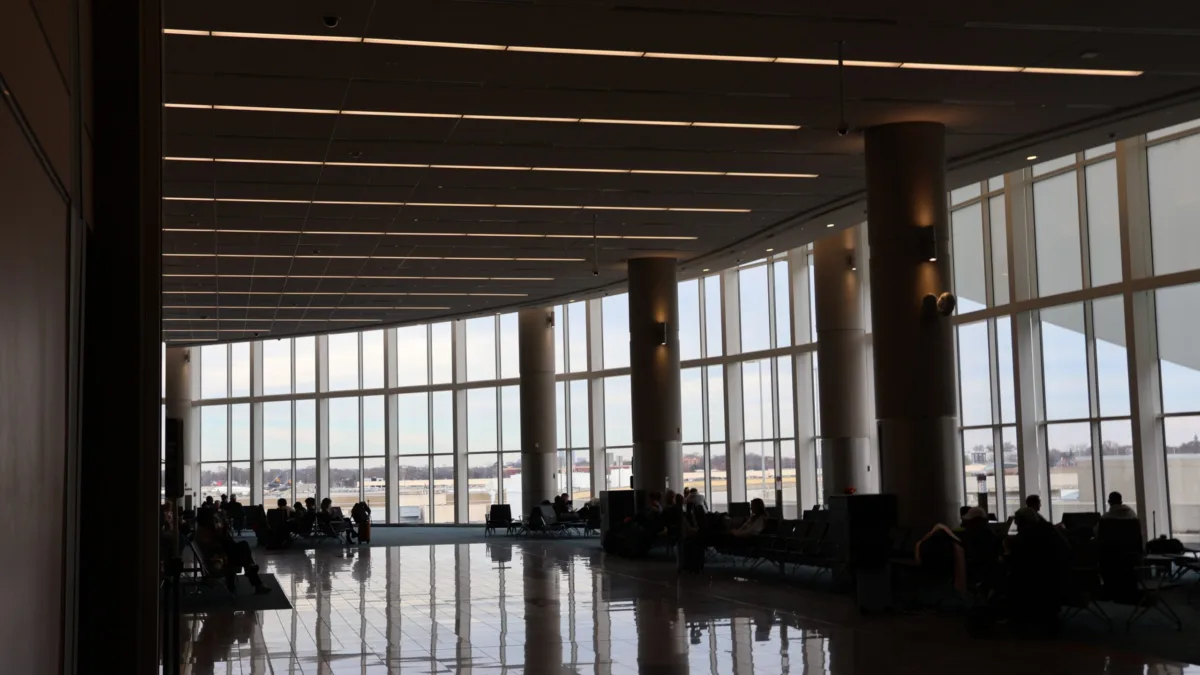
Severe thunderstorms disrupted Hartsfield-Jackson Atlanta International Airport on September 11, 2026, triggering FAA ground stops and a large ground-delay programme. The event produced delays approaching two hours on average for inbound traffic.
Updated October 2, 2026 — FAA programme data has been added to quantify the disruption precisely.
FAA average delay reached 107 minutes
The FAA’s Air Traffic Control System Command Center imposed traffic-management measures as storm cells crossed the Atlanta area. In one formal ground-delay programme, the FAA recorded an average delay of 107 minutes and a maximum assigned delay of 271 minutes.
The ground stop was later cancelled and traffic was released under controlled departure times, but that did not instantly clear the backlog.
Why Atlanta amplifies weather disruption
ATL is a major connecting hub with tightly scheduled aircraft and crew rotations. When arriving traffic is held at airports hundreds of miles away, the effect propagates through later departures and connections even after local weather improves. A similar network effect appeared in the Virgin Australia disruption that affected more than 30,000 passengers.
Thunderstorms are more disruptive than steady rain
Heavy rain can reduce capacity, but thunderstorms add lightning, strong winds and rapidly changing cells that aircraft must avoid. Controllers may have to close arrival routes or reduce the acceptance rate because safe corridors around the storms disappear.
Ground stop versus ground-delay programme
A ground stop temporarily keeps selected flights at their departure airports. A ground-delay programme then meters departures using assigned times so Atlanta does not receive more aircraft than it can safely handle. The transition between the two measures is a sign of partial recovery, not a return to normal operations.
Passenger impact after the storm
Even when the weather clears, late inbound aircraft can cause missed connections, crew-duty problems and aircraft swaps. Travellers should therefore monitor the operating airline rather than assuming the schedule is restored when an FAA ground stop ends.
Sources
FAA Air Traffic Control System Command Center advisories; WSB-TV; CBS Atlanta.
Leave a Reply