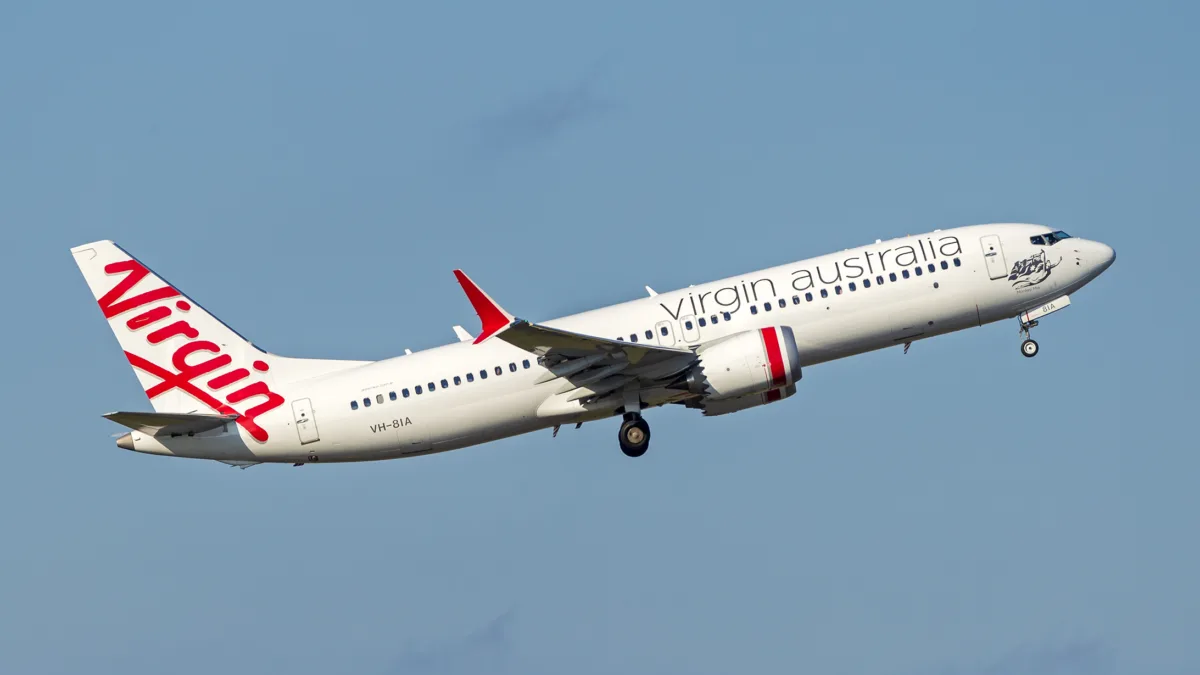
Virgin Australia’s disruption around the AFL Grand Final in Melbourne affected more than 30,000 passengers and shows how a weather event can turn into a much longer network-recovery problem. Around 50 flights were cancelled across two days and roughly 180 more were delayed as low visibility was followed by crew duty-time constraints.
Saturday: weather triggered the first wave
According to reporting in Australia, 16 flights were cancelled on Saturday as poor visibility at Melbourne reduced the number of arrivals air traffic control could accept. The disruption hit during one of the busiest travel periods of the year, combining the AFL Grand Final with school-holiday demand.
Virgin Australia had planned a reinforced schedule for the period, with more than 500 flights on its busiest days. That left little spare capacity once aircraft and crews began moving out of their planned positions.
Sunday: crew legality became the next bottleneck
By Sunday, the problem had changed. A further 34 flights were cancelled after many cabin crew members affected by the previous day’s disruption reached regulatory duty-time limits. The airline then had to find replacement staff, including asking off-duty employees to cover additional work.
Across the disruption period, around 180 additional services were delayed, with an average delay of about 44 minutes according to The Australian.
Once aircraft and crews are no longer where the schedule expects them to be, disruption can continue long after visibility improves. Full peak-period flights also mean fewer spare seats are available to rebook passengers, so every cancellation creates pressure on later services.
The episode is a clear example of the difference between operating the original timetable and having enough resilience to recover when that timetable breaks.
Passenger assistance depends partly on the cause
Virgin Australia’s published disruption policy distinguishes events outside its control, such as weather, from events within its operational control, including some crew-related disruptions. When a flight is cancelled, the airline generally offers rebooking on the next available service without additional fare cost, with refund or travel-credit options depending on the circumstances and available alternatives.
For disruptions treated as within the airline’s control, additional assistance can include reasonable meal costs and, where required, accommodation and ground transport. The exact support depends on the individual case and the cause attached to the cancellation or delay.
The crew constraints occurred while Virgin Australia and cabin-crew representatives were negotiating a new collective agreement, with discussions including pay, workload and maximum duty periods. That context does not prove that the industrial negotiations caused the operational problem, but it is relevant to understanding the pressure around staffing and additional shifts.
What this weekend reveals
Virgin Australia had expected an average of about 420 flights per day during the September peak, rising above 500 on the busiest days. The Melbourne disruption shows how quickly a high-utilisation domestic network can lose recovery margin when weather, full flights and crew legality interact.
AeroSillage takeaway: for passengers, the important question is not only what caused the first delay, but how much spare capacity an airline has to restore the network afterward.
Sources
Virgin Australia disruption policy; The Australian; public schedule and operational data.
Leave a Reply