
Amelia Earhart’s lost plane remains missing after Pacific expedition rules out latest lead
A Purdue-backed expedition to Nikumaroro has identified the Taraia lagoon anomaly as likely washed-up trees, not Amelia Earhart’s missing Electra.
Updated 19 October 2026 at 11:02 p.m. (Paris time). Rewritten to incorporate the expedition findings announced on 19 October in Kiribati.
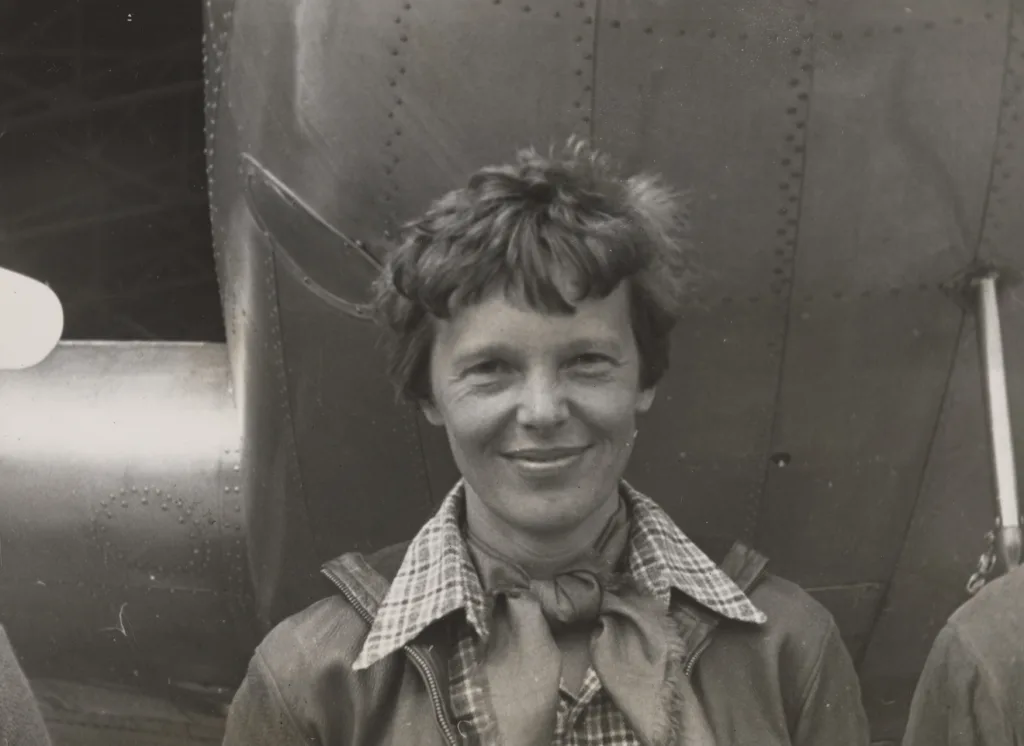
For years, an elongated pale shape in a Pacific lagoon invited a tantalising question: could it be the wreckage of Amelia Earhart’s Lockheed Electra? It could be seen in historical aerial photographs and, more recently, in satellite imagery. On 19 October 2026, researchers who had travelled to the remote atoll of Nikumaroro delivered a far less dramatic finding. The shape was most likely a collection of large trees washed onto a sandspit. Earhart’s aircraft, missing since 1937 along with navigator Fred Noonan, has not been found.
The finding is a disappointment for those who hoped the so-called Taraia Object would settle aviation’s best-known disappearance. Yet the expedition has produced something of genuine value: a suspected aircraft remnant has been subjected to on-site investigation, rather than judged on the resemblance of a shape in an image. The explanation that emerged is natural, not aeronautical.
Reaching the site was an undertaking in itself. Nikumaroro, once known as Gardner Island, belongs to Kiribati and lies isolated in the South Pacific. Dangerous surf breaks against its reef, complicating access by small boat. This was the setting for the 17-person Taraia Object expedition backed by the Archaeological Legacy Institute, the Purdue Research Foundation and Purdue University.
The flight that never reached Howland Island
On 2 July 1937, Earhart and Noonan left Lae, New Guinea, in their twin-engined Lockheed Electra 10-E. They were attempting a round-the-world flight. Their destination that day was Howland Island, a tiny target in an immense ocean. They never arrived. Radio exchanges indicated difficulty locating the island; contact was lost, and an extensive US air and sea search failed to find either crew member or the plane.
The conventional explanation is that the aircraft eventually exhausted its fuel and went down at sea near Howland. In the absence of an identified wreck, another theory has attracted researchers for decades. It proposes that Earhart and Noonan continued southeast and reached Nikumaroro, roughly 400 miles (640 kilometres) from Howland, where they may have landed on the reef and survived temporarily as castaways. The idea remains disputed and unproved.
Its supporters point to various pieces of circumstantial evidence, including human bones discovered on the atoll in 1940, objects found in later searches and interpretations of old photographs. None has conclusively established that Earhart and Noonan lived or died there. That uncertainty is not a minor footnote; it is the central challenge of investigating a disappearance that has accumulated far more stories than authenticated physical evidence.
How a promising shape became a search target
The latest mission focused on an object in the lagoon near the Taraia Peninsula. It appeared in satellite images examined in 2020 and seemed to correspond to a feature visible in aerial photographs taken as early as 1938. Some observers thought its dimensions and brightness might be consistent with aircraft wreckage. But a picture cannot tell investigators what an object is made of, how it got there or whether it dates from before or after the disappearance.
The research team sailed approximately 830 nautical miles over five days aboard the Marin Mainiku, arriving on 12 October. On 13 October, expedition members began establishing operations on the atoll. Underwater work started the following day, with a magnetometer to look for magnetic signatures associated with some metal components and side-scan sonar to map forms on the lagoon floor. These technologies can identify promising locations for closer examination. They do not turn a visual anomaly into a confirmed aircraft.
Then the weather intervened. On 16 October, Purdue reported that rough seas had prevented normal shore work for a third consecutive day. Moving between the ship and the island required navigating a difficult opening in the reef, an unacceptable risk in heavy surf. The expedition extended its stay. At that stage, neither success nor failure could reasonably be inferred from the delay.
When the team was finally able to examine the site, the metallic-wreckage hypothesis failed its most important test. According to Purdue’s findings, much of the material once visible in imagery had broken apart or washed away. A single Y-shaped segment remained. The surface that had seemed to reflect light like metal was coated in carbonate deposits and hardened coral sand. Other pieces bore similar shiny coatings. The most plausible explanation was a concentration of trees and driftwood deposited by the sea.
Artifacts remain, but identification is another matter
The expedition did recover several items during archaeological work on land and underwater. Among them was a steel tube about 30 inches (76 centimetres) long, discovered in the lagoon near Taraia. Researchers plan further examination, including how material carried into the lagoon moves and becomes stranded. No verified connection between that tube and Earhart’s plane has been announced.
This is the crucial difference between finding an object and identifying an aircraft. A piece of metal could have numerous origins. A credible attribution to Earhart’s Electra would require documented context, manufacturing details, dimensions or other distinctive characteristics, and scrutiny beyond the team that recovered it. The atoll also has a known maritime history: the British merchant ship SS Norwich City grounded on its reef in 1929, leaving another possible source of human-made debris nearby.
Investigators say the broader castaway hypothesis remains worth exploring. Ruling out the Taraia Object does not establish that Earhart’s aircraft sank near Howland either. It demonstrates only that one specific candidate in the lagoon was not what its proponents had hoped. Scientific findings often narrow possibilities rather than settle an entire historical question.
Purdue’s involvement carries unusual historical weight. Earhart joined the university in 1935 as an adviser to women students and its aeronautics programme. The Purdue Research Foundation helped fund her Electra, known as the Flying Laboratory, which she intended to return to the university after completing her journey. The present-day researchers are therefore pursuing a mystery connected directly to their institution’s history.
What the October mission established is clear, even if the larger question is not: the Taraia lagoon anomaly has not yielded Earhart’s missing aircraft. The next credible development will come from analysis of the recovered artifacts or new evidence that can survive the same kind of examination. The mystery of the flight of 2 July 1937 remains open.
The expedition chronology is documented in Purdue’s reports on 12 October, 14 October and 16 October, alongside the latest findings.
JOIN THE CONVERSATION
Let’s discuss this story.
A question, a clarification or a different perspective? Share it with us.