
Air Canada United Fare Increases: Eight Routes at Risk
Canada's Competition Bureau warns that a proposed expansion of the Air Canada-United agreement could drive materially higher fares on eight cross-border routes.
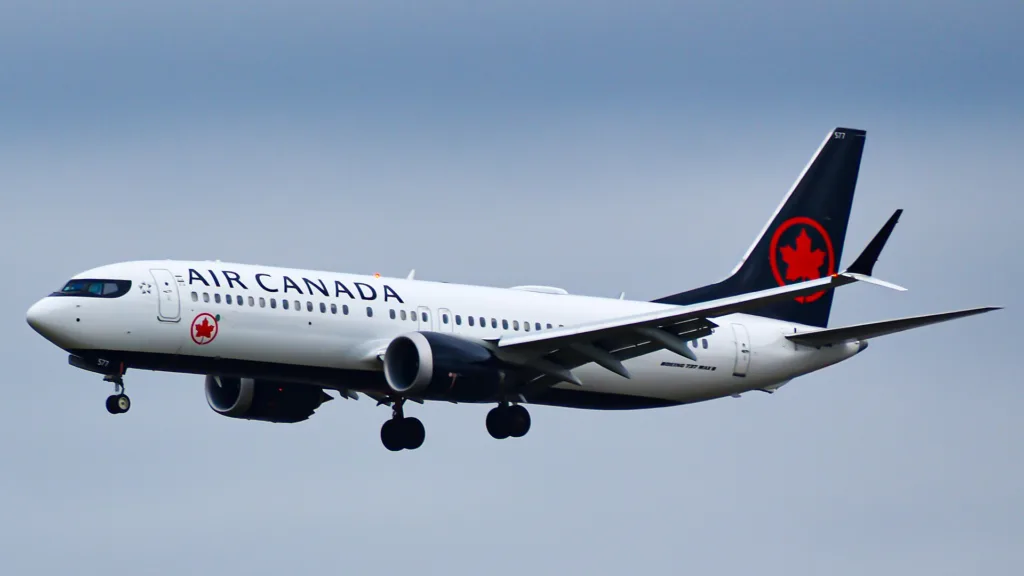
Air Canada and United could charge more on eight Canada–U.S. routes if regulators approve closer cooperation, Canada’s Competition Bureau warned on October 28, 2026. Its economic model predicts materially higher fares on eight of them if regulators permit the proposed expansion of their agreement.
For now, Canada’s government continues to review the proposal, while existing restrictions on airline coordination remain in place.
Where the Competition Bureau predicts higher fares
In its October 28 release, the Bureau said Air Canada and United carry all nonstop passengers on five of the ten affected routes. Elsewhere, the two airlines also hold substantial combined market shares, leaving some travelers with few nonstop alternatives.
The Bureau’s October 16 assessment identifies Ottawa-Washington, Vancouver-San Francisco, Montreal-Washington, Toronto-Denver and Toronto-Houston among the routes with the largest modeled fare effects. Across eight routes, its model forecasts material fare increases and millions of dollars in annual consumer harm if the proposed coordination takes effect.
However, the model found no material fare increase on Ottawa–New York and Toronto–Cleveland. The Bureau attributes that result to the fact that only one partner currently offers nonstop service on each route.
Why a 2012 agreement still matters
At the center of the dispute is a 2012 consent agreement. It restricts Air Canada and United from coordinating certain commercial decisions, including prices, on these ten routes. Their proposed expansion would allow closer cooperation where those limits now apply.
As a result, the Bureau expects competing airlines to provide too little pressure on fares on several routes. Its assessment focuses on the consequences of the proposed cooperation.
Those competition concerns now feed into the transport minister’s public-interest review. Transport Canada is accepting public comments until November 15, 2026. Canadian travelers, consumer groups and aviation businesses can submit feedback through the federal consultation site or by email at TC.natair-aernat.TC@tc.gc.ca.
Canada’s transport minister can authorize the proposed arrangement, approve it with conditions or refuse it. The Bureau’s assessment informs that decision; it does not itself change current fares or lift the 2012 restrictions.
What the findings mean for cross-border travelers
For cross-border travelers, the immediate issue is how many independent nonstop choices would remain. The Bureau sees the greatest fare risk where passengers already have few alternatives.
Separately, Air Canada and United have announced six new cross-border routes. AeroSillage reported on those planned summer 2027 services. The competition review concerns closer coordination on routes already covered by the 2012 restrictions.
Next, Canada’s government must decide how to handle the proposal. It must determine whether to authorize the expanded agreement and what conditions, if any, should accompany that approval.
Read next

JOIN THE CONVERSATION
Let’s discuss this story.
A question, a clarification or a different perspective? Share it with us.