
South China Sea: flares fired toward Philippine aircraft
The Philippine Coast Guard says Chinese forces fired flares toward an unarmed surveillance aircraft over the Spratlys. No injuries or damage were reported.
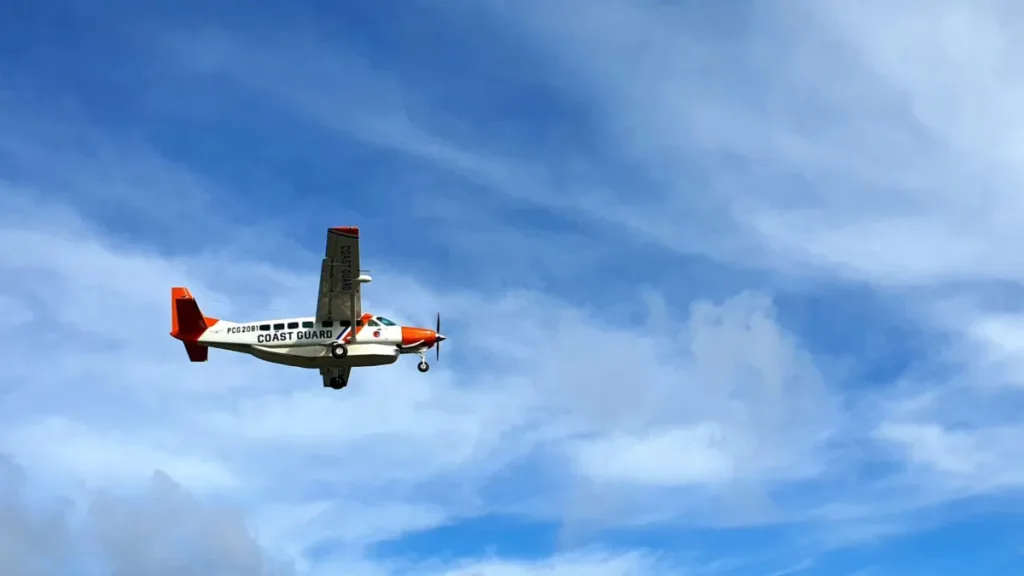
For the crew of an unarmed surveillance aircraft, flares fired nearby are more than a diplomatic provocation: they raise immediate questions about flight safety in contested airspace. The Philippine Coast Guard says Chinese forces fired flares towards its aircraft twice during a 7 September 2026 mission over the Spratly Islands. The account remains attributable to the Philippine authorities, rather than an independently established sequence of events.
Two reported encounters on one surveillance mission
According to the PCG, the aircraft was first challenged by radio near Subi Reef, known in the Philippines as Zamora Reef. Flares were then fired toward the aircraft. A similar episode was reported near Mischief Reef, or Panganiban Reef.
No injuries or aircraft damage were reported, and the Philippine crew continued the mission.
Philippines calls the behavior unsafe
PCG commandant Admiral Ronnie Gil Gavan said the use of flares endangered flight safety and argued that it was inconsistent with the “due regard” principle under the Chicago Convention.
At publication, AeroSillage had not identified a specific public Chinese response to the September 7 incident. The account therefore rests on the official Philippine report, which has been repeated by national media.
Why it matters
The incident comes amid repeated air and maritime confrontations in the South China Sea, especially around Chinese-held and Philippine-claimed features in the Spratlys. The alleged use of flares near an aircraft raises different safety questions from a routine radio challenge: crews need to maintain a safe flight path, identify the hazard and decide whether to continue the mission. The reported absence of injuries or damage does not settle whether the manoeuvre was safe. Nor does it establish that scheduled passenger aircraft were directly threatened. Civil aviation depends on predictable separation, communications and restraint around non-military flights, particularly in contested areas.
Sources
Philippine Coast Guard / Philippine Information Agency; ABS-CBN News.
Related: Air traffic control: why one outage can disrupt thousands of flights, for a wider look at how disruption propagates through the network.
Read next


JOIN THE CONVERSATION
Let’s discuss this story.
A question, a clarification or a different perspective? Share it with us.