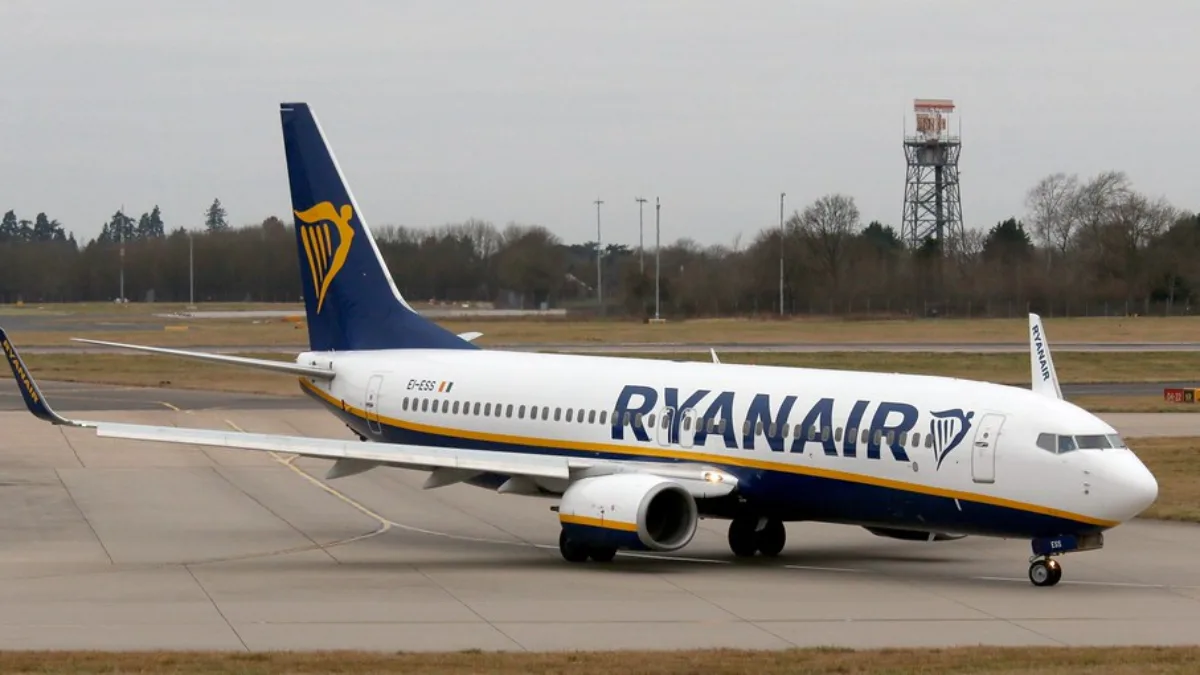
Morocco has become far more than another leisure destination on Ryanair’s map. By 2026, the Irish low-cost carrier had five bases in the Kingdom, 16 locally based aircraft and a network that also includes domestic flying. For an international audience, the striking point is not simply Ryanair’s scale: it is how Morocco is becoming one of the clearest examples of the airline shifting capacity toward lower-cost, fast-growing markets outside the EU.
From inbound tourism to a genuine operating market
Ryanair’s Moroccan footprint has expanded quickly. In 2024 it announced 14 based aircraft across Marrakesh, Fez, Agadir and Tangier, together with 175 summer routes, including 11 domestic services. The opening of Rabat as a fifth base in 2026 brought the based fleet to 16 aircraft.
For Winter 2026, Ryanair is marketing 5.3 million seats across 156 routes, including 17 new services, linking Morocco with 14 countries. The distinction between “serving” a country and “basing” aircraft there matters: based aircraft overnight locally, begin their operating day from the airport and require crews and support functions on the ground. Morocco is now part of Ryanair’s production platform, not just the southern end of its European network.
Few markets combine the same advantages. Morocco is close enough to Western Europe for highly productive Boeing 737 rotations, has a large tourism economy, strong visiting-friends-and-relatives traffic, winter-sun demand and multiple airports capable of supporting point-to-point flying. It also gives Ryanair access to growth without relying on a single dominant hub.
This is especially relevant for UK, Irish and wider European travellers. A network built from Marrakesh, Agadir, Fez, Tangier and Rabat allows the airline to sell Morocco as a portfolio of destinations rather than a single gateway market.
Marrakesh remains the largest Ryanair base in the country and is the natural leisure powerhouse. Fez has a strong VFR and city-break profile. Agadir is heavily leisure-driven. Tangier combines European links with northern Moroccan demand, while Rabat marks a move into a more balanced capital-city market.
Rabat’s 2026 opening involved two based aircraft and a reported $200 million aircraft investment. Ryanair announced 20 routes for Summer 2026, including seven new international links. The fifth base lifted the airline’s stated aircraft investment in Morocco to $1.6 billion.
Domestic flights change the competitive picture
The most unusual part of the strategy is not the Europe–Morocco network but the launch of 11 domestic routes from 2024. Ryanair entered a market where Royal Air Maroc had long been the central network carrier and Air Arabia Maroc was the main low-cost challenger.
These domestic sectors matter because they can bypass Casablanca. Direct links between regional cities support a very different travel pattern from RAM’s hub-and-spoke model. For passengers, that can turn a long overland journey into a short flight. For tourism, it can make multi-city itineraries easier without forcing travellers back through the country’s main gateway.
Ryanair and Royal Air Maroc are not mirror-image competitors
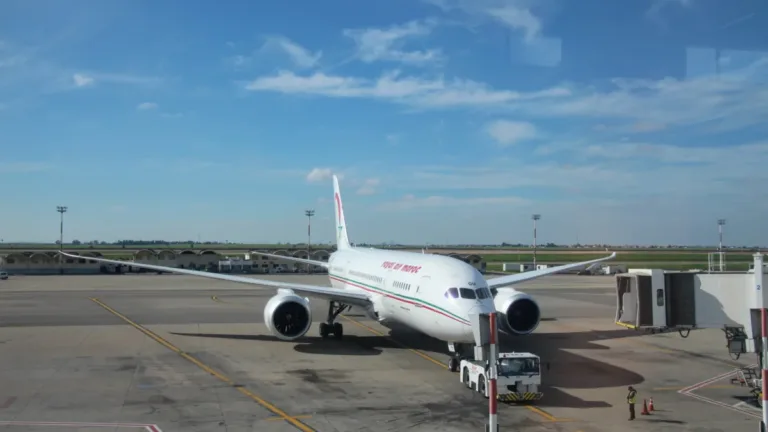
Royal Air Maroc is built around Casablanca and connectivity. Its value lies in feeding African, European, Middle Eastern and transatlantic traffic through a hub. Ryanair is built around point-to-point demand, high aircraft utilisation and simple operating patterns.
That means the two airlines overlap, but not everywhere. They compete for price-sensitive leisure traffic and on some city pairs, yet Ryanair can also stimulate routes that would not fit RAM’s hub logic. The more direct low-cost pressure may fall on Air Arabia Maroc, whose business model is closer to Ryanair’s on regional and leisure markets. That overlap is stronger among price-sensitive leisure and regional customers, increasing pressure on costs, frequencies and the speed at which new routes can be opened.
Ryanair routinely reallocates aircraft toward countries and airports where taxes, charges and growth prospects are attractive. That is an important lens for understanding Morocco. The airline’s expansion is not only a tourism story; it is also a capital-allocation decision.
The upside for Morocco is significant capacity, lower fares and more direct connectivity. The strategic risk is that mobile low-cost capacity can also move elsewhere. Ryanair has repeatedly shown in Europe that aircraft can be shifted quickly when airport economics deteriorate.
Regional airports are central to the model
Ryanair’s Winter 2026 plan spans 13 Moroccan airports, including regional points such as Tetouan, Essaouira, Ouarzazate, Dakhla and Nador. This wider footprint supports Morocco’s ambition to spread tourism beyond the traditional gateways.
Dakhla is a good example. Direct European services give the destination visibility and accessibility without requiring passengers to connect through Casablanca. The same logic applies to several smaller regional markets.
Growth on this scale creates operational pressure. Low-cost economics depend on punctuality and fast turnarounds, while Moroccan airports are simultaneously preparing for a major traffic increase ahead of 2030. More Ryanair flying means more stands, more passenger-processing demand and more pressure on ground handling and border-control capacity.
One of the clearest differences between Ryanair and Royal Air Maroc is geographic. Casablanca is the centre of RAM’s network; it is not the centre of Ryanair’s Moroccan strategy. Ryanair’s strength comes from building parallel point-to-point networks through Marrakesh, Fez, Agadir, Tangier and Rabat.
That helps explain why the relationship is both competitive and complementary. Ryanair expands regional access while RAM preserves the country’s main connecting-hub function.
How far can Ryanair go in Morocco?
In 2024, Ryanair was already talking about more than 5 million passengers in its Moroccan summer programme. By 2026, the airline says its Summer programme will carry more than 10.7 million passengers to, from and within Morocco, while Winter 2026 offers 5.3 million seats. Those figures use different metrics and seasonal periods, so they should not be compared directly, but they point in the same direction: Morocco has become one of Ryanair’s most important growth markets.
The next phase may involve additional frequencies, more secondary cities and deeper domestic penetration. The strategic question for Morocco is no longer whether Ryanair matters. It is how to capture the benefits of the airline’s growth without becoming overly dependent on one highly mobile operator.
- 5 bases in Morocco.
- 16 based aircraft in 2026.
- $1.6bn in aircraft investment claimed by Ryanair.
- 13 Moroccan airports in the Winter 2026 programme.
- 156 routes and 5.3m seats for Winter 2026.
- 11 domestic routes introduced from 2024.
Primary sources
Ryanair Corporate: Morocco Winter 2026 schedule; Rabat fifth-base announcement; 2024 Morocco investment and Tangier base announcements. Employment and investment figures are company claims.


Leave a Reply