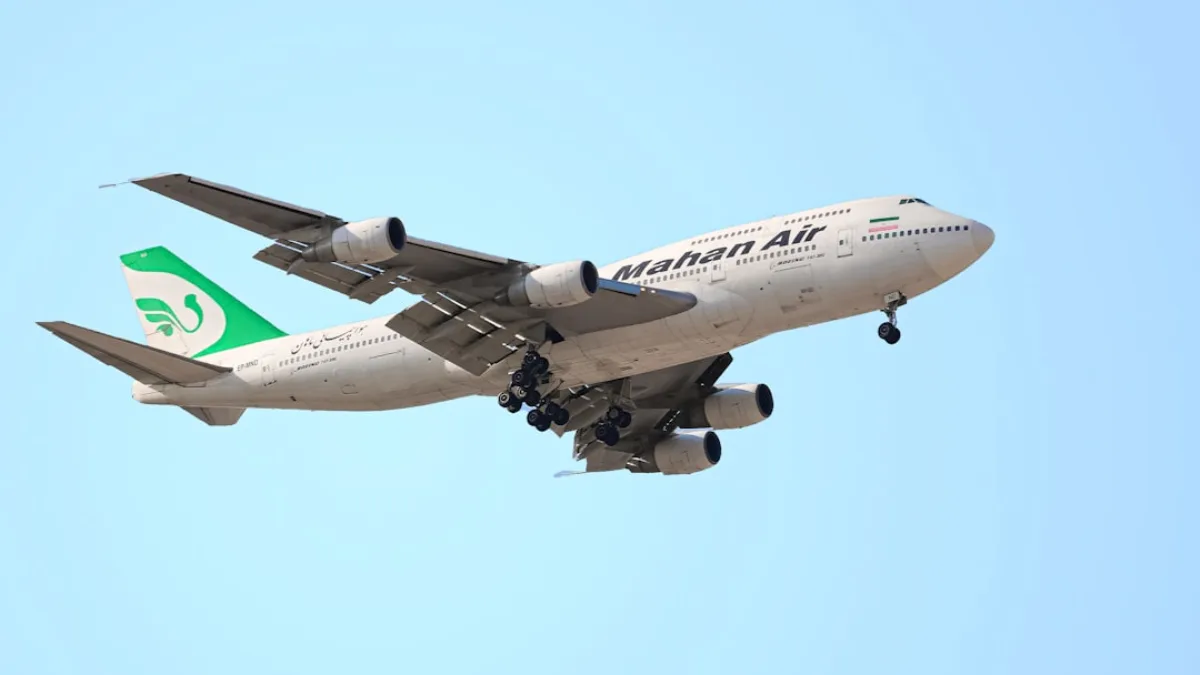
Iraq has suspended Iran-linked flights at all four airports where those services were operating: Baghdad, Najaf, Erbil and Sulaimaniyah. The restrictions expanded in stages in late September 2026 and illustrate how sanctions pressure can sharply reduce bilateral aviation without closing Iraqi airspace as a whole.
How the suspension spread across four airports
Baghdad was the first major point affected. On September 22, Iran’s Civil Aviation Organization said Baghdad would no longer receive flights operated by Iranian carriers and indicated that some services might be shifted to Najaf.
That alternative lasted only a few days. By September 25, Najaf, Erbil and Sulaimaniyah had also suspended Iran-linked services, according to Reuters, Iraqi state reporting and airport information. Najaf said its suspension would remain in place until further notice.
Najaf is the most exposed passenger market
The scale of the impact is particularly visible at Najaf, a major gateway for religious travel. According to a schedule cited by Shafaq News, 18 of the 20 flights planned on one Wednesday were linked to Iranian cities.
That makes the suspension much more than a marginal schedule adjustment. It affects pilgrims, tour operators, airport activity and a large bilateral travel flow tied to Iraq’s holy cities.
This is not a general Iraqi airspace closure
Iraq has not announced the closure of its national airspace. Other international and domestic traffic continues. The restrictions are targeted at services connected with Iran.
That distinction matters for passengers connecting through Iraq: flights unrelated to Iran may continue to operate even while bilateral Iran services disappear from airport schedules.
Sanctions pressure reaches the entire aviation supply chain
The effect is not limited to airline names. Sanctions exposure can complicate access to fuel, ground handling, airport services and other support provided by foreign companies.
That is why an airline can become operationally constrained even without a formal ban on every aircraft or a nationwide airspace closure.
Regional connections may become longer and more expensive
Passengers who would normally fly directly between Iraq and Iran may have to reroute through Gulf or Turkish hubs, depending on nationality, visa rules and available schedules. That can increase travel time, connection risk and fares.
The restrictions also add pressure to a regional network already affected by wider geopolitical disruption and changing airline schedules.
What to watch next
The key questions are how long the suspensions last, whether exemptions are introduced and whether similar restrictions spread to other regional markets. Travellers should verify the status of their individual flight directly with the operating airline before departure.
Sources
Reuters, September 25, 2026; Najaf International Airport / Shafaq News; Iran Civil Aviation Organization, September 22, 2026.
Leave a Reply