
Flydubai FZ1073: A Flight Into Terror, the Full Story of a Day That Changed Everything
Inside flydubai FZ1073: the cockpit axe attack, passengers' intervention, the damaged Boeing and the investigation into its first officer.
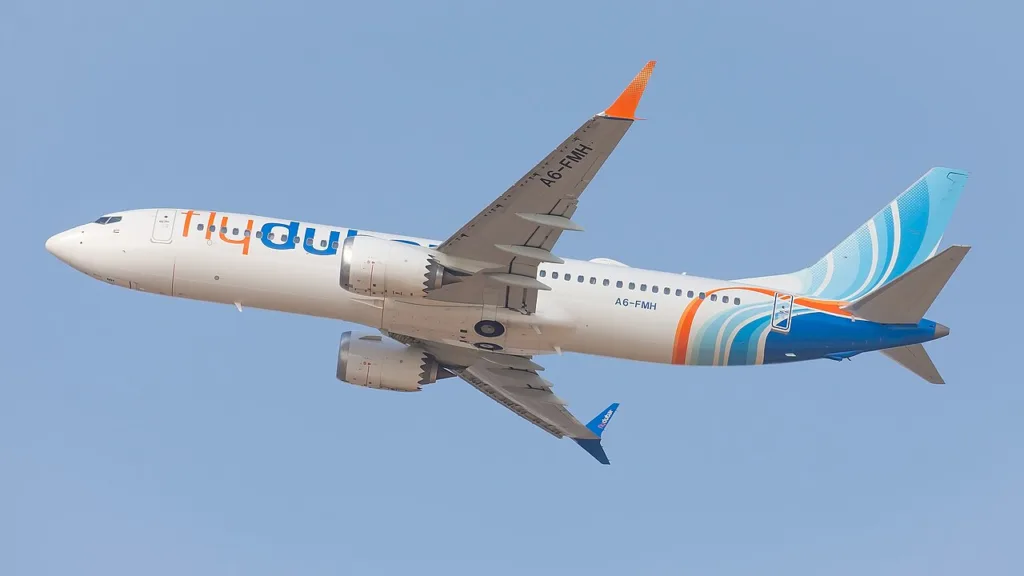
At Dubai International Airport on the morning of Wednesday, 30 September 2026, passengers settle into a flydubai Boeing 737 MAX 8 bound for Tel Aviv. Many are returning home to Israel. Yaniv Hayoun is travelling with his family after a holiday in Vietnam. Two other people on board are flydubai pilots, but they are not scheduled to operate this service: they are travelling to take up duties on a later flight. Neither they nor the passengers can yet know how important that coincidence will become.
In the flight deck, Indian captain Smit Machchhar is meeting his first officer, Hammam al-Hammami, for the first time. The Omani pilot is 29. They exchange ordinary small talk. Machchhar will later say there was nothing troubling about his colleague’s behaviour. The captain has spent more than a decade flying for SpiceJet before joining flydubai about four years earlier. Long before this flight, he spoke publicly about the duty that mattered most to him: ensuring the people behind the cockpit door walked off his aircraft safely.
Flight FZ1073 departs Dubai at approximately 7.05am Dubai time (03:05 UTC), according to the flight record published by Flightradar24. Its route crosses Saudi airspace before continuing towards Israel. The aircraft is Boeing 737 MAX 8 A6-FKF. At this point, the journey appears routine. Ten days later, Emirati prosecutors will allege that the man in the right-hand seat had chosen this route as the setting for a planned suicide attack.
At 34,000 feet, an ordinary morning disintegrates
For roughly two hours the two pilots share the flight deck. Then, while the aircraft is cruising at around 34,000 feet, Machchhar feels a devastating blow to his head. His first thought is not that he has been attacked. He thinks part of the cockpit interior may have collapsed onto him. A second blow follows, then more. The man he has been working alongside is striking him with the aircraft’s emergency crash axe.
Machchhar struggles to release his harness. He raises his arms against blows aimed at his head, sustaining deep wounds to his arm as well. Blood loss affects his sight; he can make out little more than outlines. He reaches for the cockpit-door release and cries out for help. The physical effort repeatedly leaves him losing consciousness. This is how he describes the attack in his first extensive newspaper interview, given to The National from Zayed Military Hospital in Abu Dhabi on 17 October.
Outside the locked door, others begin to sense that something is badly wrong. A flydubai pilot travelling to operate the return service notices the cockpit door behaving oddly, opening and closing repeatedly. The UAE Attorney-General’s account of 9 October says he attempts to enter using the access code. Once inside, he sees al-Hammami attacking the captain. A cabin-crew member and passengers rush forward to assist.
Machchhar’s own memories come in fragments. He recalls the engines winding down and feeling the jet pitch into an alarming descent. He tries again to open the flight-deck door. When he comes round, he is lying between the cockpit and the forward galley. The door has opened. A flydubai pilot travelling in the cabin, followed by crew and passengers, gains access and helps bring the assault to an end.
Flight-tracking data tell another part of the story. Early reports cite losses of roughly 14,000 to 16,000 feet in about 30 seconds; other accounts measure a fall of around 17,000 feet across a different portion of the track. Those figures should not be mistaken for identical measurements. Their shared finding is unmistakable: the Boeing is descending at an exceptional rate. Its transponder broadcasts 7700, the general emergency code, and later 7500, the code for unlawful interference. Controllers see the flight veer away from its intended route.
The people who reached the controls
Yaniv Hayoun is among the passengers who move towards the cockpit. On his return to Israel, he describes helping to overpower the attacker and briefly pulling back on the aircraft’s controls. Asked what gave him the idea, he points to the television documentary Air Crash Investigation, also known internationally as Mayday. That does not make Hayoun a trained airline pilot, or the person who flew the Boeing to safety. His account describes an improvised intervention at the moment control was being wrested from the assailant. It was reported by The Times of Israel and The Indian Express.
The next stage depends on professional flight crews. Two flydubai pilots travelling as passengers assume control, according to the Emirati investigators. One has been rostered for the return flight. With passengers and cabin crew restraining al-Hammami, the pilots recover the aircraft and arrange a diversion. It is a sequence in which several people played different roles: the injured captain making access possible, cabin occupants stopping the violence, Hayoun describing a brief attempt to raise the nose, and qualified pilots bringing the flight back under control.
While the aircraft heads for Saudi Arabia, Machchhar is being treated in the cabin. Dentist Shota Musaev, another passenger, joins cabin crew in trying to staunch the bleeding. He later tells The National that he kept pressure on the wounds for around 45 minutes, making use of ice packs as they struggled to contain the blood loss. The captain thinks of his son and daughter and prays. He is determined not to give up, although he cannot be certain he will live. While the relief pilots concentrate on reaching Tabuk, the dentist and cabin crew continue treating a critically injured man.
The crew choose Tabuk, in north-western Saudi Arabia. According to a contemporaneous chronology published by Al Jazeera, controllers receive an emergency landing request at about 8.44am Saudi time. The aircraft lands at Prince Sultan bin Abdulaziz International Airport at around 9.45am Saudi time (06.45 UTC). Medical personnel attend to those injured. Saudi authorities take custody of the first officer. The travellers are subsequently carried onwards to Israel on a replacement aircraft. Everyone aboard the original flight survives.
The damaged tail that tells another story
Photographs taken after the landing reveal serious damage to the rear of the aircraft. Part of the rudder, the movable panel attached to the vertical tail, appears to be missing. The images, published by Aviation Week with an Associated Press credit, show the actual FZ1073 aircraft, registration A6-FKF. The damage poses a separate engineering problem from the violence in the cockpit.
A very steep descent can carry an aircraft towards speeds beyond its operating limits. As airspeed rises, aerodynamic pressure on the structure increases sharply. Pulling out of a dive can then impose substantial loads as the aircraft changes direction. The vertical tail helps maintain directional stability; the rudder provides a means of controlling yaw, the aircraft’s movement left or right about its vertical axis. Losing part of that surface can reduce control margins without necessarily making a controlled landing impossible.
Several specialist analyses have discussed excessive speed and structural loads during FZ1073’s descent. The photographs alone, however, cannot establish when the rudder failed or exactly which forces caused it to separate. That requires flight-recorder data, a reconstruction of speed and control inputs, and a detailed examination of the airframe. A safe landing is therefore not the end of the technical story. The Boeing survived an extreme flight-path excursion with visible damage to a primary control surface.
The investigation reaches back years
On 9 October, UAE Attorney-General Hamad Saif Al Shamsi announces findings that change the way the flight is understood. His prosecutors accuse al-Hammami of planning a suicide attack against the passenger terminal at Israel’s Ben Gurion Airport, intending to cause mass casualties. They say the 29-year-old Omani had drawn inspiration from the attacks of 11 September 2001. These are allegations set out by prosecutors during an ongoing criminal inquiry, not a final judicial verdict.
Investigators say the pilot had already flown to Tel Aviv twice to familiarise himself with the route and the airport, making 30 September his third flight on the service. The prosecutor describes deliberate psychological and physical preparation, including repeated exposure to extremist material online and private boxing training. Officials say al-Hammami confessed to the plan with his lawyer present. They are still investigating whether anyone else assisted him.
His employment record now assumes new significance. According to the official account, he flew for Oman Air between 2020 and 2024, completed three months of theoretical training with Royal Air Maroc in 2025 as part of a potential recruitment process, but was not hired. In a 3 October statement reported by Anadolu, the Moroccan airline said his application had been rejected and he had never served among its flight crews. He subsequently joined flydubai in January 2026. At recruitment, he held a pilot’s licence, submitted a good-conduct certificate and passed the required professional and security checks. Nothing in those checks, prosecutors say, revealed the extremist beliefs or violent intentions they now attribute to him. The question raised is not only why a crash axe was available to a pilot, but what safety-critical employers and regulators can realistically learn about applicants across several jurisdictions.
The prosecutors trace the suspect’s alleged ideological trajectory back to 2017, while he was studying in Australia. They describe extremist literature and online propaganda, contacts in Melbourne, and a centre called MyCentre. One man named in reporting about these allegations, community leader Samir Mohtadi, also known as Abu Hamza, has strongly denied that al-Hammami had any connection with his centre. Australia’s joint counterterrorism investigators, including the Australian Federal Police, Victoria Police and ASIO, have examined the suspect’s years in the country. The prosecutor’s allegations and the Australian denial remain distinct pieces of the record.
The inquiry also leads to New Zealand. On 6 October, police there confirmed that al-Hammami had stayed in the country from 30 November 2018 until 23 May 2019 to complete part of his flight training for a UK-based company. Investigators began examining records from that period. The dates fill a gap between his studies in Australia and his subsequent work for commercial airlines.
Early media reports also claimed that the first officer had previously been barred from flying in Oman over suspected extremist sympathies. That allegation raises obvious questions about information-sharing between airlines and authorities. Yet the UAE prosecution’s published findings separately state that flydubai’s recruitment requirements were satisfied. Whether a warning existed, who held it and whether it could lawfully have reached the employer are matters to establish, not grounds for assuming a proven hiring failure.
There is another question the captain himself cannot resolve. If, as prosecutors allege, the intended target was an airport terminal in Tel Aviv, why did the first officer launch the assault while the aircraft was still more than an hour away? Machchhar says the timing makes no sense to him. The gap between the proposed final target and the dive over Saudi Arabia is one of the reasons investigators still need the flight’s full technical record.
The consequences extend beyond the courtroom. After the attack, Israel introduced restrictions affecting the nationalities of pilots and cabin crew assigned to flights into its airspace. Reporting by Al Jazeera describes a list of 31 countries and the inclusion of certain dual nationals. Air France said airlines must respect the entry conditions of the states they serve; Smartwings acknowledged receiving the directive. The move has set off a different dispute: whether requirements imposed by one state can be reconciled with another country’s employment and anti-discrimination laws. French legal specialists have questioned restrictions based on nationality rather than individual screening.
Saudi Arabia has opened a separate aviation-safety investigation, Reuters reported on 7 October. It is being conducted under the framework of ICAO Annex 13, normally used to identify safety lessons from serious aviation occurrences. The US National Transportation Safety Board and the UAE are participating. Its engineering and operational questions are separate from those being examined by criminal prosecutors. The condition of the Boeing’s rudder, the flight recorders and the aircraft’s extreme descent belong to that safety inquiry.
Already followed by AeroSillage’s earlier report on the alleged plot, the criminal investigation is now proceeding across borders. Al-Hammami was initially detained in Saudi Arabia and subsequently transferred to the UAE. On 14 October, Indian media reported that two Maldivian pilots employed by flydubai had been arrested in connection with the inquiry. Both were reported to know the suspect, although Emirati authorities had not publicly described any alleged role they might have played. The report came after prosecutors said al-Hammami had claimed to act alone, a claim investigators were continuing to examine. Prosecutors have taken statements from Machchhar, the relief pilots and cabin crew, while reviewing technical reports and recordings. Their forensic medical assessment describes potentially fatal head injuries consistent with the use of the emergency axe. Investigators continue to assess evidence and possible accomplices.
For Machchhar, recovery means something more immediate. Interviewed at Zayed Military Hospital, he says he still wants to fly. He describes the people who came to his aid and those who treated him during the diversion. For the inquiry, the unanswered questions reach from the first officer’s alleged preparation to the precise movements of the aircraft during its dive and the damaged rudder at Tabuk.
JOIN THE CONVERSATION
Let’s discuss this story.
A question, a clarification or a different perspective? Share it with us.