
US lawmakers urge FAA to pause AI air traffic tool over safety oversight concerns
US lawmakers want the FAA to pause a new AI-assisted air traffic tool in the Washington area while safety testing and training are scrutinised.
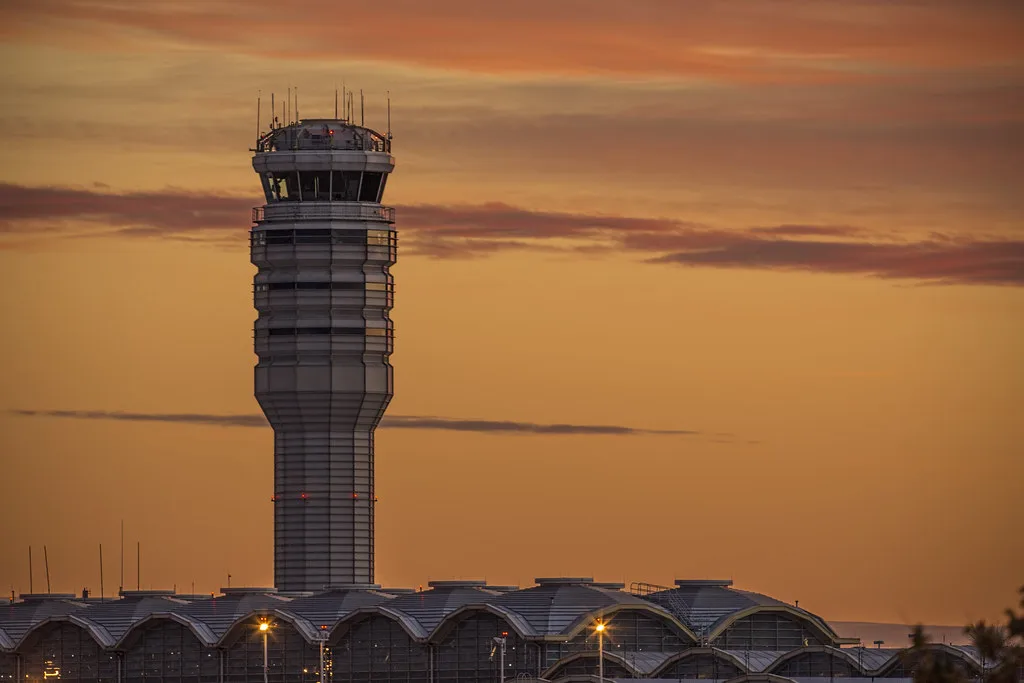
More than two dozen US lawmakers are calling for a pause in the rollout of an artificial-intelligence tool intended to assist air traffic operations in the Washington, DC area. Their request, reported by Reuters on 13 October 2026, centres on transparency over safety evaluations, testing and staff training. The system, called SMART (Strategic Management of Airspace, Routes, and Trajectories), draws on more than 200 data streams to anticipate traffic constraints and recommend scheduling changes; it does not fly aircraft or replace controllers’ operational decisions. Reuters reported that the FAA awarded Air Space Intelligence a $875 million, 12-year contract in June and that lawmakers requested an answer by 19 October.
What lawmakers are asking
Representatives including April Delaney, Alexandria Ocasio-Cortez and Don Beyer are among those raising concerns about the FAA’s plans. The lawmakers want the agency to address unanswered questions before the system is deployed more widely.
Crucially, a congressional request is not an FAA order. The reporting describes pressure to pause the tool, not a confirmed agency-wide suspension. Nor does the request itself establish that the tool has caused an aviation incident.
Why testing matters in air traffic management
Air traffic control involves time-critical decisions under tightly controlled safety procedures. Any software that informs those decisions needs clearly defined performance limits, reliable behaviour in unusual circumstances and processes that allow controllers to identify or disregard incorrect outputs.
An AI system may offer assistance by processing complex traffic information, but its usefulness depends on the specific task for which it was designed. Validation must address how the system performs outside routine scenarios as well as during everyday operations.
Laboratory performance alone is not enough to establish that a tool is suitable for operational use. Safety assessments need to consider inaccurate data, unusual traffic patterns, misleading alerts, system outages and how controllers respond when an output is unreliable. A recommendation that works well under normal conditions may still create risk if its limitations are unclear at a critical moment.
Training is therefore about more than learning which button to press. Staff must understand the system’s intended role, recognise errors and maintain the ability to operate when it is unavailable. The lawmakers’ challenge is not necessarily a rejection of AI in aviation; it is a demand that deployment follow the same evidence-based safety principles expected of other changes to air traffic management.
Artificial intelligence is not a single technology with a single safety profile. A tool that forecasts workload presents different risks from one that suggests traffic sequencing or informs conflict resolution. An assessment therefore needs to specify exactly what the Washington-area system does, how autonomous it is and what operational decisions it influences. Without detailed technical documentation, it would be premature to suggest that the tool has replaced human controllers.
Safety validation must examine inaccurate inputs, rare traffic conditions, outages and the traceability of recommendations. Human factors are equally important: operators may place undue confidence in a persuasive interface, while frequent incorrect warnings may encourage them to ignore genuine alerts. Training must cover those limitations and the ability to continue working when the technology is unavailable.
An algorithmic recommendation becomes useful in air traffic management only when controllers can understand its scope and identify unreliable outputs. Validation should examine missing, conflicting and unusual data, as well as how human operators recover when a recommendation proves unsuitable. These are questions for the SMART review, not findings that the tool has already failed them.
In safety-critical operations, an advisory system must be assessed not only for average performance but also for how it fails. Controllers need to understand, challenge and override recommendations, while retaining established procedures if data are misleading or unavailable. That is why validation, training and phased implementation matter; the lawmakers’ request does not itself establish that the system is unsafe.
The lawmakers’ letter is a demand for evidence and transparency, not a finding that the FAA has committed a violation. Nor does it amount to a general verdict against AI in aviation. The meaningful test is whether the tool can provide a measurable operational benefit while retaining human authority, clear accountability and reliable safeguards under both routine and abnormal conditions.
Training is particularly important. Controllers need to know when to trust an advisory function, how to identify errors and how to keep operating if the system is unavailable. Clear accountability and the ability to reconstruct how a recommendation was produced are also essential elements of safety oversight.
The debate has implications beyond Washington. Aviation authorities worldwide are examining increasingly capable digital tools, but safety-critical adoption cannot be judged by technical promise alone. A transparent demonstration of reliability, alongside continued human supervision, remains the central issue.
What still needs to be established
The label “artificial intelligence” covers very different functions in aviation: forecasting traffic demand, identifying anomalies, proposing arrival sequences or helping detect potential conflicts. Their safety implications are not interchangeable. Assessing this particular system requires information about what it actually does, how much autonomy it has and whether it influences operational decisions. The lawmakers’ complaint focuses on the lack of access to testing and training information needed to examine those questions.
Transparency is more than a political demand. If a system behaves unexpectedly, controllers and safety investigators should be able to establish what data it used, what advice appeared and when human intervention was required. Human factors are central: a confident-looking but inaccurate recommendation may encourage overreliance, while persistent false alerts can lead users to disregard an otherwise useful warning function.
Two conclusions would be premature. A letter from lawmakers does not establish that the FAA violated a safety requirement; it asks the agency to demonstrate that the relevant safeguards are in place. Nor does the dispute show that AI assistance in air traffic management is inherently unsafe. Different tools require different evidence. The practical question is whether each proposed application can deliver measurable benefits without compromising established layers of human oversight and operational resilience.
Source: Reuters, 13 October 2026.