For international readers, Saturday’s aviation picture is about networks becoming usable again — or becoming more ambitious. The FAA has concluded that the software issue reviewed on some 737 MAX flight computers is not a safety concern, removing a late obstacle for the MAX 10. Alaska Airlines is meanwhile turning Seattle into a much broader long-haul battleground, KLM has accepted its first A350, and Thai Airways says it can restore its full schedule after two days of cuts. In manufacturing, Airbus appears to have accelerated September deliveries, although the figure remains provisional.
FAA decision clears a major hurdle for the 737 MAX 10
The US Federal Aviation Administration said its expert review found that a software glitch in some 737 MAX flight computers does not create a safety concern. The regulator said pilots retain full control and cockpit indications remain clear and unambiguous. Boeing is still developing a software update and interim operating guidance remains relevant.
Why it matters in the US: this is a material change from yesterday’s uncertainty. The FAA had held up MAX 10 certification while it assessed the issue; the review now removes that specific obstacle. It does not itself amount to final certification, but it moves Boeing closer to approval of a variant with a large order backlog and major US customers including United, Southwest and Alaska. The next question is no longer whether this glitch blocks certification, but how quickly the remaining regulatory work can be completed.
Alaska takes its Seattle rivalry with Delta into long-haul markets
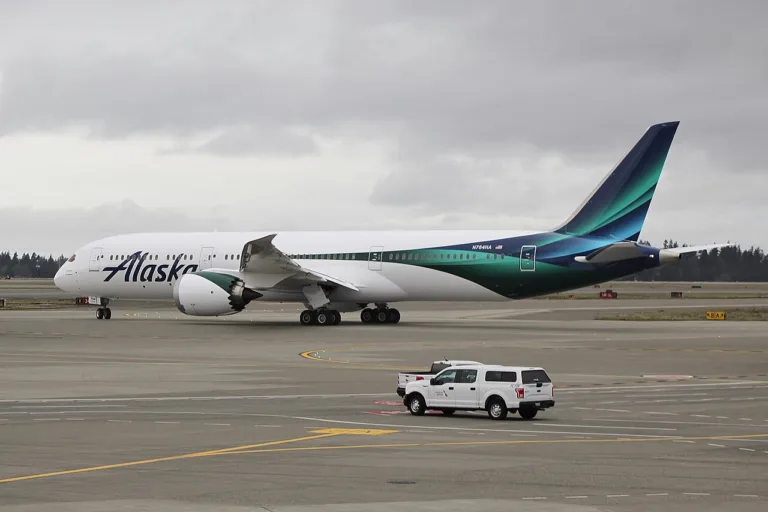
Alaska Airlines is using the widebody capability acquired with Hawaiian Airlines to push beyond its traditional domestic model. It aims to serve at least 15 intercontinental destinations from Seattle by 2030 and become the city’s largest international carrier. Paris and Athens are planned for 2027 as the airline seeks more premium and international revenue.
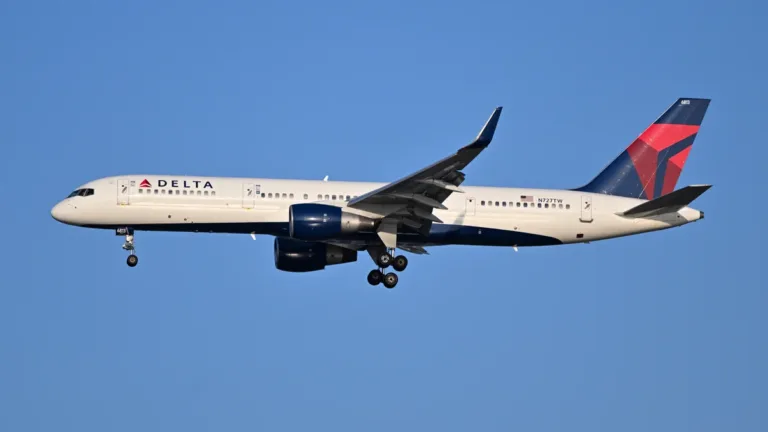
Why it matters: Seattle is not simply gaining a few new routes. Alaska is attempting to change its economics by combining a lower-cost heritage with premium cabins, long-haul aircraft and a broader loyalty proposition. That puts it into more direct competition with Delta, whose Seattle network already feeds international services. For US travellers, a successful strategy could produce more nonstop choices to Europe and Asia; for Alaska, it also brings higher costs and much greater operational complexity.
KLM receives its first Airbus A350
KLM took delivery of its first A350-900 on October 2. The 331-seat aircraft has 34 World Business Class seats, 26 Premium Comfort seats and 271 Economy seats. Toronto is due to become its first commercial destination in the coming weeks, followed during the winter season by Montreal, Kilimanjaro, Dar es Salaam, Nairobi and Zanzibar.
Why it matters internationally: the delivery begins a significant widebody transition at one of Europe’s major connecting airlines. KLM plans to use A350s to replace older Boeing 777-200ERs and Airbus A330s. That affects not only fleet efficiency but also the competitive product offered through Amsterdam against other European hubs. The first North American deployments make the change immediately relevant to transatlantic travellers.
Thai Airways plans full schedule restoration after two days of cuts
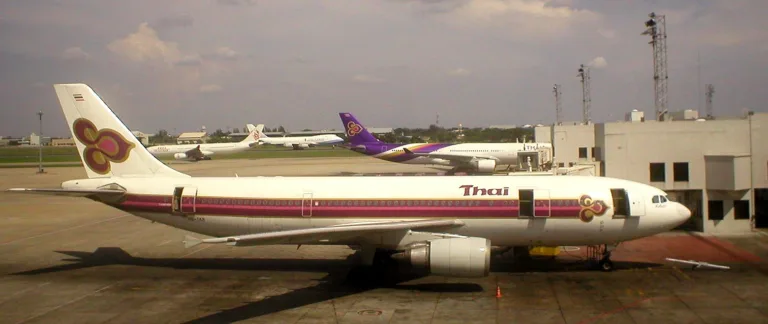
Thai Airways says all scheduled flights are due to operate again on October 3 after the carrier cut 15 flights on October 1 and nine more on October 2. The airline has mobilised additional personnel and resources following a staffing shortage that developed amid severe weather and flooding disruption around Bangkok.
Passenger impact: a restored timetable does not instantly clear every baggage or connection problem left by earlier disruption. Travellers through Bangkok should continue checking live flight status and baggage information. Operationally, the episode shows why hub resilience depends on ground staff, transport access and baggage systems as much as aircraft availability.
Airbus delivery pace improves, but September total is not official yet
Airbus delivered around 72 aircraft in September, according to industry sources, almost matching 73 in the same month last year. Airbus has not confirmed the provisional figure and is expected to publish its monthly industrial bulletin on October 8. The reported acceleration follows concern over parts-quality issues and persistent engine and component shortages.
Why it matters: deliveries are the point at which production plans become usable airline capacity and manufacturer cash flow. A stronger September would narrow some of the gap created by earlier delays, but one monthly sprint does not prove that supply constraints have disappeared. Airbus is targeting roughly 870 aircraft for the year, making the official October 8 data the more important benchmark.
Najaf reopens substantial capacity to Iranian airlines
Iraq says Iranian airlines other than Mahan Air have been cleared to operate up to 40 daily flights to and from Najaf International Airport following an earlier suspension linked to US sanctions. The decision restores significant capacity on a market driven by religious, family and regional travel.
Why it matters beyond Iraq: Middle East airline schedules remain unusually sensitive to sanctions, security notices and national airspace decisions. The Najaf clearance is therefore a specific operational reopening rather than evidence that regional aviation has broadly normalised. Travellers and carriers still face a patchwork of changing restrictions elsewhere in the region.
The thread to watch
Today’s stories share one theme: capacity exists only when regulation, aircraft, labour and infrastructure line up. Boeing has removed one certification obstacle, KLM has added a new long-haul aircraft, Thai Airways is rebuilding its operating programme and Alaska is betting that Seattle can support a much larger international network. The next test is execution rather than announcement.
Primary references include the FAA, Air France-KLM/KLM, Reuters and Thai Airways operational information. Status checked on the morning of October 3, 2026.