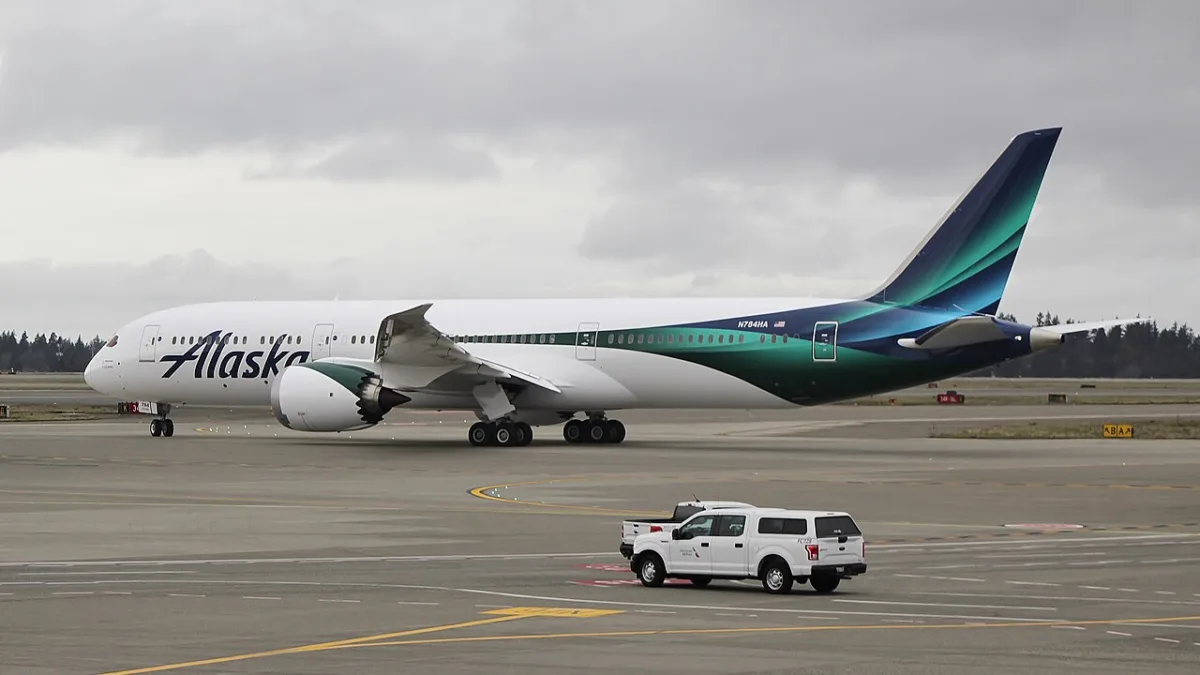
Seattle is no longer just the place where Alaska Airlines is strongest at home. It is becoming the airport where the carrier is trying to prove it can compete globally. After acquiring Hawaiian Airlines, Alaska suddenly gained something it had never possessed at scale: widebody aircraft, long-haul operating expertise and a path into Europe and Asia. In 2026, that strategy is no longer theoretical. The airline is building a Boeing 787 operation around Seattle, adding intercontinental routes and moving directly into territory where Delta Air Lines has spent more than a decade building its own Pacific Northwest hub.
The result is one of the most interesting network battles in U.S. aviation. Alaska still dominates Seattle overall, but Delta remains the airport’s leading international carrier by passenger share. Alaska’s answer is not simply to add more flights. It is attempting to change what kind of airline it is.
Seattle is Alaska’s fortress, but Delta still leads internationally
Seattle-Tacoma International Airport is unusual because two large U.S. carriers both treat it as a strategic hub. According to Port of Seattle data, Alaska Air Group carries roughly half of all passengers at SEA, while Delta accounts for about a quarter. On domestic traffic, Alaska’s advantage is even larger.
Internationally, however, the balance is different. Port of Seattle figures show Delta still ahead in international passenger share, with Alaska behind it. That gap explains much of Alaska’s current strategy: the airline already owns the local customer base, corporate relationships and domestic feed. The missing piece has been a sufficiently large long-haul network to keep those passengers within its own system when they travel overseas.
Before the Hawaiian Airlines acquisition, Alaska was fundamentally a narrowbody airline. Its strengths were the West Coast, Alaska, Hawaiʻi, transcontinental flying and a dense domestic network. Hawaiian brought widebody aircraft, long-haul crews, Pacific experience and an established international operating platform.
That combination gave Alaska a shortcut. Instead of spending years building a widebody airline from scratch, it could use Hawaiian’s Boeing 787-9 operation and long-haul know-how while gradually creating an Alaska-branded global product.
The 787 is now central to that transformation. Alaska has said Seattle will become the base for as many as 17 Dreamliners over time, creating a fleet large enough to support a meaningful intercontinental schedule rather than a handful of prestige routes.
Paris and Athens make the European ambition much clearer
Alaska’s 2027 schedule is where the scale of the plan becomes visible. The airline will launch seasonal nonstop service from Seattle to Athens on May 12, 2027 and to Paris-Charles de Gaulle on May 25, 2027.
Athens will operate three times weekly through October. Paris will operate five times weekly through the fall. Both routes are planned with the Boeing 787-9.
These additions matter for two reasons. First, they expand Alaska beyond the initial phase of long-haul flying into a network with multiple European and Asian destinations. Second, Paris is a market where Delta already has strong brand recognition and alliance depth through Air France-KLM, making the competitive overlap especially visible.
Alaska says its Seattle network will include Athens, Paris, Reykjavik, London, Rome, Seoul and Tokyo by summer 2027. The company now talks about reaching at least 15 long-haul intercontinental destinations by 2030.
That changes the role of Seattle inside the Alaska system. A domestic passenger arriving from Portland, Spokane, Anchorage, San Diego or elsewhere on the West Coast can increasingly connect onto an Alaska-operated long-haul flight rather than transfer to a partner or rival carrier.
It also creates new itinerary possibilities from Hawaiʻi. Alaska specifically points to same-day Honolulu–Seattle–Paris connections as an example of how the combined Alaska-Hawaiian network can be used as a single system.
Delta is not standing still
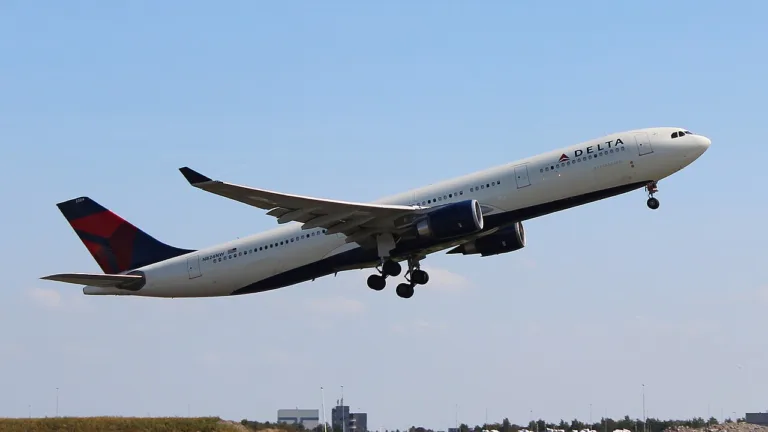
Delta has spent years developing Seattle as one of its core U.S. gateways to Asia and Europe. The airline operates a large domestic schedule from SEA, has invested heavily in premium ground facilities and continues to add international flying.
In summer 2026, Delta launched new Seattle routes to Rome and Barcelona. It also operates long-haul service from Seattle to destinations including Amsterdam, Paris, London, Seoul, Tokyo, Taipei and Shanghai, depending on season and schedule.
Delta has also invested in its Seattle premium proposition, including a Delta One Lounge and Sky Club facilities. In other words, Alaska is not attacking an underdeveloped competitor. It is entering a market where Delta has already built the ingredients of a mature global hub.
The competition is becoming a product battle, not just a route battle
Alaska’s long-haul push would be much less credible if it stopped at adding destinations. The carrier is therefore trying to move upmarket at the same time.
Its Boeing 787-9 product includes lie-flat business-class suites, and Alaska has announced a broader premium strategy under its new long-haul experience. It is also developing a new international lounge in Seattle, expanding premium seating and rolling out Starlink Wi-Fi across the Alaska and Hawaiian fleets.
That matters because long-haul economics are driven disproportionately by higher-yield customers. A carrier can fill an aircraft and still struggle if too many seats are sold cheaply. Alaska’s own strategic presentations make clear that premium products, loyalty, international flying and cargo are expected to become a much larger part of the business.
The financial logic is important. Reuters reported that Alaska operates with a cost per available seat mile materially below the large U.S. network carriers, but also earns less revenue per seat mile. That is a powerful reason to pursue more premium and long-haul flying: the company is trying to preserve its structural cost advantage while extracting more revenue from each customer.
The risk is that international expansion also adds complexity. Widebody flying requires more specialized crews, maintenance capability, spare aircraft planning, international sales expertise and a schedule capable of producing useful connections in both directions.
What looks attractive on a route map can become expensive if aircraft utilization is weak, if seasonal demand falls sharply or if premium customers remain loyal to established competitors.
Seattle gives Alaska one advantage few challengers would have
Alaska is not entering Seattle as an outsider. It is the airport’s largest airline overall, with a powerful local identity and a large domestic feeder network. Port of Seattle says Alaska Air Group accounts for just over half of total passenger traffic at SEA.
That local base gives the carrier something valuable: it does not need to build every long-haul route around connecting passengers from scratch. A large proportion of SEA travelers begin or end their journey in the region, and Alaska already has deep penetration among those customers.
The airline can therefore combine local demand with connections from the Pacific Northwest, Alaska, California and Hawaiʻi. That is a different starting point from a carrier trying to build a hub in a city where it has little domestic feed.
The Seattle–Paris market is strategically interesting because it combines leisure, corporate demand, alliance competition and strong local brand recognition. Alaska will enter with five weekly flights in summer 2027, while Delta and its SkyTeam relationships give it a much broader European network beyond Paris.
Alaska, however, can use oneworld partners and its own domestic network to create a different proposition. The real test will not simply be whether the route launches successfully, but whether Alaska can sustain strong yields once introductory demand settles.
Athens is different. Alaska will become the first airline to operate a nonstop route between Seattle and Athens, giving it a degree of first-mover advantage in a market without direct local competition.
Another important piece of the strategy sits outside Seattle. Hawaiian’s Airbus A330 fleet remains centered on Honolulu, while Alaska’s 787 long-haul operation is being built around Seattle.
That creates a two-hub structure with different roles. Honolulu remains the natural gateway for Hawaiʻi and selected Pacific flying, while Seattle becomes the main platform for Alaska-branded intercontinental expansion to Europe and Asia.
The company is also integrating the two brands through Atmos Rewards and broader commercial coordination. The challenge will be to make the combined network feel coherent to customers rather than like two airlines stitched together operationally.
By 2030, the question is whether Alaska can become a true global network carrier
Alaska’s target of at least 15 intercontinental destinations from Seattle by 2030 is ambitious enough to change how the airline is perceived. If the plan works, Alaska will no longer be primarily a West Coast domestic carrier with international extensions. It will operate a genuine long-haul hub with premium cabins, widebody aircraft, alliance connectivity and a much more diversified revenue base.
But Delta’s position ensures the transformation will be tested under competitive pressure from the start. Seattle may be Alaska’s home market, yet international flying is exactly where Delta has spent years building scale, premium products and global partnerships.
That is why this rivalry matters beyond one airport. It is a test of whether a historically domestic-focused airline can use an acquisition to accelerate into the global network-carrier model, and whether Seattle is large enough to support two U.S. airlines with serious intercontinental ambitions.
Sources
Alaska Airlines, Paris and Athens announcement
Alaska Air Group, Alaska Accelerate strategy update
Alaska Airlines, Seattle global network and 787 strategy
Port of Seattle, SEA airport traffic and airline shares
Delta Air Lines, Seattle hub snapshot
Reuters, Alaska’s Seattle strategy and competition with Delta

Leave a Reply