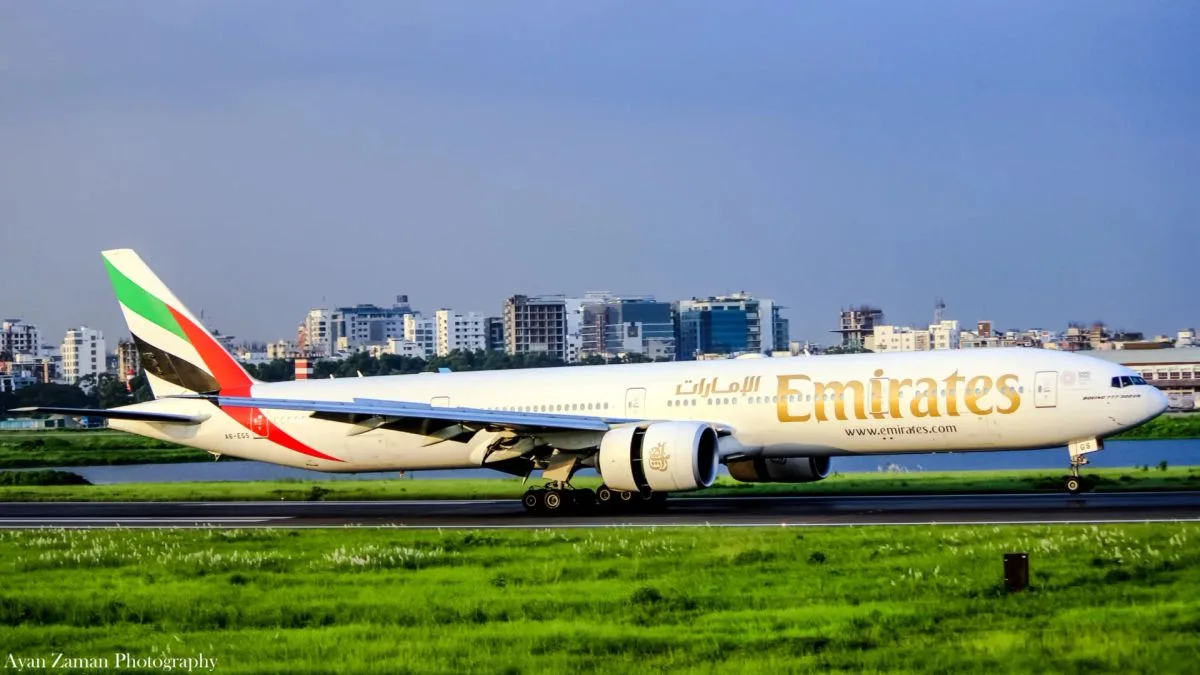
A380s, private suites, an onboard bar, Dubai and spectacular advertising have made Emirates one of the world’s most recognisable airlines. But in 2026 the important question for passengers is more practical: what product are you actually buying, and how much can the experience vary from one Emirates flight to another?
The answer matters because the airline is changing quickly. Airbus A350s are entering the fleet, A380s and Boeing 777s are being refurbished, Premium Economy is expanding and Starlink is being rolled out. The Emirates logo alone no longer tells you exactly what cabin you will get.
A global brand built around Dubai and the A380
Emirates carried 53.2 million passengers in the 2025–2026 financial year. At March 31, 2026, it served 152 cities in 80 countries with a fleet of 277 aircraft. The airline also reported a record net profit of about $5.4 billion.
Brand Finance valued the Emirates brand at roughly $10.6 billion in 2026, up 27% year on year, placing it among the world’s most valuable airline brands and the most valuable outside North America.
That visibility comes from sponsorship and marketing, but also from a simple promise: the journey itself should feel premium. The real test is whether the onboard product consistently lives up to that promise.
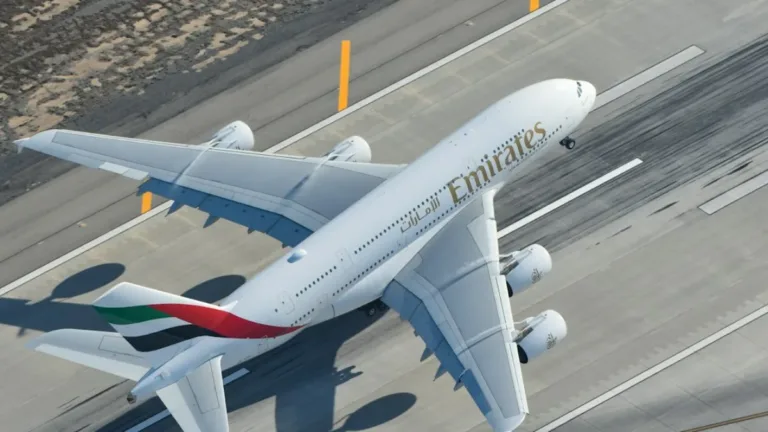
Emirates built a large part of its identity around the Airbus A380. While many airlines reduced or abandoned their superjumbo fleets, Emirates chose to keep investing in the type and expects to operate A380s into the 2040s.
The upper deck, the Business Class bar and First Class Shower Spas have become as much brand symbols as transport products.
But that success can distort expectations. Not every Emirates flight uses an A380, and not every aircraft has the airline’s newest cabin.
A powerful product that is still far from uniform
This is the single most important point before booking. Emirates operates several generations of A380s and Boeing 777s, as well as newer Airbus A350s. Seat design, cabin layout and onboard equipment therefore vary.
The difference can be especially meaningful in Business Class between older aircraft and refurbished A380s or 777s. Emirates itself warns that products can vary by aircraft type, configuration and operational substitution.
For a traveller paying a significant premium, checking the aircraft type and seat map for each segment is therefore essential.
Retrofits, Premium Economy and connectivity are reshaping the product
Emirates is trying to solve that inconsistency through one of the industry’s largest cabin-refurbishment programmes.
The investment totals about $5 billion and covers 219 aircraft: 110 A380s and 109 Boeing 777s. By July 2026, 100 aircraft had already been fully refurbished: 47 A380s and 53 777s.
The work goes far beyond cosmetic changes. Cabins are stripped and rebuilt, new seats are installed and Premium Economy is added to more aircraft. The goal is to reduce the gap between old and new generations of product.
For the French market, Emirates plans to deploy a refurbished A380 daily on flights EK071 and EK072 between Paris-CDG and Dubai from October 25, 2026.
That brings Premium Economy to Paris after Lyon and Nice. Emirates says about one in ten passengers has chosen Premium Economy on the routes where it has already been introduced in those French markets.
The significance goes beyond Dubai itself because many passengers connect onward to Australia, New Zealand, Japan, Singapore, India, Thailand, the Maldives or Mauritius.
Emirates is often associated with First Class suites and the A380 bar, but the product with the broadest commercial impact may be Premium Economy.
On refurbished A380s it has 56 seats in a 2-4-2 layout, with wider seats, leg rests and more personal space than Economy, plus a differentiated meal service.
For many travellers it solves a very practical problem: how to improve comfort on a ten- or twelve-hour flight without paying Business Class prices.
For Emirates, it also raises average ticket value while targeting a much larger market than premium cabins alone.
This is where advertising imagery needs the most perspective. An Economy ticket does not include the A380 bar, showers or private suites.
Economy remains a long-haul economy-class experience whose comfort depends on the aircraft and configuration. Emirates still benefits from a large entertainment system, full meal service and a dense connecting network via Dubai.
The retrofit programme should also improve Economy through refreshed interiors, newer fittings and better connectivity on refurbished aircraft.
Emirates is also installing Starlink on 232 aircraft. The aim is to provide high-speed Wi-Fi with an experience much closer to ground connectivity than older satellite systems.
As passengers increasingly work, stream and use personal devices in flight, connectivity is becoming a real purchase factor rather than a minor extra.
Dubai remains both the strength and limitation of the model
Emirates’ hub model is built around Dubai. For many destinations in Asia, Africa and Australia, the hub creates strong connection options and a vast one-stop network.
But the same model can mean a detour when a competitor offers a nonstop flight. A Paris–Dubai–Bangkok itinerary may be attractive on price or product, but it is still longer than a nonstop Paris–Bangkok journey.
The right comparison is therefore not only fare. Travellers should compare total journey time, connection length, aircraft type on each leg, actual cabin and included services.
Emirates is not automatically ranked number one in every industry survey. Skytrax currently certifies it as a four-star airline, which is a useful reminder that global reputation and absolute uniformity are not the same thing.
Its real strength is the combination of brand visibility, a unique A380 scale, Dubai’s hub power and very large investment in the onboard product.
So does Emirates deserve its reputation?
Much of it is justified. The A380, onboard bar, First Class suites, expanding Premium Economy, huge network and cabin investment are genuine differentiators.
But “flying Emirates” still does not mean one identical experience across the fleet. The aircraft allocated to your flight can make a major difference.
The best advice in 2026 is therefore not simply to choose Emirates: it is to choose the right Emirates flight.
Main sources
Emirates Group annual results 2025–2026; Emirates retrofit programme updates; Emirates Paris Premium Economy deployment; Emirates Starlink programme; Brand Finance Airlines 50 2026; Skytrax airline rating.
Leave a Reply