For international aviation readers, Friday’s agenda is unusually concentrated around regulatory risk and industrial resilience. The FAA is convening a safety review of Boeing’s 737 MAX software issue, while a preliminary NTSB account of September’s fatal Amazon Air contractor crash in Miami adds detail about wind information, approach speed and deceleration. Boeing has meanwhile removed one near-term labour risk after engineers and technical workers ratified a contract. In Europe, easyJet cabin crew are beginning a multi-day strike in Portugal, and US-China trade friction is again reaching aerospace supply chains.
FAA review puts the 737 MAX software response under scrutiny
The US Federal Aviation Administration is due to convene a safety review on October 2 over a recently disclosed 737 MAX software problem. The issue can affect access to automated flight-guidance functions in a specific sequence involving a missed approach and a subsequent route change. Boeing has reinforced procedures for operators while developing a permanent software correction.
Why it matters internationally: the significance now lies in the regulator’s assessment of the remedy, rather than simply the discovery of the glitch. Certification of the 737 MAX 10 has been held back pending resolution. Any additional FAA requirement could therefore ripple into delivery planning for US and overseas customers waiting for the largest MAX variant. The review should not be read as a finding that an accident is imminent; it is part of the regulatory process for deciding what corrective action is required.
Miami 767 crash: preliminary evidence sharpens the safety questions
New preliminary information from the US National Transportation Safety Board describes the September 6 crash of a 21 Air Boeing 767-300 freighter operating for Amazon Air at Miami International Airport. Five people died. The early record indicates that the crew did not receive expected wind information with the landing clearance, the aircraft approached at high speed, and key deceleration systems were not deployed before the runway overrun. The captain considered going around, while the first officer repeatedly called attention to the speed.
Why it matters: these are investigative facts, not final causal findings. The eventual inquiry will have to examine several layers at once: controller weather information, stabilized-approach criteria, cockpit decision-making and braking-system use. For cargo operators, the case also matters because Amazon has suspended 21 Air operations while the safety review continues.
Portugal strike creates a fresh disruption point for European travellers
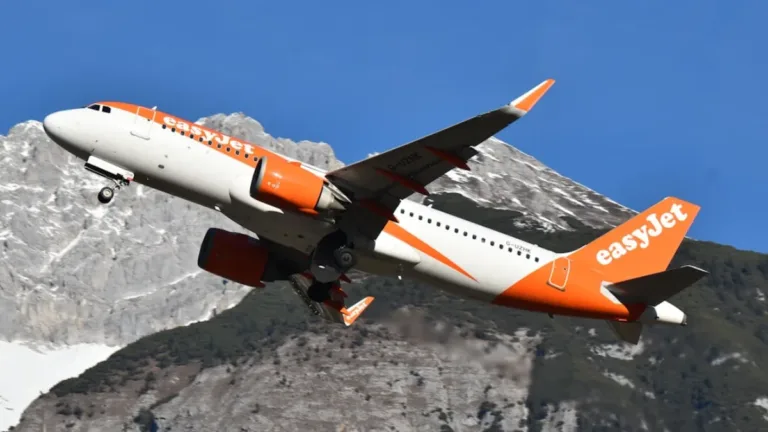
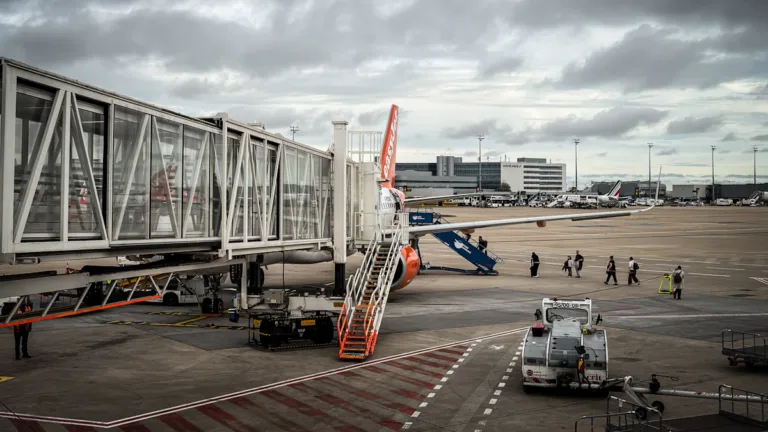
easyJet cabin crew in Portugal begin industrial action today, with the strike scheduled through October 6 and Lisbon, Porto and Faro among the airports exposed. Some services have been cancelled in advance. Travellers from Britain and Ireland, as well as passengers connecting across easyJet’s European network, should rely on the airline’s live flight status rather than assuming every service at the three airports is affected.
Passenger impact: Portugal is a major leisure market from the UK and Ireland, so even targeted cancellations can displace substantial numbers of travellers over a weekend. Rerouting and refund rights should be considered separately from compensation eligibility, which can depend on the exact circumstances behind a cancellation. Passengers should preserve airline notifications and receipts if disruption creates additional expenses.
Boeing engineers ratify contract, removing a certification risk
Members of the Society of Professional Engineering Employees in Aerospace have approved a four-year agreement with Boeing. The union represents roughly 17,000 professional and technical employees. The deal includes a guaranteed 10% wage increase on ratification and further annual increases, averting the immediate prospect of a strike after the previous agreements expired.
Why it matters: Boeing can ill afford another source of schedule instability. Engineering and technical staff support work across programmes that include the delayed 737 MAX 10 and 777X certification campaigns. The agreement does not solve Boeing’s regulatory or production challenges, but it removes a labour disruption that could have compounded them.
US-China trade pressure reaches aerospace parts
Washington is slowing some export licences for aircraft-related components destined for China as the US seeks leverage in wider trade negotiations. The reported measures include supplies relevant to state-owned manufacturer COMAC and come amid a broader contest over strategic technologies and materials.
Why it matters beyond China: commercial aviation supply chains are international by design. Extended licensing delays could affect COMAC’s production ambitions and maintenance planning in China, while also complicating Boeing’s commercial relationship with a market that has historically been important for aircraft sales. For now, reported licensing delays should not be described as a blanket ban on US aerospace exports to China.
Malaysia Airlines parent moves to bring MRO capability closer
Malaysia Aviation Group has signed an agreement to acquire Sepang Aircraft Engineering from Airbus. The transaction would give the parent of Malaysia Airlines greater control over maintenance and engineering capability near its home hub.
Why it matters in Asia-Pacific: maintenance capacity has become a strategic constraint as airlines manage growing fleets, parts shortages and longer shop-visit lead times. Greater in-house control can help an airline group manage aircraft downtime and costs, although the benefits depend on completion of the transaction and how the MRO operation is integrated.
The thread to watch
Today’s developments point to a common theme: airline capacity depends on more than aircraft orders. Regulators, skilled labour, maintenance capability and cross-border component flows can each become binding constraints. The FAA’s MAX review and the NTSB’s Miami investigation deserve particularly careful follow-up because both remain active processes and their final outcomes should not be anticipated.
Primary references include US aviation authorities, Reuters reporting, labour communications and airline operational information. Status checked on the morning of October 2, 2026.