
The aviation journal
Press review
Essential aviation news, in perspective

Six aviation developments: Airbus leasing, Paris airports, US controllers, Maastricht and Ryanair's regional network strategy.
The Aviation Press Review for October 18, 2026 connects six stories shaping airline operations. New aircraft orders matter because delivery capacity is tight; divergent traffic at Paris-CDG and Orly points to different market pressures; and a US controller pay deal puts staffing in focus. Maastricht’s summer performance and Ryanair’s choices in Italy and Austria illustrate how network reliability, costs and competition interact.
A 75-aircraft Airbus order shows how lessors are shaping airline capacity
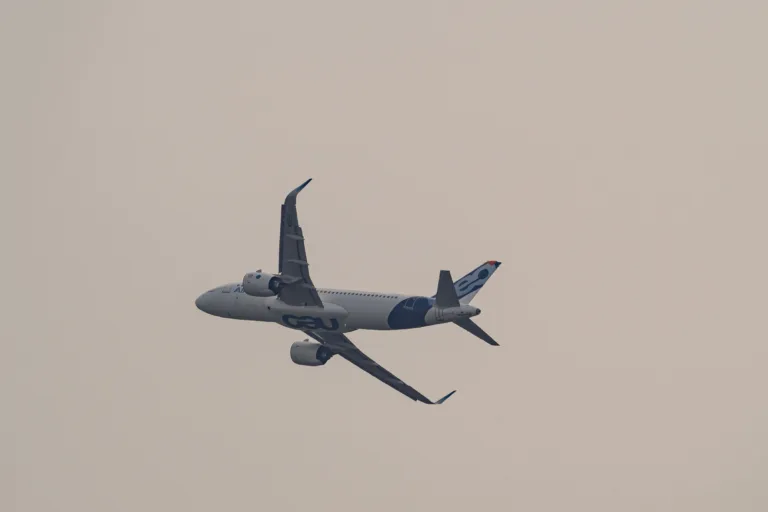
Aviation Capital Group has signed a firm order for 75 A320neo-family jets, Airbus said on October 16. The deal brings ACG’s historical orders for the family to 190. This is not a single airline committing to 75 new routes or 75 immediate deliveries. A leasing company acquires aircraft and places them with multiple operators, allowing carriers to obtain capacity without making every aircraft purchase directly. That distinction matters as delivery positions for fuel-efficient narrowbodies remain valuable. Airbus says the family can deliver at least 20% fuel and carbon-emission savings relative to earlier-generation single-aisle jets, depending on operations. ACG’s investment points to sustained demand for replacement aircraft, but future airline customers, lease terms and fleet assignments are separate decisions. AeroSillage’s dedicated report examines the long lead times behind the order. For travellers, the practical effect will be gradual fleet renewal, not an overnight capacity surge.
Paris airport figures reveal a sharper divide than the headline decline
September’s passenger figures offer a useful warning against treating a metropolitan airport system as a single market. Groupe ADP’s October 15 traffic statement shows Paris-CDG handling 6.22 million passengers, up 1.5% year on year, while Paris-Orly fell 7.9% to 2.86 million. The combined Paris figure was 9.08 million, down 1.6%. Over January–September, the airports handled 80.9 million passengers, 0.4% below the comparable 2025 period. ADP now expects a slight full-year decline in Paris traffic rather than the modest growth it had previously forecast. This is not evidence that every international segment is contracting: CDG’s September increase tells a different story from Orly’s. Airline network changes, seat supply and market exposure matter. For investors, the revised guidance is material; for passengers, it is a reminder that competition and available schedules vary markedly by airport.
US controllers secure a pay deal, but staffing is the real operational test
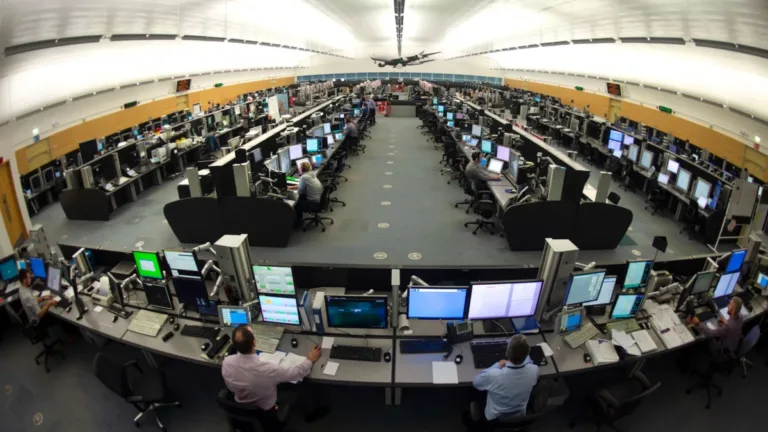
The FAA and the National Air Traffic Controllers Association reached a 2.8% pay agreement announced on October 16. The increase takes effect October 18 and is retroactive to the beginning of 2026. The agreement also changes how facilities track working time, plan shifts around forecast traffic and prioritise transfers to locations with more severe staffing shortages. Pay is one part of the story; deploying qualified controllers where demand peaks is the other. Air traffic control cannot simply add capacity at short notice because training, certification and local familiarity take time. Better scheduling could improve resilience without increasing headcount immediately, although that outcome remains to be demonstrated in operational statistics. The announcement describes an agreement between management and the union, not a guarantee that US flight delays will fall this month. The measures will be judged by controller retention, coverage at pressured facilities and the consistency of service during busy periods.
Maastricht offers a rare measurable success in European air traffic control
EUROCONTROL’s Maastricht Upper Area Control Centre handled 842,259 flights from May through September, according to its October 15 summer review. The centre says 98.4% of flights crossing its airspace incurred no delay attributable to Maastricht, and total MUAC-attributable delays were more than halved against summer 2025. That is a specific performance metric, not a claim that almost every European flight arrived on time. MUAC controls upper airspace across parts of Belgium, Germany, Luxembourg and the Netherlands, making it an important example of cross-border operations. Traffic planning, staff deployment and digital controller–pilot communications contributed to the result, alongside generally favourable weather. The centre also estimates that more direct routings avoided about 512 tonnes of CO₂ during the peak season. The larger lesson is that airspace performance depends on coordination across boundaries. Our report on the UK Prestwick outage illustrates what happens when technical resilience is weaker.
Rimini becomes Ryanair’s latest test of regional airport economics
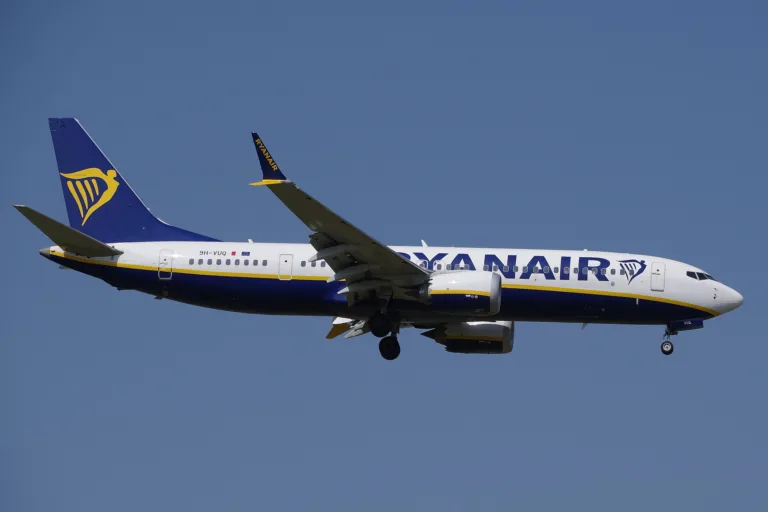
Ryanair plans to base two aircraft at Rimini in summer 2027, with 17 routes and five additions linking the Italian Adriatic destination to Dublin, Memmingen, Stockholm, Tirana and Warsaw. Announced on October 15, the programme includes more than 600,000 seats, while the airline values the aircraft investment at $200 million. The carrier links the decision to the removal of a local aviation tax in Emilia-Romagna. The move is commercially significant because basing aircraft can create more scheduling flexibility and early departures than serving an airport only with inbound aircraft. But headline route counts do not reveal profitability, year-round demand or how many passengers will actually travel. Ryanair’s estimate of more than 500 jobs supported is an economic-impact claim, not a confirmed list of new direct hires. Regional airports competing for mobile airline capacity will watch whether the expanded network is sustained beyond its launch season.
Vienna versus Bratislava: Ryanair’s tax argument needs careful reading
Ryanair is again urging Austria to remove its €12 air travel tax. In an October 16 company statement, it highlighted an 8% September traffic decline at Vienna and said Bratislava’s passenger traffic doubled over the first nine months of 2026. These are figures presented by an interested airline, accompanied by its argument that taxes and airport charges are driving passengers and aircraft to neighbouring markets. The figures alone do not isolate the effect of one levy: airline capacity decisions, route mix and each airport’s starting point also shape growth rates. Yet the comparison reveals a real competitive issue. Low-cost airlines can redeploy aircraft across borders, while passengers may weigh a cheaper fare against longer ground journeys. Governments therefore face a trade-off between aviation tax revenue, connectivity and local economic activity. The most useful next measure will be how actual schedules and passenger volumes evolve, not the rhetoric of either side.
JOIN THE CONVERSATION
Let’s discuss this story.
A question, a clarification or a different perspective? Share it with us.