
The aviation journal
Press review
Essential aviation news, in perspective

TAP-Lufthansa, Airbus services, Bordeaux Airport, Boeing deliveries, sustainability and Delta One: six aviation developments analysed.
Six aviation developments worth watching today: airline consolidation, industrial capacity, airport investment, passenger services and sustainability.
Lufthansa’s TAP victory redraws the South Atlantic airline map
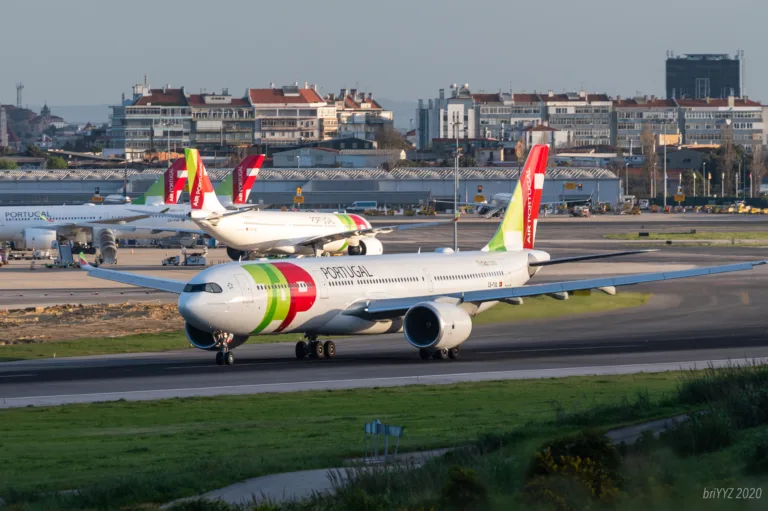
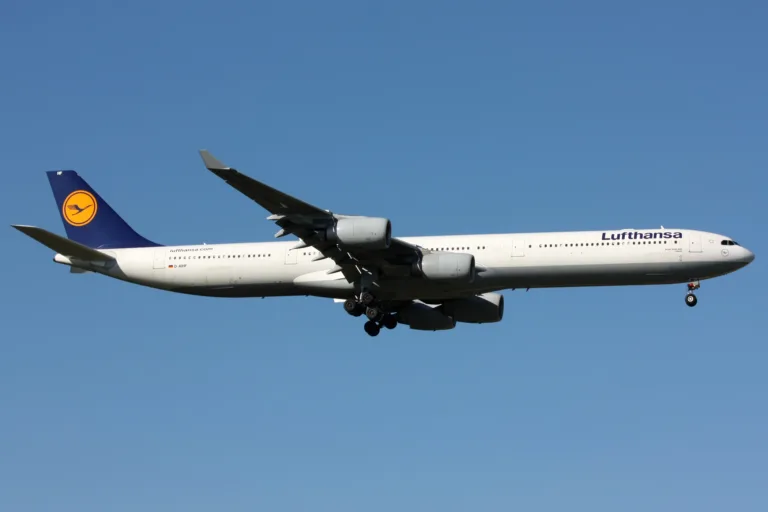
Portugal selected Lufthansa Group as the preferred investor in TAP Air Portugal on October 14. Lufthansa says it offered €1.025 billion for an initial 44.9% stake, with a possible increase to €1.2 billion for 49.9%. Final documents and regulatory approvals are still pending, so this is not yet a completed takeover. TAP’s links to Brazil and Portuguese-speaking African countries help explain the strategic appeal. The decision gives Lufthansa a potential new Atlantic platform while denying Air France-KLM the same opportunity. It does not automatically change flight schedules or alliance arrangements overnight. Our full report on Portugal’s choice examines the promised investment and fleet expansion.
Primary source : Lufthansa Group.
Airbus sees a $420bn services market — and a major workforce challenge
Airbus’s Global Services Forecast, released October 14, predicts that the market supporting commercial aviation will more than double to exceed $420 billion by 2045. The forecast assumes a global fleet of 45,550 aircraft and cumulative demand for 730,000 maintenance technicians, 660,000 pilots and 1.05 million cabin crew. These are estimates, not confirmed recruitment plans. Airlines will need trained people, spare parts and workshop capacity to turn new aircraft deliveries into reliable operations. Digital tools can improve maintenance planning, but they cannot replace licensed staff or physical repair capacity. The outlook also gives context to Airbus’s exploration of larger aircraft variants.
Primary source : Airbus.
Bordeaux starts construction on an integrated terminal building
Bordeaux Airport said on October 14 that work had started on a central building connecting Halls A and B. The project brings together passenger reception, security screening, waiting areas, retail and baggage-handling functions. It is part of a broader €140 million investment programme, excluding tax. The operational promise is straightforward: fewer fragmented steps between check-in, screening and boarding, with better coordination behind the scenes. Construction itself may introduce temporary walking routes and disruption before those benefits arrive. The project’s success will ultimately be judged by processing times, baggage performance and passenger experience rather than by the new building alone.
Primary source : Bordeaux Aéroport.
Boeing’s third-quarter deliveries provide a production reality check
Boeing reported 161 commercial aircraft deliveries for the third quarter of 2026 in an October 13 disclosure. The total included 124 aircraft from the 737 family and 22 787 widebodies, bringing commercial deliveries for the year to date to 475. The mix matters to airlines planning capacity: narrowbodies underpin many domestic and regional networks, while widebody availability can determine international expansion. Yet a factory handover is not equivalent to immediate revenue service. Training, maintenance and route economics remain critical, and Boeing cautioned that the figures would not be final until its quarterly financial results were issued.
Primary source : Boeing.
Sustainable hotel procurement becomes an airline operations issue
IATA and the World Sustainable Hospitality Alliance announced on October 14 that they would develop shared sustainability guidance for airlines buying hotel services. The work will combine aviation procurement priorities with hospitality-sector performance indicators. Hotel accommodation is not a marginal purchase: airlines depend on it for crew rotations and to support stranded travellers during disruptions. Consistent criteria could make supplier comparisons more credible, particularly across jurisdictions with different reporting practices. However, this is a framework for developing guidance, not a mandatory global standard or evidence that emissions have already fallen. Procurement teams will need practical, independently checkable measures.
Primary source : IATA.
Delta’s Delta One overhaul targets the premium passenger experience
Delta unveiled a broad redesign of its Delta One offering on October 14, starting with transoceanic departures from Los Angeles this autumn and expanding across the network in early 2027. The changes cover dining, cabin service, tableware, amenities and more flexible meal preselection. This is a commercial strategy as much as a hospitality announcement: premium customers judge consistency and rest alongside seat design. Because the rollout is phased, travellers should not assume that every route will offer the full package immediately. Delivering the promise will require coordination between catering, cabin crews, fleet upgrades and day-to-day operations.
Primary source : Delta Air Lines.
JOIN THE CONVERSATION
Let’s discuss this story.
A question, a clarification or a different perspective? Share it with us.