
The aviation journal
Press review
Essential aviation news, in perspective

Monday's aviation agenda is shaped by new operational risk, institutional accountability and airline economics. A further strike at Riyadh airport on Sunday has sharpened questions about safe flight planning; U
Monday’s aviation agenda is shaped by new operational risk, institutional accountability and airline economics. A further strike at Riyadh airport on Sunday has sharpened questions about safe flight planning; US regulators have issued fresh caution, while the US Army has disclosed measures following the Washington midair collision. Away from immediate safety alerts, Malaysia’s airline financing debate and Brussels’ sustainability gathering reveal how fuel prices and regulation influence network decisions.
US flight operators face a new Saudi Arabia caution notice
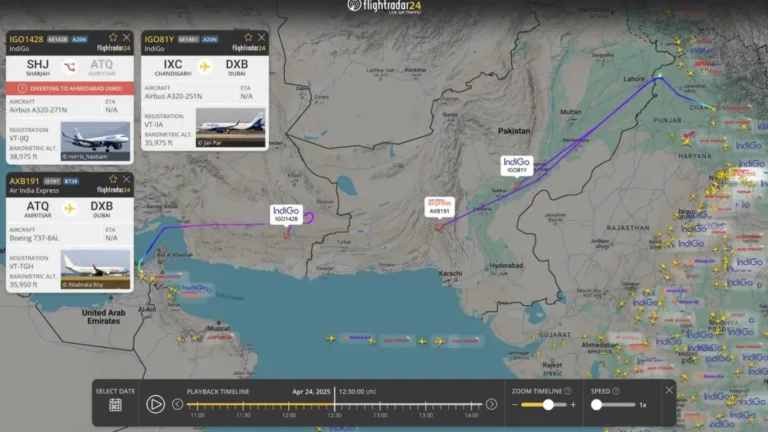
Reuters reported on October 11 that the Federal Aviation Administration issued a caution notice to US operators flying into, out of or over Saudi Arabia, citing military activity and possible navigation-system disruption. The reported notice runs to December 10, 2026. This is an operational risk advisory, not evidence that every US airline has cancelled every service touching Saudi airspace.
Operators must distinguish airspace restrictions, their own risk assessments and airport-specific closures. EASA’s separate Saudi Arabia conflict-zone bulletin, active until November 16 unless revised, advises avoiding a defined portion of the Jeddah flight information region and exercising caution elsewhere. The two agencies’ measures differ in scope and legal audience. Travellers should use their carrier’s live flight status rather than extrapolating a blanket closure from either warning.
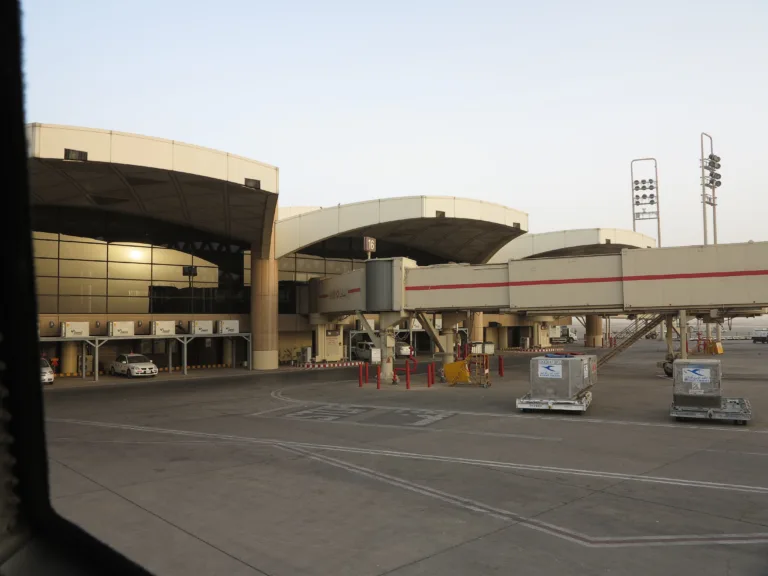
Riyadh airport struck again Sunday as disruption extends
A new projectile hit the passenger terminal area at King Khalid International Airport on Sunday, according to an Associated Press report citing Saudi authorities. The report describes one death and eleven injuries in the latest incident, following Saturday’s attack that killed twelve. Because these are successive events, reporting should identify the date and source of each casualty figure rather than silently blending updates.
The practical aviation consequences are broader than cancellations at one airport. Aircraft and crews can be displaced, onward connections disrupted and risk assessments revised across routes serving the Gulf. None of that proves a specific flight is cancelled until its operator confirms it. The priority is timely passenger communication, safe contingency planning and careful separation of confirmed restrictions from forecasts.
Washington collision: Army sets out its safety response
The US Army released findings from its administrative investigation on October 8 into the January 2025 collision between a Black Hawk helicopter and a regional passenger jet near Reagan National Airport. It lists changes to altitude awareness, ADS-B reliability, traffic-awareness training, command oversight and civil-military coordination. Some recommendations have been implemented while others remain under way.
The release is not a replacement for the independent National Transportation Safety Board investigation. That distinction matters: an organisation can identify corrective actions for its own operations while the national accident investigator assesses the wider system. Airlines, airports and controllers should watch how helicopter routing, surveillance and shared safety information change in practice, not simply whether a new report has been published.
AirAsia financing talks show the limits of fuel-cost resilience
Reuters reported on Monday that AirAsia co-founder Tony Fernandes had met Malaysian finance officials amid pressure from higher fuel prices and airport charges. Although sources discussed possible public support for financing, Fernandes said the talks were about aviation costs and that no direct government assistance had been sought or offered. A financing agreement should therefore not be treated as concluded.
The deeper question is how a large low-cost network protects affordable fares when fuel volatility erodes margins. Reducing frequencies can preserve cash but weaken connectivity; raising fares may depress demand; new borrowing carries its own costs. A clear picture will depend on formal financing disclosures and operating results, not speculative headlines about a rescue.
Sources : Source 1
Brussels public-sector action: airport warns about surface access
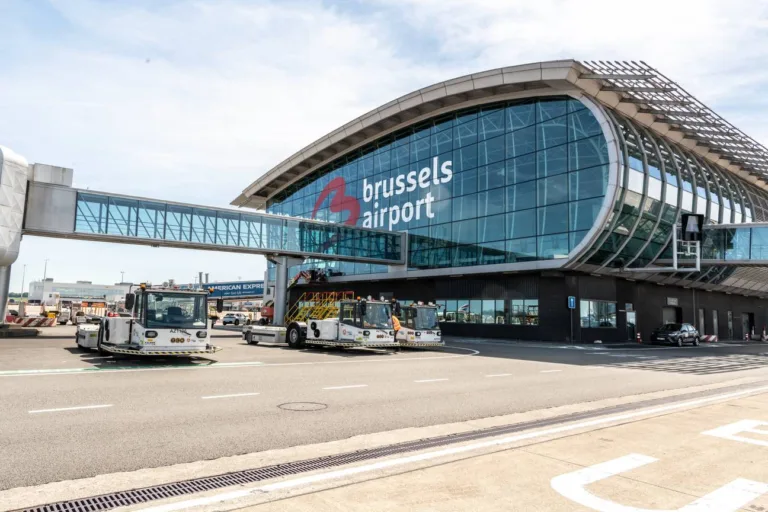
Brussels Airport says public-sector industrial action on Monday, October 12 is not currently expected to affect flights, but buses and trains serving the airport may be disrupted. The airport directs travellers to the relevant Belgian transport operators for updates. This is a different operational problem from the ground-handling action on October 9.
For an international passenger, the distinction matters: an on-time departure is of little help if the rail connection fails. Travellers should check each part of the journey and allow time for alternative ground transport. There is no basis in the airport’s notice for claiming an airport-wide shutdown today; flight-specific changes remain the responsibility of airlines.
Sources : Source 1
IATA sustainability forum opens tomorrow amid financing pressure
The International Air Transport Association’s World Sustainability Symposium is scheduled for October 13–14 in Brussels, bringing together airlines, policymakers, energy producers and financiers. Its agenda centres on the policies and investment choices needed for aviation’s 2050 net-zero ambition. The proximity of the meeting makes it a useful checkpoint for the industry’s claims about feasible decarbonisation.
Sustainable aviation fuel supply, funding structures and policy consistency are central questions. A conference does not by itself increase fuel production or change ticket prices. The meaningful test will be whether announced measures identify financing, implementation dates and measurable delivery rather than relying on broad long-term commitments.
Sources : Source 1
JOIN THE CONVERSATION
Let’s discuss this story.
A question, a clarification or a different perspective? Share it with us.