
The aviation journal
Press review
Essential aviation news, in perspective

Aviation's latest headlines underline the gap between an immediate operational hazard and a long-term market decision. A severe-turbulence diversion in the Americas, a major aircraft leasing order, the EASA advisory on Saudi airsp
Aviation’s latest headlines underline the gap between an immediate operational hazard and a long-term market decision. A severe-turbulence diversion in the Americas, a major aircraft leasing order, the EASA advisory on Saudi airspace and ground-handling disruption in Brussels all demand different kinds of interpretation. New air cargo data adds a commercial perspective. This October 10 briefing separates confirmed facts from open questions and explains what matters to passengers and industry readers.
Avianca turbulence diversion puts the focus back on cabin safety
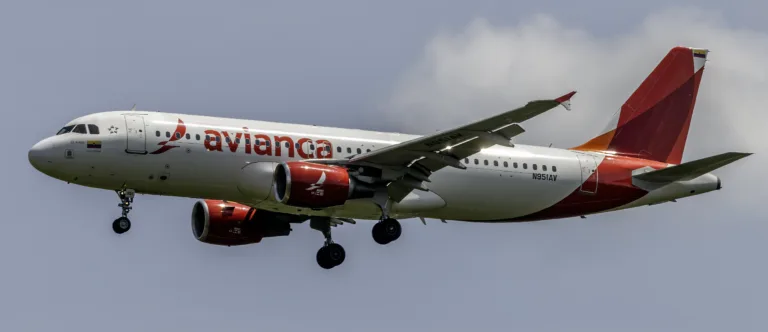
An Avianca Airbus A320 flying from Medellín to New York-JFK diverted to Miami early on Friday, October 9, after encountering severe turbulence. Miami-Dade emergency responders reported at least eight injured people taken for hospital treatment, including one with serious injuries. Avianca separately said nine passengers and crew members required medical attention. Those figures reflect different reporting categories; they should not be combined into a single casualty total.
The FAA confirmed the aircraft’s origin, intended destination and diversion. Avianca said unaffected passengers continued to New York later that morning. The operational lesson is not that every turbulent flight is unsafe, but that unexpected vertical forces can injure unrestrained occupants in seconds. The FAA recommends remaining buckled while seated. No official investigative finding was available in the reporting reviewed, so attributing the episode to a particular forecast failure would go beyond the evidence.
Avolon’s 110-aircraft Airbus order is a signal from the leasing market
Irish aircraft lessor Avolon placed a firm order for 35 Airbus A330-900 widebodies and 75 A320neo-family jets, Airbus announced on October 9. The incremental deal raises Avolon’s A330-900 order total to 114 and its A320-family commitments to roughly 650 aircraft. It is a substantial fleet-investment decision, but not a direct airline route launch or a delivery announcement.
Lessors sit between manufacturers and airlines, purchasing aircraft and placing them with operators over time. A mixed order therefore indicates demand across different business models: narrowbodies for dense domestic and regional networks, and widebodies for longer international sectors. The commercial question will be which airlines take the capacity, at what lease rates, and on what delivery timetable. Airbus’s release does not answer those questions yet, so the order should be read as a market signal rather than immediate seat growth.
Saudi airspace: EASA’s risk map matters more than a single airport headline
The European Union Aviation Safety Agency’s Saudi Arabia conflict-zone bulletin remains active as regional security deteriorates. The CZIB, issued September 30 and valid through November 16 unless revised, identifies heightened hazards from missile and drone activity, interception operations and falling debris. It specifically advises operators against flying in a defined portion of Saudi airspace while calling for caution and robust contingency planning elsewhere in the Jeddah flight information region.
That distinction matters for passengers connecting through Gulf hubs. An airline may suspend a city service, reroute an overflight or operate a flight using a different track; those are separate operational decisions. Diversions can extend journey times and require extra fuel, while changes may come at short notice. Travellers should use the operating carrier’s current flight information rather than assume every route across the country is subject to the same restriction.
Brussels ground-handling action shows why disruption can be airline-specific
Brussels Airport said a national demonstration on October 9 involved some staff employed by handling company Alyzia. The airport expected more than half of Alyzia-served flights to operate, despite cancellations, and said flights handled by Aviapartner were not expected to be affected. That operational split explains why two passengers departing the same terminal could experience very different outcomes.
Ground handlers provide services such as baggage, ramp support and aircraft turnaround coordination; an airline can have a ready aircraft and crew but still face delays if those services are constrained. Looking ahead to October 12, the airport expects no flight impact from a separate public-sector union action, while warning that public transport to the terminal may be disrupted. Passengers should check both their airline and their ground transport arrangements.
Air cargo demand grows, yet higher fuel costs change the economics
IATA’s August 2026 market analysis recorded 4.4% year-on-year growth in global air cargo tonne-kilometres, with international demand up 5.3%. Available industry capacity edged down 0.1%, lifting the cargo load factor to 46.0%. These are August statistics released subsequently, not a claim about real-time October shipments.
The industry’s apparent strength comes with a caveat: IATA’s report places jet fuel at about US$157 per barrel. A fuller aircraft spreads fixed costs over more cargo, but expensive fuel can erase much of that advantage. Regional performance also varies, so global growth does not mean every trade lane is recovering. For freight forwarders and airline planners, the key indicators are yield, capacity allocation and route-specific reliability rather than volume alone.
The wider picture. An incident investigation, an airspace advisory, a handling strike and an aircraft order operate on very different timescales. Passengers need live operational updates; analysts need to track the evidence and future implementation. Read yesterday’s English briefing and explore AeroSillage English.
JOIN THE CONVERSATION
Let’s discuss this story.
A question, a clarification or a different perspective? Share it with us.