22 September is dominated by the fragility of the infrastructure that keeps air transport moving. In less than twenty-four hours, two separate incidents disrupted air traffic control in the United Kingdom and on the US East Coast. They come alongside continuing schedule adjustments in the Middle East, a very concrete French safety investigation into runway operations at Nice, a new Airbus industrial investment and an announced tightening of measures against Iranian airlines. For travellers, the common thread is clear: beyond the aircraft themselves, network robustness depends on technical systems, airspace and industrial supply chains that are increasingly interconnected.
United Kingdom: second air traffic control outage in less than two weeks
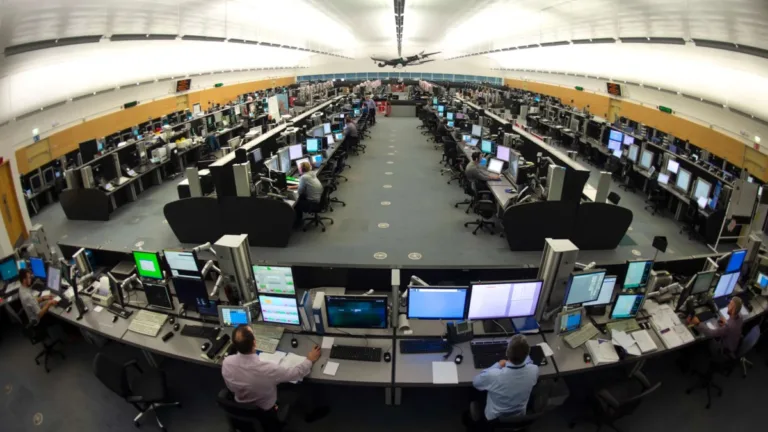
A connectivity problem at NATS’ Prestwick centre caused delays and cancellations on Monday at Manchester, Glasgow, Belfast and several other UK airports. NATS said the fault had been resolved. Reuters reported at least 24 morning cancellations, while Ryanair estimated that 25,000 of its passengers were affected. The incident came less than two weeks after the 8 September software outage that led to around 2,000 cancellations.
Why it matters. This new incident does not appear to have the same cause as the 8 September failure, but their close timing is raising questions about the resilience of the UK system. For passengers departing France or connecting through Britain, disruption can spread rapidly through aircraft and crew rotations. The CAA also notes that although an air traffic control failure does not necessarily trigger fixed financial compensation, airlines’ duty-of-care obligations remain.
Sources: Reuters, NATS, Civil Aviation Authority, The Guardian.
United States: severed fibre disrupts major East Coast airports
The FAA suspended or restricted arrivals at several major US airports on Monday after a fibre cable in New Jersey was accidentally cut. New York-JFK, LaGuardia, Newark, Philadelphia and Boston were among the airports affected. Reuters reported that around 7,000 flights were delayed or cancelled across the United States during the day, including more than 1,400 at the main New York airports. Operations gradually resumed after communications were restored.
Why it matters. For European travellers, the impact extends far beyond domestic US flights: JFK, Newark and Boston are major gateways for transatlantic traffic from Paris, Montréal, Brussels and Geneva. A telecommunications failure can therefore disrupt connections across several continents. The event also revives the US debate over air traffic control modernisation: $12.5 billion has already been allocated to infrastructure and the administration is seeking additional funding.
Sources: FAA and Reuters, 21 September 2026.
Nice: BEA carries out a night reconstruction of the Nouvelair–easyJet near miss
France’s BEA carried out a night-time reconstruction at Nice Côte d’Azur to examine the role the lighting environment may have played in the serious incident involving a Nouvelair Airbus A320 and an easyJet aircraft. Investigators are seeking to reproduce as closely as possible the visual conditions encountered by the crews and to understand how runway references were perceived.
Why it matters. A full-scale reconstruction is a significant step in a safety investigation: it goes beyond flight recorders and procedures to examine human factors and airport ergonomics. Nice has a distinctive configuration, particularly at night or in poor visibility, with a dense lighting environment around runways, taxiways and the coastline. Caution is still necessary, however: the reconstruction does not prejudge the BEA’s final conclusions.
Sources: BEA; AeroTime, 21 September 2026.
Middle East: airlines extend further schedule adjustments
Several international airlines continue to modify schedules to the Gulf and the wider Middle East in response to airspace restrictions and their own risk assessments. Air France, British Airways and Wizz Air are among carriers that have extended certain suspensions or adjustments, while Gulf airlines are adapting operations as the regional situation develops.
Why it matters. For a traveller in Europe, the consequences are not limited to the destinations directly affected. Dubai, Abu Dhabi, Doha and Riyadh are major connecting hubs for Asia, the Indian Ocean and Africa. A suspension lasting only a few days can therefore change thousands of itineraries. As schedules evolve quickly, the timetable displayed at the time of purchase should not be treated as final. In the event of cancellation, the AeroSillage Passenger Rights desk tracks the rules on rerouting and care.
Sources: airline communications; The National, 22 September 2026.
Airbus invests £150 million in the United Kingdom
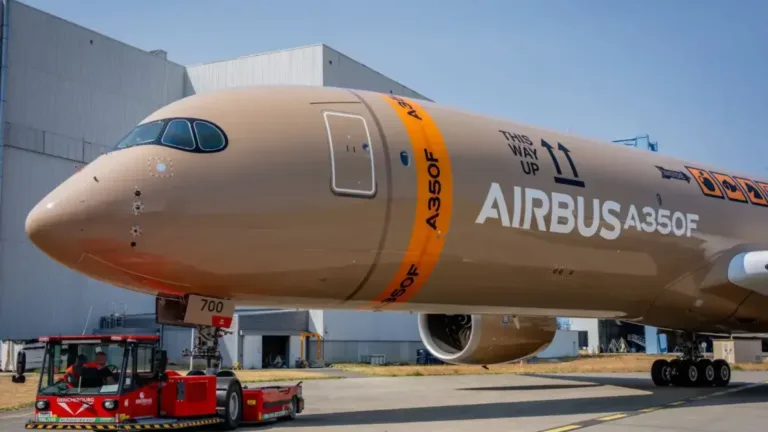
Airbus has announced a £150 million investment in its UK industrial footprint, notably to support higher production rates for the A320 family. The manufacturer plans to convert and modernise capacity at Broughton, a strategic site for the production of wings for its commercial aircraft.
Why it matters. The battle over production rates is not fought only on final assembly lines in Toulouse, Hamburg, Tianjin or Mobile. It depends on thousands of parts and subassemblies produced upstream. By strengthening Broughton, Airbus is seeking to reduce one of the main risks in increasing output: a critical industrial link being unable to keep pace. The investment directly concerns the European aerospace ecosystem and, indirectly, Toulouse, where A320neo delivery capacity remains strategic.
Source: Airbus, statement issued 21 September 2026.
Iran: Washington announces another tightening of pressure on airlines
US Treasury Secretary Scott Bessent said American measures are intended to sharply restrict from 23 September the ability of Iranian airlines to operate abroad, particularly by limiting access to fuel and the services needed for international stops. Several foreign carriers have meanwhile reduced or removed flights to Iran from their schedules.
Why it matters. The political announcement must be distinguished from its actual operational effects, which will depend on how sanctions are applied by service providers and the states concerned. But effective tightening could further isolate the Iranian market and complicate travel by the diaspora via Istanbul and regional hubs. For Iranian airlines already struggling to access parts and international services, the pressure would increasingly affect day-to-day operations as well as fleet renewal.
Sources: Reuters, US Treasury Department and regional media, 21–22 September 2026.
The thread running through today’s news
Events over the past few hours show that air transport capacity can no longer be reduced to the number of aircraft available. A cut fibre, a connectivity failure, a geopolitical restriction or an industrial weakness can immediately have network-wide effects. For Europe, the challenge is twofold: make infrastructure more resilient while increasing capacity. This tension between growth and robustness will be one of the defining issues for air transport in the years ahead.