Aviation on 15 September opens with the sector once again facing strong pressure on costs. Higher fuel prices are weakening less-capitalised carriers, while the largest groups are trying to protect margins and capacity. Here are the main developments published since the previous day.
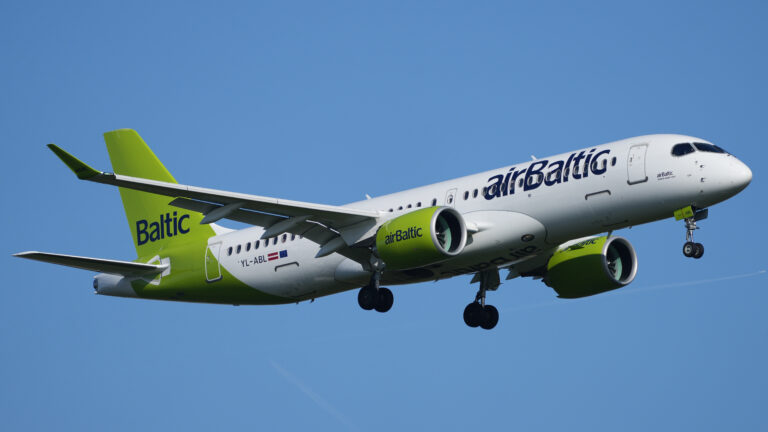
1. airBaltic enters Chapter 11 to restructure its debt
airBaltic has sought Chapter 11 protection in the United States in order to restructure its debt while continuing operations. The Latvian airline, majority-owned by the state and with Lufthansa as a minority shareholder, has secured €350 million in financing, subject to court approval. Reuters reports around $583 million of debt and a target of improving annual earnings by €44 million.
The case above all illustrates the vulnerability of mid-sized airlines to a sudden increase in jet-fuel costs and to a winter season that is traditionally more difficult. AeroSillage has been following the pressure building on weaker European carriers.
Key point: Chapter 11 does not mean that airBaltic is shutting down. On the contrary, it provides a framework for continuing flights while negotiating a restructuring, but it confirms the pressure accumulating on Europe’s most fragile operators.
Source: Reuters, 14 September 2026.
2. Aegean falls into the red in the first half
Aegean Airlines has reported a net loss for the first half, hit by fuel costs and disruption in the Middle East. The Greek carrier remains exposed to a difficult combination: rising operating expenses, geopolitical volatility and the need to maintain a sufficiently dense schedule to defend market share.
The Aegean case shows that pressure is not limited to airlines already in financial difficulty. Even established operators positioned in strong tourism markets can see profitability deteriorate when fuel costs and operational disruption rise at the same time.
Key point: winter 2026–2027 could become a real stress test for European airlines with the thinnest margins.
Source: Reuters, 14 September 2026.
3. Emirates sees demand rebound after a better-than-expected summer
Against the backdrop of financial concerns elsewhere, Emirates says commercial momentum has recovered strongly. The airline operated around 93% of its pre-disruption capacity during July and August and carried more than 8.6 million passengers. Winter bookings are rising in several markets, including South Africa, Brazil, India and Egypt.
The airline is also preparing additional capacity as Dubai gradually regains its role as a global hub. The recovery comes as Emirates continues to broaden its European ambitions.
Key point: international demand remains robust at the largest hubs, but the gap is widening between groups able to absorb shocks and smaller carriers.
Source: Reuters, 14 September 2026.
4. NTSB says some FAA responses are inadequate
In the United States, the NTSB says around one third of the FAA’s responses to its safety recommendations following the fatal Washington mid-air collision in 2025 are “unacceptable”. The debate notably concerns the use of ADS-B In, which can provide crews with additional traffic information and alerts.
The FAA has already revised some helicopter routes and strengthened separation between different traffic flows, but the NTSB is calling for more binding measures. The issue is expected to remain part of the debate in the US Congress.
Key point: beyond the accident itself, the speed at which US regulation evolves is now being challenged by the investigating authority.
Source: Reuters, 14 September 2026.
5. Airlines call for more competition in engine parts
IATA is pushing engine manufacturers to open the market for refurbished parts further to independent suppliers. The move follows a European agreement concerning Pratt & Whitney Canada and turboprop engines. Airlines now want the same principle extended to jet engines, where costs are much higher.
According to IATA, parts shortages and maintenance constraints cost airlines almost $6 billion last year. Behind the regulatory debate is therefore a major industrial battle over the total operating cost of fleets.
Key point: after several years of supply-chain pressure, airlines want to reduce their dependence on manufacturers and engine makers in order to contain maintenance spending.
Source: Reuters, 14 September 2026.
6. Boeing and American Airlines reach a 737 MAX maintenance milestone
Boeing and American Airlines have announced completion of the first full landing-gear exchange on a 737 MAX. The operation is an important milestone as the global MAX fleet ages and enters heavier maintenance cycles.
The issue is less spectacular than a new aircraft order, but strategically important: proven procedures and an adequate parts chain should reduce aircraft downtime and improve fleet availability.
Key point: the 737 MAX is gradually entering a new phase of its life cycle in which the performance of the maintenance network becomes as important as delivery rates.
Sources: Boeing and American Airlines, 14 September 2026.
In perspective
The thread running through this edition is cost. Fuel, maintenance, financing and safety regulation are weighing ever more heavily on airline decisions. For passengers, that pressure may eventually feed into fares. AeroSillage’s Airlines desk and Fleet & Industry desk track these structural changes.