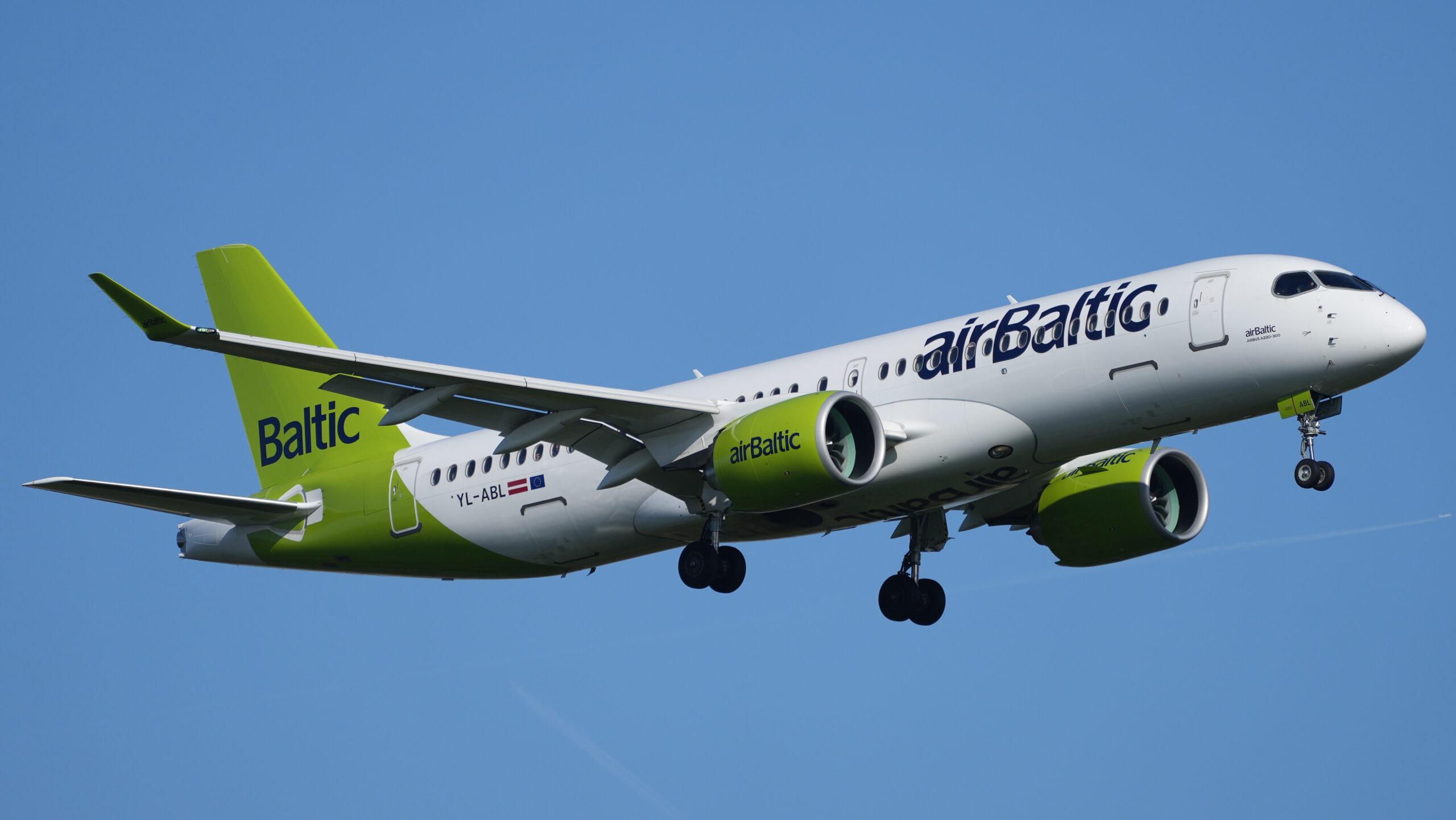
UPDATE: airBaltic filed for Chapter 11 protection in the United States on September 14, 2026, opening a court-supervised debt restructuring while continuing operations. The Latvian carrier says it has secured about €350 million in new financing from a group of lenders to support the process.
The filing marks one of the most serious financial turning points in airBaltic’s recent history. Before entering Chapter 11, the airline had been seeking creditor approval for up to €257 million of new senior debt as it worked to strengthen liquidity and address refinancing pressure.
How airBaltic reached Chapter 11
airBaltic had originally planned to meet bondholders on September 11, 2026 to seek permission to raise up to €257 million of “super senior” debt, giving the new financing repayment priority over the existing bonds.
The airline postponed that meeting to September 15 at 12:00 GMT to give bondholders more time to review the proposal and submit voting instructions. Reuters reported that approval required more than 75% of votes cast.
At the same time, Fitch estimated that airBaltic needed roughly €156 million of short-term liquidity to maintain normal operations and warned that fallback options would be limited if stakeholders rejected the plan.
Liquidity, 2029 debt and public support are the core issues
The airline has faced several problems at the same time. One is operational: part of its Airbus A220-300 fleet has been affected by Pratt & Whitney engine availability issues. Inspections, repairs and maintenance delays have reduced the number of aircraft available for service at different points.
For a carrier that built its strategy around a highly standardised A220 fleet, that disruption has direct consequences for schedules, capacity and cost. airBaltic has had to use temporary solutions to maintain its network while some aircraft remained unavailable.
Higher fuel costs and geopolitical disruption have added further pressure to the cost base and to some routes.
Investor anxiety became visible in the bond market. airBaltic has €380 million of debt due in 2029, and rising yields reflected increasing concern over the airline’s ability to refinance that obligation on acceptable terms.
The new financing sought before the Chapter 11 filing was intended to give the airline more room to manage those maturities. The plan was backed in part by Polus Capital and Klirmark Capital.
airBaltic remains strategically important to Latvia and the wider Baltic region. The Latvian state has supported the company in the past, but further direct public support is constrained by both fiscal considerations and European state-aid rules.
That made creditor and private-investor support especially important. Riga supported the search for new financing without committing, at that stage, to another large public injection.
A growing airline facing a capital problem
Commercially, airBaltic remains a major Baltic carrier with a broad network centred on Riga and significant activity in Tallinn and Vilnius. Its Airbus A220 fleet has modernised the passenger product and improved fuel efficiency compared with older aircraft.
But airline growth is capital intensive. Fleet costs, unavailable engines, fuel, financing and expansion can absorb cash quickly, especially when several pressures arrive at once.
What Chapter 11 changes in practice
Before the Chapter 11 filing, the postponed bondholder vote was viewed as a critical test of whether the airline could secure the liquidity it needed without a more formal restructuring.
A rejection would have been particularly serious because Fitch had warned that the company’s alternatives were “quite limited”. Investors were therefore watching not only the financing terms, but the willingness of management, the Latvian state and creditors to support a credible longer-term plan.
It would have been excessive to describe airBaltic as a company on the verge of disappearing. The airline continued to fly and retained strong political importance in Latvia.
But the surge in bond yields, the proposed super-senior debt, the postponed vote and Fitch’s liquidity estimate all showed that financial headroom had narrowed sharply.
The September 14 filing is more significant than the earlier creditor-vote delays. Chapter 11 is designed to allow the airline to keep operating while restructuring obligations under court supervision and negotiating with creditors, aircraft lessors and other partners.
Latvian authorities confirmed the US filing, while the airline said its flying programme would continue.
What it means for passengers
airBaltic says its schedule remains in operation and that the approximately €350 million financing package is intended to support the business during the restructuring process.
Chapter 11 does not mean that the airline has ceased trading. It does, however, confirm that airBaltic’s financial position has entered a critical phase in which liquidity, fleet availability and creditor agreements will determine how successfully the company can stabilise itself.
Sources
Reuters, September 10–14, 2026; Latvian Public Media; airBaltic Investor Relations; Fitch comments on liquidity needs.

Leave a Reply