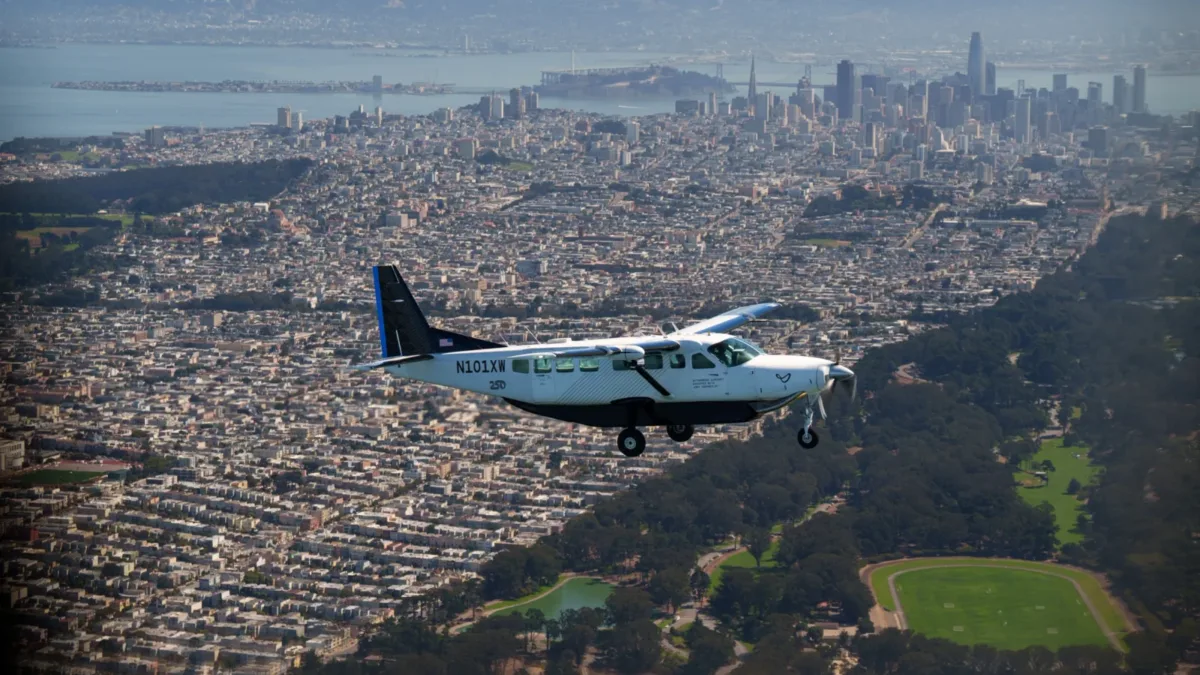
Joby Aviation’s autonomous Cessna Caravan crossing of the United States matters less as a “pilotless flight” claim than as a test of how automation could enter cargo, medical and government aviation before it reaches passenger airlines. The modified J208 flew 3,199 miles from California to North Carolina between September 7 and 14, 2026, with the onboard safety pilot making no control inputs.
A human still remained in the loop. The aircraft was remotely supervised, and a safety pilot was present in the cockpit. That distinction is critical when assessing what the demonstration actually proves.
The near-term market is likely cargo, not passengers
A Cessna Caravan is an unusually practical testbed because it already serves freight, regional utility and remote-community missions around the world. Those sectors can gain from automation without requiring the industry to solve every passenger-acceptance issue first.
Medical logistics, disaster response and military resupply are also attractive because reducing crew exposure can itself create operational value.
What was automated
Joby says the system handled taxiing, take-offs, navigation and landings. Remote supervisors could monitor the aircraft, adjust the flight plan and communicate with air traffic control through the aircraft’s radios.
The route included stops in Phoenix, Fort Worth and at Shaw Air Force Base. Joby also says the aircraft rerouted around severe weather in real time, making the exercise more representative of operational flying than a closed test-range demonstration.
Why the regulatory question now becomes harder
The technology may be progressing faster than the framework around it. Regulators will eventually have to decide how remote pilots are licensed, what communications redundancy is required, how many aircraft one operator may supervise and what happens if the ground link is degraded.
Those questions are more likely to be tested first in controlled cargo or government operations than on scheduled passenger services.
What Joby has actually demonstrated
The J208 platform has accumulated more than 400 flights and 800 automated flight hours, according to Joby. The system builds on technology acquired with Xwing in 2024 and has already been used in US military exercises.
The transcontinental crossing therefore extends an existing test programme rather than representing a sudden leap from experimental autonomy to commercial passenger flight.
What to watch next
The key milestones are not another distance record. They are regulatory approvals, expanded cargo or logistics trials and evidence that remote supervision can be scaled safely in normal airspace.
AeroSillage view: autonomous aviation is most likely to arrive through useful, unglamorous missions first. If the economics work there, passenger applications may follow much later.
Related: Technology & Sustainability.
Leave a Reply