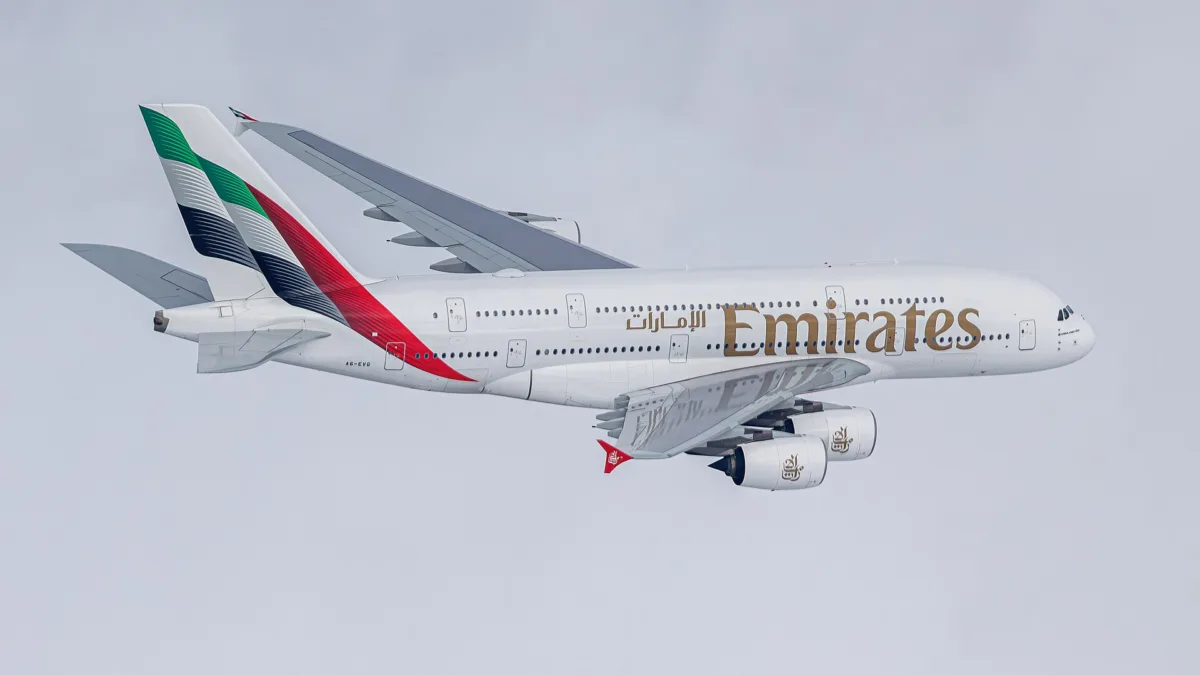
Its full-length double deck, four engines and famously quiet cabin made the Airbus A380 an engineering landmark. Yet production ended in 2021 after 251 aircraft, with Emirates accounting for 123 deliveries. The superjumbo’s story is not about an aircraft that could not fly efficiently under any circumstances. It is about the gap between a bold forecast for global airline networks and the aircraft airlines actually wanted to buy.
On 14 February 2019, Airbus announced that A380 deliveries would cease in 2021. Emirates had reduced its A380 commitment from 162 to 123 aircraft and chosen other Airbus widebodies for part of its future fleet. Without enough orders from other operators to maintain production, Airbus saw no viable path forward. Emirates accepted the final newly built A380 on 16 December 2021, its 123rd; Airbus identified it as the 251st produced.
A forecast built around the world’s biggest hubs
The A380 was conceived for an aviation system in which congested global gateways would need more seats per airport slot. A very large aircraft could carry hundreds of travellers on one movement, particularly between major cities and connecting hubs. That logic remains sound on some exceptionally busy routes, including those where extra take-off and landing slots are difficult to obtain.
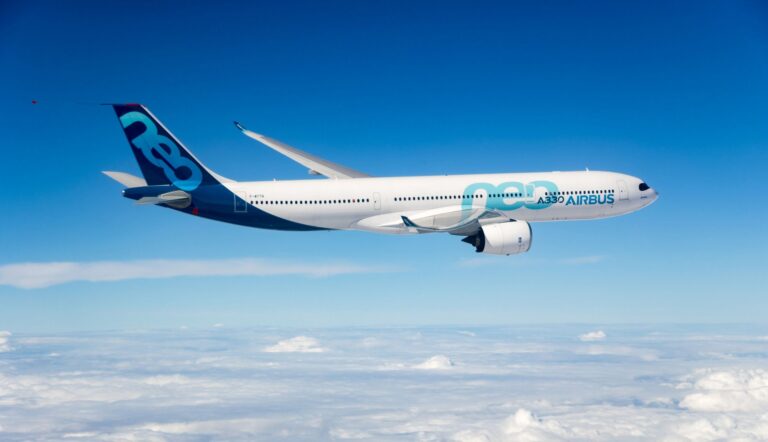
What changed was the breadth of the market. Airlines increasingly valued frequent services and nonstop connections linking more city pairs. Long-range twinjets, including Boeing’s 787 and Airbus’s A350, gave carriers the range to launch routes that could not reliably fill a 500-seat aircraft. Travellers could bypass some connections; airlines could match capacity more closely to demand. This was never a clean division between hub-and-spoke and point-to-point flying, however: twinjets also feed major hubs, and the A380 can remain attractive on dense trunk routes.
Aircraft economics depend not simply on cost per available seat, but on how many seats earn revenue and at what fares. A well-filled A380 may make good sense when airport capacity is scarce and demand is concentrated. An oversized aircraft on a thin route, by contrast, can expose an operator to a painful gap between fixed flight costs and ticket revenue. Premium-cabin demand adds another dimension: the best aircraft for a route depends on the mix of customers, not just the total headcount.
The cost of being exceptional
The A380 entered the market in an era of rapid improvements in twin-engine aircraft and engine performance. Four engines, a highly specialised airframe and a comparatively small global fleet create maintenance and support considerations that differ from the newer twinjets. Large numbers of passengers boarding and leaving simultaneously require careful airport and schedule planning; some airports invested in appropriate stands, taxiway arrangements and dual-level boarding facilities.
These are manageable constraints at airports and airlines designed around the type, but they limit flexibility elsewhere. A carrier cannot necessarily move an A380 to an alternative route as readily as a smaller widebody. Meanwhile, Airbus faced the enormous industrial expense of developing a new very-large-aircraft family and early programme difficulties, including wiring and production coordination. The commercial stakes were high long before the last order disappeared.
One distinction matters: commercial disappointment for the manufacturer is not evidence that every A380 flight is unprofitable. Individual route results depend on ownership costs, fares, network connectivity, utilisation and load factors. Public figures do not support a blanket claim that every A380 operator loses money on every flight.
Emirates made the case, but could not make the market
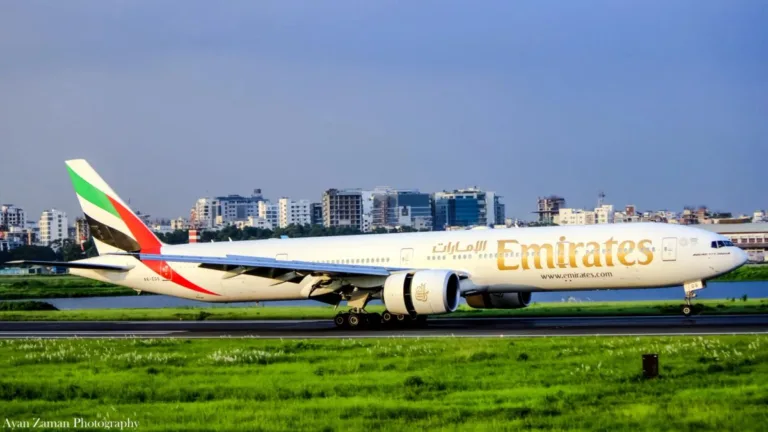
Emirates took 123 A380s, roughly 49% of total production. Dubai’s geography and the airline’s extensive connecting network helped aggregate passengers from different origins onto high-capacity long-haul services. The aircraft also suited Emirates’ product positioning, including premium cabins and onboard facilities that helped turn the A380 into an international brand symbol.
What worked for Emirates did not automatically work for every airline. A network with fewer intercontinental connecting flows, different premium demand or more fragmented routes had less reason to commit to such capacity. Reliance on a single dominant buyer became a fundamental programme risk. Airbus’s 2019 statement was explicit: when Emirates reduced its commitment, there was insufficient remaining backlog from other customers to sustain the production line.
Covid-19 subsequently pushed several airlines to ground or retire aircraft as international travel collapsed. But the chronology is critical: Airbus had already decided to stop production in 2019, before the pandemic. As travel returned, some operators reactivated A380 fleets or invested in cabin upgrades, demonstrating that a production shutdown does not necessarily end an aircraft’s commercial usefulness.
On very dense routes, especially where airport slots are scarce, the A380 can still offer an attractive way to carry more passengers per movement. But that advantage depends on consistently high demand and yields sufficient to support a large four-engine aircraft. Capacity is an asset on some routes and a commercial liability on others.
Passenger affection for the superjumbo never guaranteed broad airline adoption. Smaller long-range twinjets gave operators more flexibility to connect cities directly and adjust capacity to demand. The A380’s commercial history therefore reflects an industry-wide change in network economics rather than a simple verdict on the aircraft’s engineering quality.
The A380 delivered a distinctive flying experience and solved a real problem on a limited number of high-density routes. What it did not deliver was enough airline demand, from enough customers, to justify a lasting manufacturing programme. That distinction explains why passengers can admire the superjumbo while airline planners choose smaller long-range aircraft for much of their networks.
As of 2026, A380s are still carrying travellers. Their longevity does not reverse the production decision, just as the closure of the assembly line does not erase what the aircraft achieved. Its lasting lesson is that engineering scale and passenger appeal only succeed commercially when they fit a sufficiently broad airline business model.
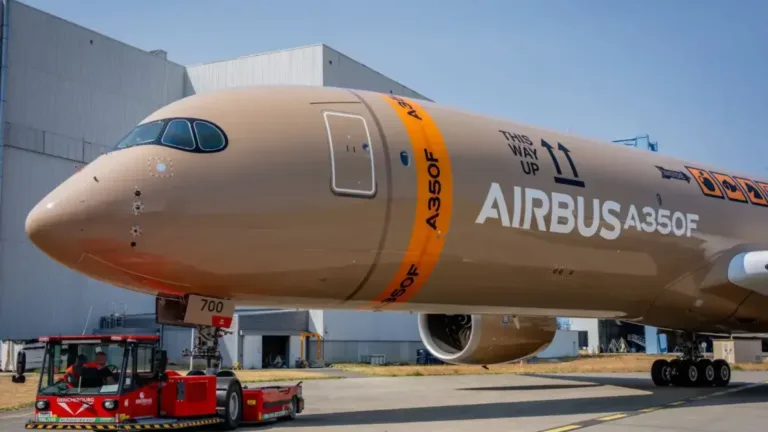
Related coverage: the A350F maiden flight illustrates Airbus’s continuing investment in the newer twin-engine widebody family, here in the cargo market.
Primary sources: Airbus, February 2019 production decision; Airbus, final A380 delivery and programme figures; Emirates, December 2021 fleet completion.
Archive photograph: Emirates Airbus A380 in flight, 20 February 2025. Epilot787 / Wikimedia Commons, CC BY-SA 4.0, resized for AeroSillage.

Leave a Reply