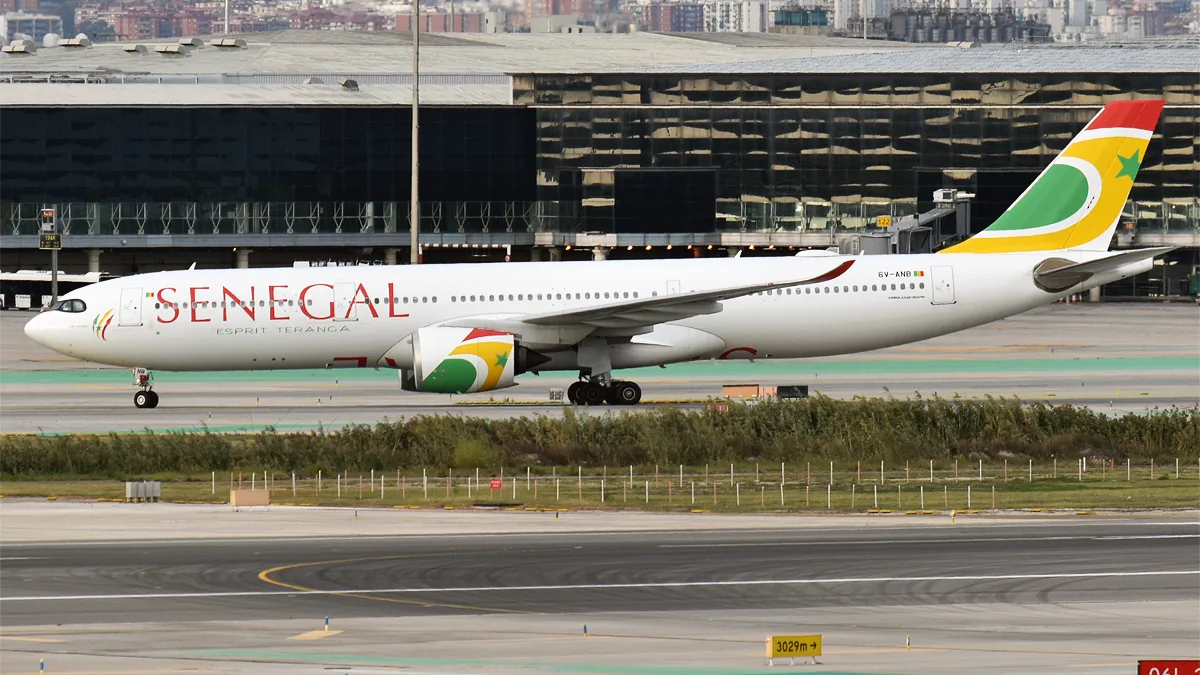
Air Senegal remains one of West Africa’s most sensitive airline turnaround stories. The carrier has acknowledged a heavily degraded financial position, but says the first restructuring measures are beginning to improve the situation. The key question is no longer whether the airline can announce new routes, but whether it can rebuild a stable operating platform before expanding again.
Debt, fleet availability and the first phase of the turnaround
In an official communication, Air Senegal detailed inherited debt of around CFA118 billion: approximately CFA52 billion owed to private-sector creditors and CFA66 billion to public-sector entities.
Cumulative losses for 2022 and 2023 reached about CFA139 billion. That scale explains why the turnaround cannot be reduced to a normal cost-cutting exercise.
The operational situation was also serious. Air Senegal indicated that the fleet actually available for service represented only around half of its initial capacity.
For an airline combining domestic, regional and long-haul operations, low aircraft availability directly damages punctuality, schedule stability and unit costs. Leasing replacement capacity or reshuffling rotations can preserve some flying, but usually at a higher cost.
The first phase of the recovery plan focused on reducing operating expenses. Air Senegal says it lowered costs and improved the deficit between 2024 and 2025, with monthly savings now measured in billions of CFA francs according to company figures.
That discipline is essential. Several African airlines have fallen into the same trap: opening prestigious new routes before having enough capital, reliable aircraft and stable demand to support them.
Fleet reliability must come before renewed expansion
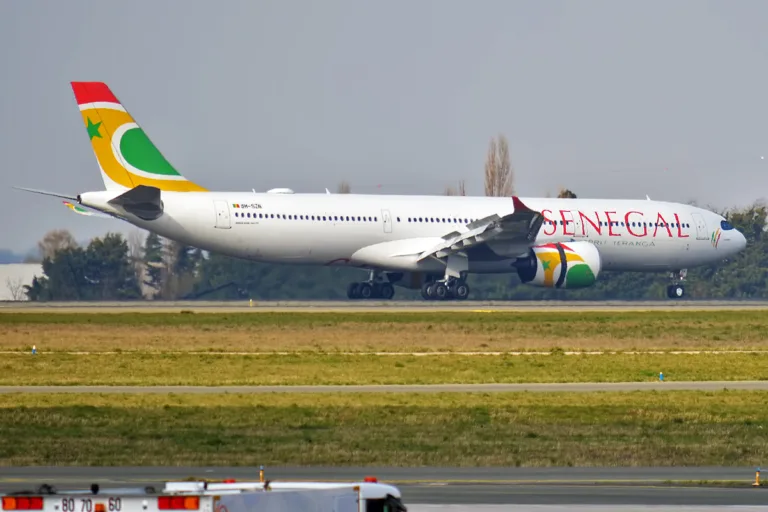
Air Senegal uses Airbus A330neos for long-haul operations and wants to rebuild a more robust narrowbody fleet. Plans involving Boeing 737 MAX aircraft are intended to strengthen medium-haul and regional flying while improving efficiency.
But the relevant measure is not simply how many aircraft are ordered. The real indicators are technical availability, productive aircraft hours, punctuality, utilisation and the ability to fill seats at fares compatible with the cost structure.
Dakar’s geographic advantage only works with reliable connections
Blaise Diagne International Airport is well positioned between West Africa, Europe and North America. It can become a stronger connecting hub if Air Senegal can offer reliable schedules and dependable baggage transfers.
That geographic advantage has real value, but a hub only works when passengers trust the connection.
The airline’s previous growth exposed a mismatch between ambition and available operational capacity. A slower, disciplined rebuild is likely to produce better economics than reopening high-profile routes too early.
AeroSillage view: Air Senegal does not need another headline route to prove that the turnaround is working. It needs several years of stronger aircraft availability, cost control and operational consistency.
What will show whether the turnaround is becoming structural
Technical availability, punctuality, aircraft utilisation, unit costs, load factors and the pace of debt reduction will show whether the recovery is becoming structural rather than temporary.
Main sources
Air Senegal official communication on debt and turnaround; Air Senegal / Boeing fleet documentation.
Leave a Reply