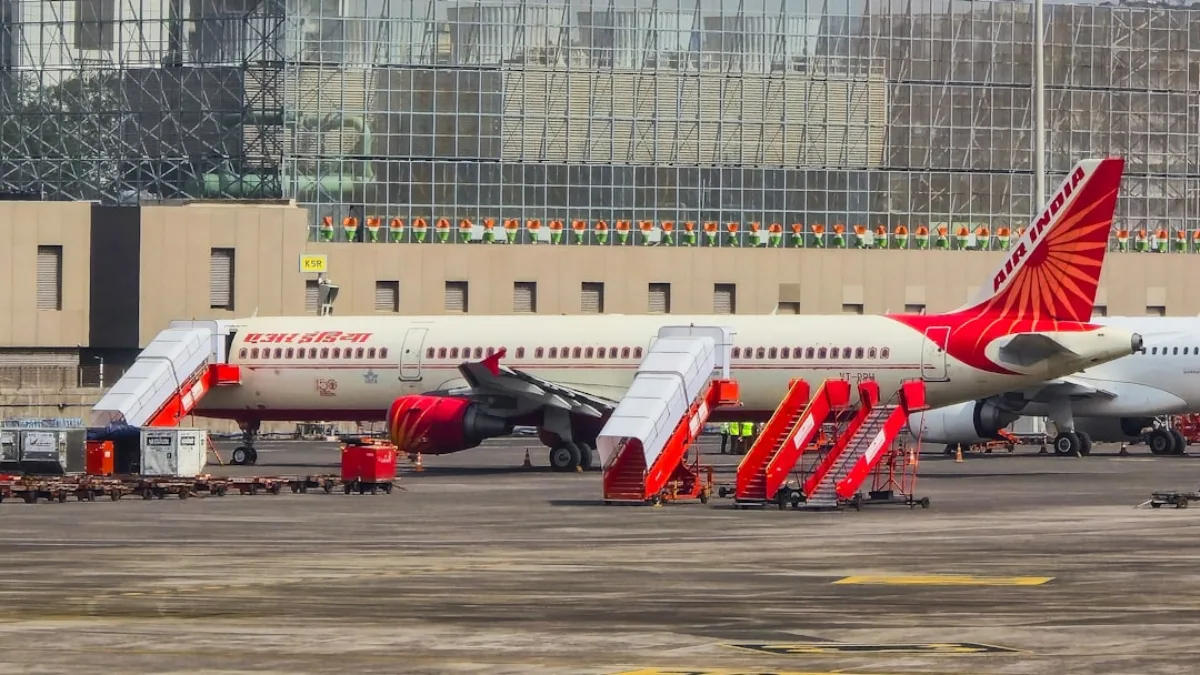
Air India’s turnaround has entered a financially sensitive phase for its shareholders. The Indian carrier is seeking about $1.5 billion in fresh equity from Tata Sons and Singapore Airlines after losses widened sharply. In Singapore, SIA’s 25.1% stake has attracted enough scrutiny to be debated in Parliament on September 8.
A major funding request
Reuters reported that Air India is seeking roughly $1.5 billion in additional equity from its two owners. Discussions remain ongoing and Singapore Airlines has not announced a final commitment.
The request follows a difficult financial year: Air India and Air India Express together recorded about $2.33 billion in losses for the year ended March 2026, underlining the scale of the restructuring undertaken since Tata reacquired the former state carrier.
Singapore Airlines is not automatically committed
Singapore Airlines has owned 25.1% of Air India since Vistara merged into Air India in November 2024. On September 8, SIA stressed that investments in India are funded from internal resources and remain subject to board approval and its normal capital-allocation framework.
Its 25.1% holding therefore does not mean SIA must automatically fund every capital request in proportion to its stake. Singapore Transport Minister Jeffrey Siow also told Parliament that Air India’s losses do not automatically become liabilities for SIA.
Why Singapore still sees strategic value
Singapore’s government continues to defend the strategic logic of the investment. For an airline based in a small domestic market, international growth depends heavily on partnerships and access to much larger traffic pools.
In its 2025-2026 annual report, Singapore Airlines described its Air India stake as a pillar of its multi-hub strategy, giving the group direct exposure to one of the world’s largest aviation markets.
A long and expensive transformation
Since returning to Tata ownership, Air India has been pursuing several transformations at once: fleet renewal, cabin refurbishment, product upgrades, operational restructuring and the integration of Vistara.
SIA itself has described the process as complex, multi-year and unlikely to progress in a straight line. The current funding need shows that traffic growth alone will not determine whether Air India reaches sustainable profitability.
Air India is already weighing on SIA’s earnings
In the first quarter of fiscal 2026-2027, SIA posted a net loss of S$76 million despite record revenue. The group cited a larger negative contribution from Air India alongside sharply higher fuel costs.
SIA nevertheless retained a strong financial position, reporting S$10.48 billion in cash reserves and S$3.24 billion in committed undrawn credit lines as of June 30. The decision is therefore as strategic as it is financial.
How far will Singapore Airlines support the turnaround?
For now, Singapore Airlines continues to express long-term commitment without promising to meet every capital request automatically. That distinction is central: SIA wants to retain exposure to India while insisting that each new investment pass through its normal approval process.
The next decisions will show how far SIA is prepared to fund Air India’s recovery in order to preserve what it considers a core pillar of its international strategy.
Sources
Singapore Airlines: Q1 2026-2027 results and 2025-2026 annual report; Reuters: August 25 and September 8, 2026; Channel NewsAsia: September 8, 2026.
Related: Air India A320 hydraulic failure injures 24, another recent look at the airline’s operational challenges.
Leave a Reply