Air France is reportedly passing on an Israeli instruction barring certain foreign and dual-national crew members from services entering Israeli airspace. A memo disclosed by French investigative outlet Mediapart on 10 October 2026 raises an important operational question for international airlines: how can crews be assigned when a destination applies nationality-based restrictions? Air France had not publicly confirmed or denied the reporting at the time of the first coverage.
The dispute is about pilots and cabin crew, not a blanket rule preventing airline passengers from flying to Israel. It is also important to separate the reported content of an internal memo from an official public directive: AeroSillage has not independently obtained the full instruction issued by the Israeli authorities.
Mediapart’s investigation, by journalist Marie Turcan, describes an internal notice addressed to Air France flight deck and cabin crew. The notice reportedly refers to an Israeli requirement that personnel entering Israeli airspace must not hold the citizenship, including dual citizenship, of a country without formal diplomatic relations with Israel.
The reference to dual nationality is operationally consequential. A crew member who holds a French passport as well as the citizenship of a country within the reported scope would still potentially be excluded from the assignment. The reported criterion therefore goes beyond which travel document the individual uses on a particular flight.
Which countries are mentioned?
Reporting by Anadolu, based on the Mediapart investigation, names Algeria, Tunisia, Iran and Pakistan among the nationalities allegedly included. These are reported examples, not an independently verified comprehensive list. No final figure for affected Air France employees has been established from the primary materials available to us.
The existence of the reported instruction does not itself establish how many crew members have already been removed from rosters, whether individual exemptions exist, or how every airline operating to Israel interprets the requirement. Those questions would require the directive itself and answers from the relevant operators and authorities.
Mediapart links the new measure to the security reaction following the late-September Flydubai FZ1073 incident. UAE investigators have described allegations against a co-pilot concerning an attempted attack involving an Israel-bound aircraft. Investigative assertions and criminal findings must not be confused: the proceedings were not a final judicial determination. AeroSillage’s FZ1073 coverage explains the allegations and the information released by prosecutors.
Aviation security requirements are inherently international: destination states, air operators and airport authorities all participate. What makes the latest reporting significant is the apparent choice of nationality as a broad screening category rather than the public identification of individual threats. That choice invites scrutiny of its scope, legal basis and practical effect, without allowing a conclusive legal judgement from the reporting alone.
What it could mean for Air France operations
If enforced in the terms reported, the instruction could require the airline to change rosters on routes passing into Israeli airspace and to review the citizenship information relevant to crew assignments. According to the coverage, internal guidance also warned about potential employment consequences for failing to comply. The mechanism and number of assignments affected have not been independently established.
For travellers, a crew assignment restriction should not be confused with a confirmed flight cancellation. No specific Air France cancellation, network-wide suspension or passenger entry restriction is established by these reports alone. Passengers should use the carrier’s official flight information for their own bookings.
A reported instruction affecting crew assignments is distinct from rules governing airline passengers. Assessing its implications requires the exact scope of the document, the procedures applied and official responses. Any operational consequences for crew rosters should therefore remain attributed to the published reporting rather than presented as a blanket rule.
Updated 12 October: FO protests and Air France responds
Updated on 12 October 2026. A statement dated 11 October and signed by Christophe Malloggi, general secretary of the Force Ouvrière union at Air France, criticises the airline’s decision to relay the Israeli instruction. FO argues that excluding crew members because of their nationality, including dual citizenship, conflicts with equality principles and calls on management to reconsider its position urgently.
The union’s demand is uncompromising: if certain colleagues cannot operate flights to Israel, FO says the airline should reconsider operating the service. This is a union position, not an announcement by Air France that the Paris–Tel Aviv route has been suspended. The document was supplied to AeroSillage; its physical authenticity has not been independently established by the newsroom.
In comments published by L’Écho touristique on 12 October, Air France said affected employees had been notified of new Israeli requirements. The airline explained that it must follow the entry rules established by countries it serves for both passengers and staff. This confirms that the company communicated the rules to employees; it does not establish how many crew assignments changed or determine the legality of those measures.
The CGT union also challenged the nationality-based restrictions, according to TourMaG, arguing that the operation of the Paris–Tel Aviv route should be reconsidered if it entails excluding employees on those grounds. Multiple labour organisations have now raised objections to the measure.
The dispute raises a potential conflict between French workplace protections and the operating requirements imposed by a destination country. A rigorous legal assessment would require the complete authenticated Israeli directive, its scope and any exceptions. Allegations of unlawful discrimination remain allegations, not court findings.
At the time of this update, published material does not establish the number of crew members reassigned or a full Air France suspension of the route. Passengers should check their individual flights with the airline rather than infer cancellations from crew screening rules.
Additional reporting: FO Air France statement dated 11 October provided to AeroSillage; L’Écho touristique, 12 October, Air France’s response; TourMaG, CGT response.
Sources: Mediapart, Marie Turcan investigation, 10 October 2026 (original reporting); Anadolu, 10 October 2026 (follow-up). The internal memo and directive have not been authenticated independently by AeroSillage.
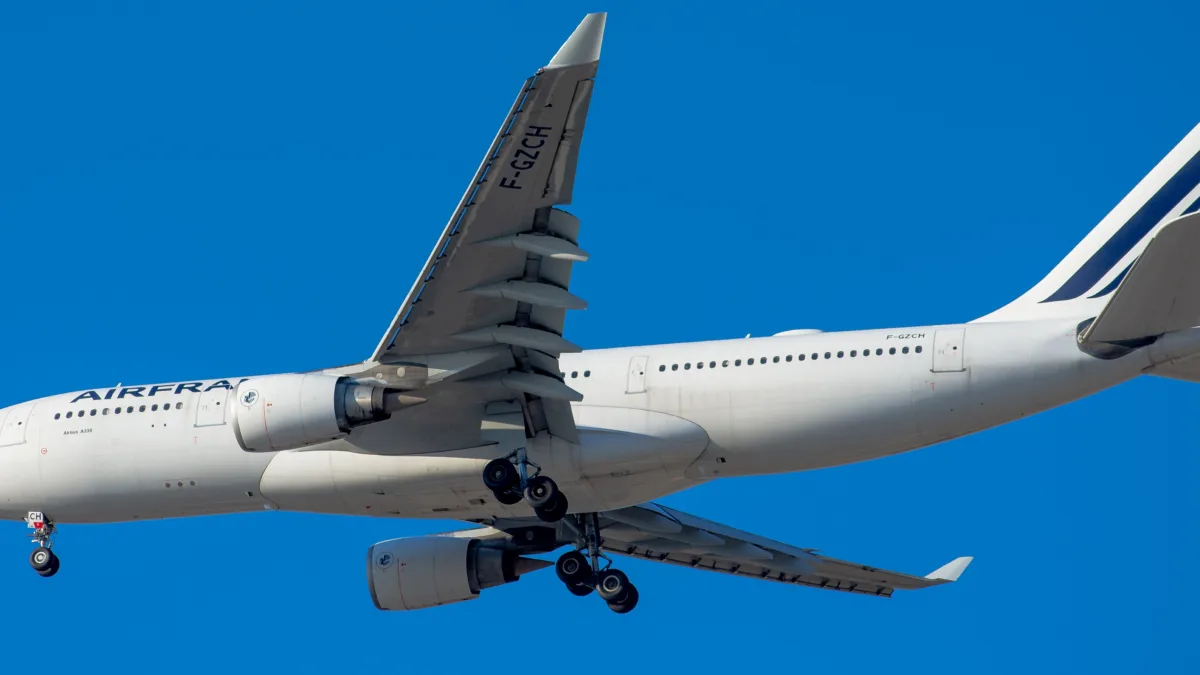
Illustration: Air France Airbus A330 F-GZCH arriving at Tel Aviv in August 2020, not a photograph of an affected crew or the reported October 2026 instruction. © Ronen Fefer / Wikimedia Commons, CC BY-SA 2.0, resized under the same licence.




Leave a Reply